In the competitive world of liquid and bulk product manufacturing, efficiency, accuracy, and scalability are non-negotiable. For producers handling large volumes—from industrial chemicals and food-grade oils to dairy products and beverages—the packaging phase is a critical bottleneck that can make or break profitability. This is where gallon-sized filling and packaging line solutions come into play, offering a transformative approach to high-volume production.

The Critical Role of Gallon Packaging in Modern Production
Gallon-sized containers are a staple across numerous industries. They represent a practical balance between consumer convenience and industrial efficiency for bulk sales. However, manually filling and sealing these containers is labor-intensive, inconsistent, and slow. An automated, integrated gallon filling and packaging line is not merely an upgrade; it’s a strategic investment that streamulates the entire production workflow. These systems are engineered to handle the specific challenges of liquids and viscous bulk products, ensuring precise fill volumes, secure sealing, and high-speed throughput that manual processes can never achieve.
Core Components of a Gallon-Sized Packaging Line
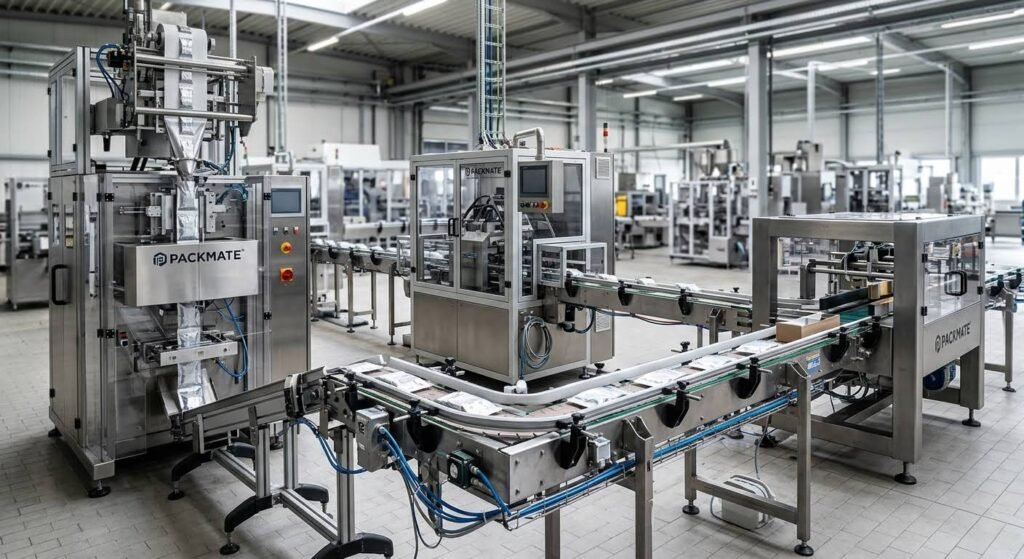
A turnkey gallon packaging solution is a symphony of synchronized machinery. Each component plays a vital role:
- Automatic Bottle Unscrambler: Gently orients and feeds empty containers onto the conveyor, eliminating manual handling.
- High-Speed Filling Machine: The heart of the line. For gallon sizes, this is typically a high-accuracy piston filler, gravity filler, or net weight scale filler designed for large volumes. Precision is measured in fractions of an ounce.
- Capping or Sealing Station: Applies screw caps, snap lids, or induction seals with consistent torque and alignment, guaranteeing product integrity and preventing leaks.
- Labeling System: Applies product labels, barcodes, and compliance information accurately and squarely onto the container.
- Automated Conveying & Accumulation: A network of conveyors smoothly transports containers between stations, with accumulation tables managing flow to prevent bottlenecks.
Integrating these components into a single, controlled system is the specialty of providers like Packmate Packaging Line, who design solutions where every machine communicates seamlessly with the next.
Tailored Solutions for Diverse Liquid & Bulk Products
Not all liquids are created equal, and neither are their packaging needs. A one-size-fits-all approach fails here. Modern lines offer customization to handle specific product characteristics:
High-Viscosity Products (Syrups, Pastes, Adhesives): Require piston fillers with specialized valves and possibly heating jackets to maintain flow. Lines may include agitation systems to keep mixtures homogeneous during filling.
Foamy or Aerated Liquids (Dairy, Detergents): Demand filling technology that minimizes turbulence, such as bottom-up fillers or systems with foam suppression features.
Corrosive or Sterile Products (Chemicals, Pharmaceuticals): Need construction from stainless steel (e.g., SS304, SS316) and sanitary design with clean-in-place (CIP) capabilities. Aseptic filling environments might be necessary for sterile fluids.
Dry Bulk in Large Bags (Powders, Granules): While not a liquid, bulk powder packaging for gallon-equivalent volumes uses automated bagging scales, form-fill-seal (FFS) machines, or open-mouth bag placers, which are part of the larger bulk production solution spectrum. You can explore such integrated systems in our dedicated Solution section.
Key Benefits Driving Investment in Gallon Packaging Automation
Unmatched Operational Efficiency
Automation drastically increases output per hour while reducing direct labor costs. One operator can oversee a line producing hundreds or thousands of gallons per shift.
Pinpoint Accuracy & Consistency
Automated fillers eliminate overfills and underfills, reducing product giveaway and ensuring every container meets exact weight or volume specifications. This consistency is crucial for compliance and brand reputation.
Enhanced Safety & Hygiene
Minimizing human contact with the product reduces contamination risks. Enclosed systems and sanitary designs are essential for food, pharma, and chemical applications.
Scalability for Future Growth
A well-designed line is modular. As demand grows, you can add lanes, faster fillers, or additional downstream equipment like case packers and palletizers without replacing the entire system.
Choosing the Right Partner for Your Packaging Line
The success of your high-volume packaging project hinges on your equipment provider. Look for a partner with:
- Proven Industry Experience: A track record in your specific sector (food, chemical, pharmaceutical) is invaluable. For instance, Packmate (GuangDong) Co., Ltd. brings over 30 years of expertise in designing for diverse product types.
- Turnkey Project Capability: The ability to deliver a complete, installed, and commissioned line—from initial design to post-installation support—ensures a smooth transition.
- Technological Innovation: Providers should offer modern controls (PLC/HMI), IoT connectivity for data monitoring, and energy-efficient designs.
- Robust After-Sales Support: Comprehensive service, readily available spare parts, and operator training are critical for minimizing downtime.
Reviewing real-world Case studies from the provider can offer concrete evidence of their capability to deliver reliable, high-performance lines.
Implementation and Integration: Beyond the Machinery
Deploying a new gallon packaging line is a significant project. A reputable provider will guide you through several key phases:
1. Needs Analysis & Line Design: Engineers analyze your product, container, required output (bottles per minute), and factory layout to propose an optimal configuration.
2. Factory Acceptance Testing (FAT): Before shipment, you should witness the line running at the manufacturer’s facility to verify performance against agreed specifications.
3. Installation & Commissioning: Skilled technicians install the line in your plant, calibrate all equipment, and run production tests with your actual materials.
4. Training & Handover: Comprehensive training for your maintenance and operational staff ensures they can run, troubleshoot, and perform basic maintenance on the new system.
For ongoing support and to understand the full scope of services offered, visit our Service page.
Frequently Asked Questions (FAQs)
1. What is the typical output speed for an automated gallon filling line?
Speed varies based on the filler type, number of heads, and product viscosity. A standard rotary piston filler for thin liquids can achieve 20-40 gallons per minute (or 80-160 containers per minute for 0.5-gallon sizes). A detailed quote from an engineer will provide precise numbers for your specific application.
2. Can one line handle different container sizes (e.g., half-gallon and one-gallon)?
Yes, many lines are designed with quick-change parts. By switching out the filling nozzles, container holders (pucks), and adjusting the conveyor guides, a single line can often accommodate a range of similar container sizes with minimal downtime for changeover.
3. How do you ensure filling accuracy for thick, viscous products like pastes?
For high-viscosity products, positive displacement piston fillers are the standard. They provide highly repeatable volumetric accuracy. Additional features like heated hoppers and product pumps maintain consistent flow, while servo-driven piston controls allow for fine-tuned adjustment of the fill volume.
4. What are the key maintenance requirements for such a line?
Regular preventive maintenance is crucial. Daily tasks include cleaning and visual inspections. Weekly or monthly schedules involve lubricating moving parts, checking seals and gaskets for wear, and calibrating scales and sensors. Your equipment provider should supply a detailed maintenance checklist and schedule.
5. How does a turnkey solution differ from buying individual machines?
Buying individual machines leaves you responsible for integration, ensuring compatibility, and programming the overall system control. A turnkey provider like Packmate delivers a fully integrated, tested, and ready-to-run production line with a single point of responsibility, significantly reducing project risk, complexity, and timeline.
For more detailed answers, you can always refer to our comprehensive FAQs resource.