In today’s competitive food industry, efficiency, hygiene, and scalability are not just advantages—they are necessities. The integration of a complete, automated packaging line is a transformative step for any food production business. This guide delves into the world of turnkey packaging solutions, explaining how a seamlessly integrated line can revolutionize your operations from raw material intake to palletized finished goods.
Understanding Turnkey Packaging Line Integration
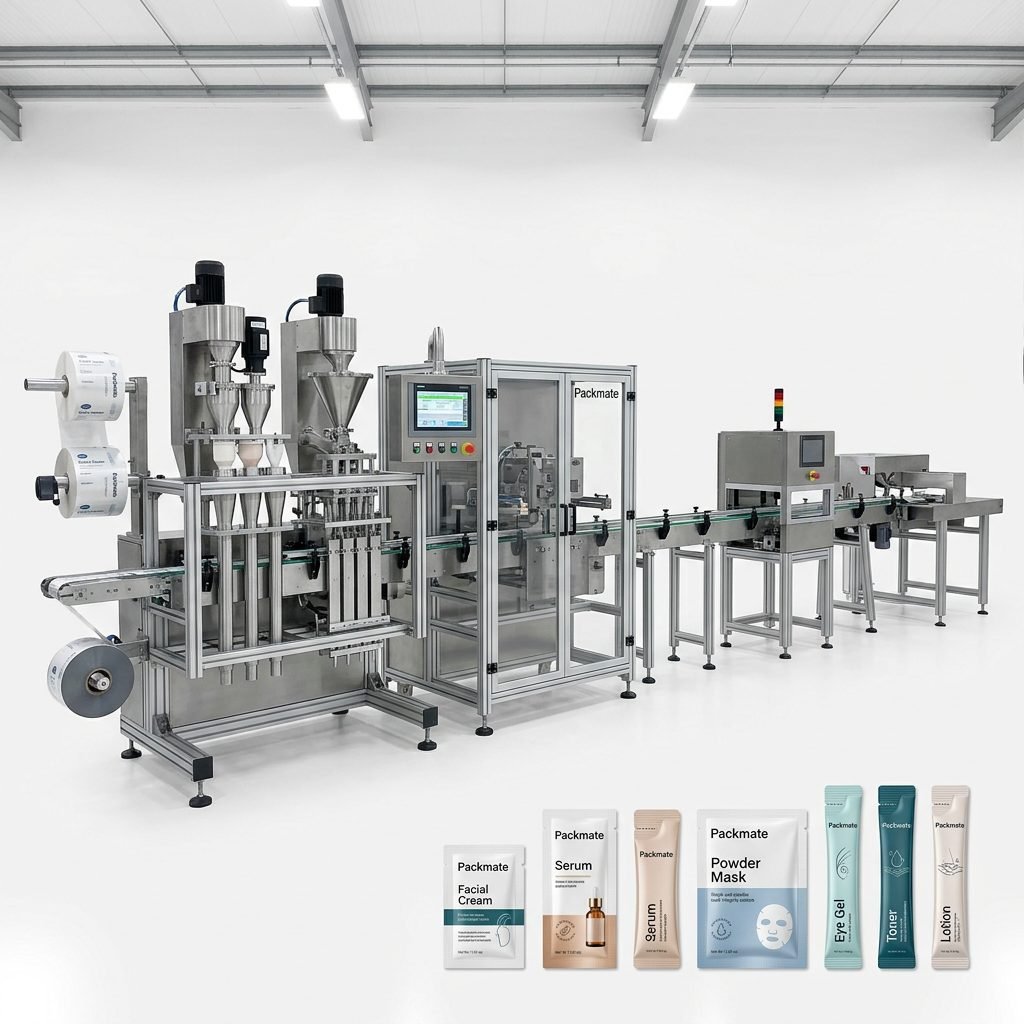
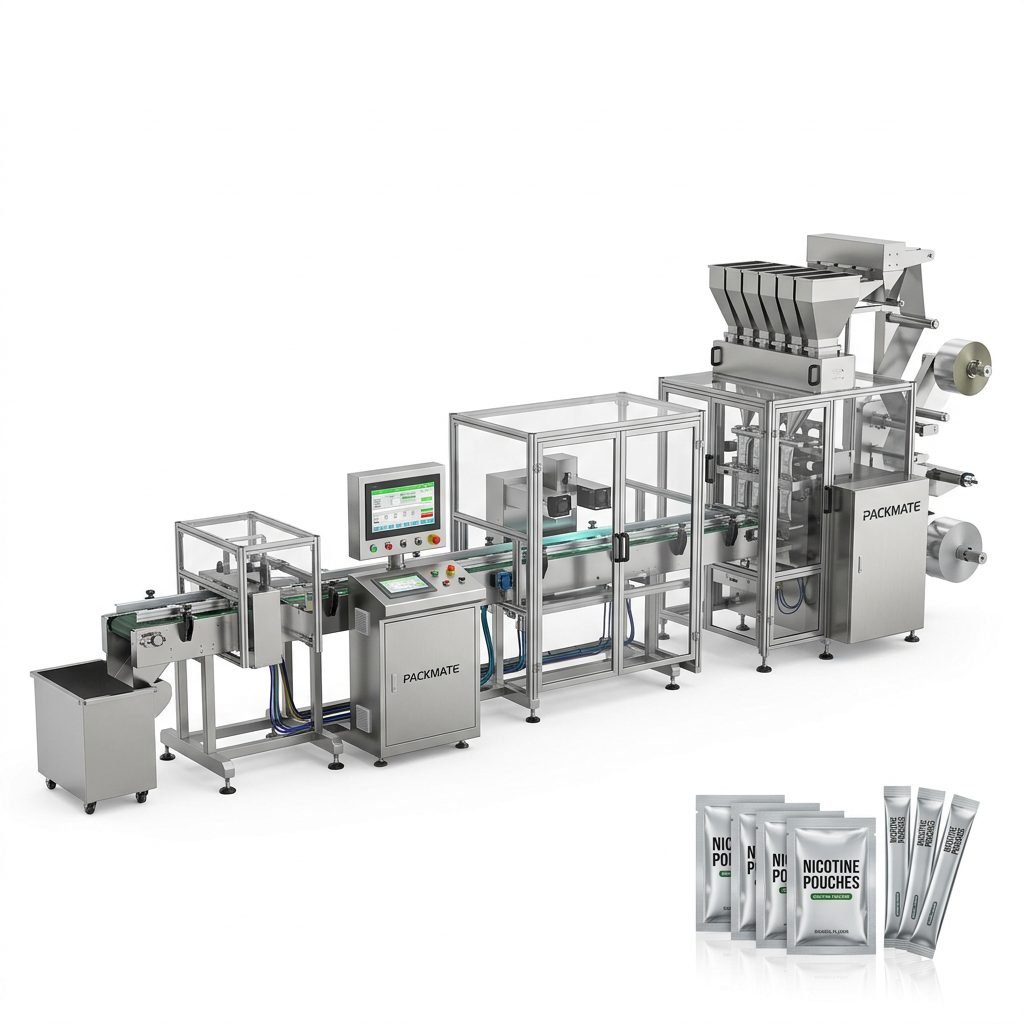
A turnkey packaging line is a fully integrated system supplied by a single provider, designed to perform a sequence of packaging operations with minimal manual intervention. Unlike piecing together machines from different vendors, a turnkey solution is engineered for harmony. Every component—from the form-fill-seal machine and checkweigher to the cartoner and case packer—is selected and synchronized to work as a unified whole. The goal is to deliver a production-ready line that you can literally “turn the key” and start operating.
Key Benefit: The primary advantage is reduced complexity. You have one point of contact for design, installation, training, and service, eliminating compatibility issues and finger-pointing between multiple equipment suppliers. This holistic approach, as championed by providers like Packmate (GuangDong) Co., Ltd., ensures reliability and simplifies your supply chain.
Core Components of an Automated Food Packaging Line
An integrated line is composed of several key stations, each performing a critical function. Understanding these components is essential for planning your solution.
1. Primary Packaging: The Heart of the Line
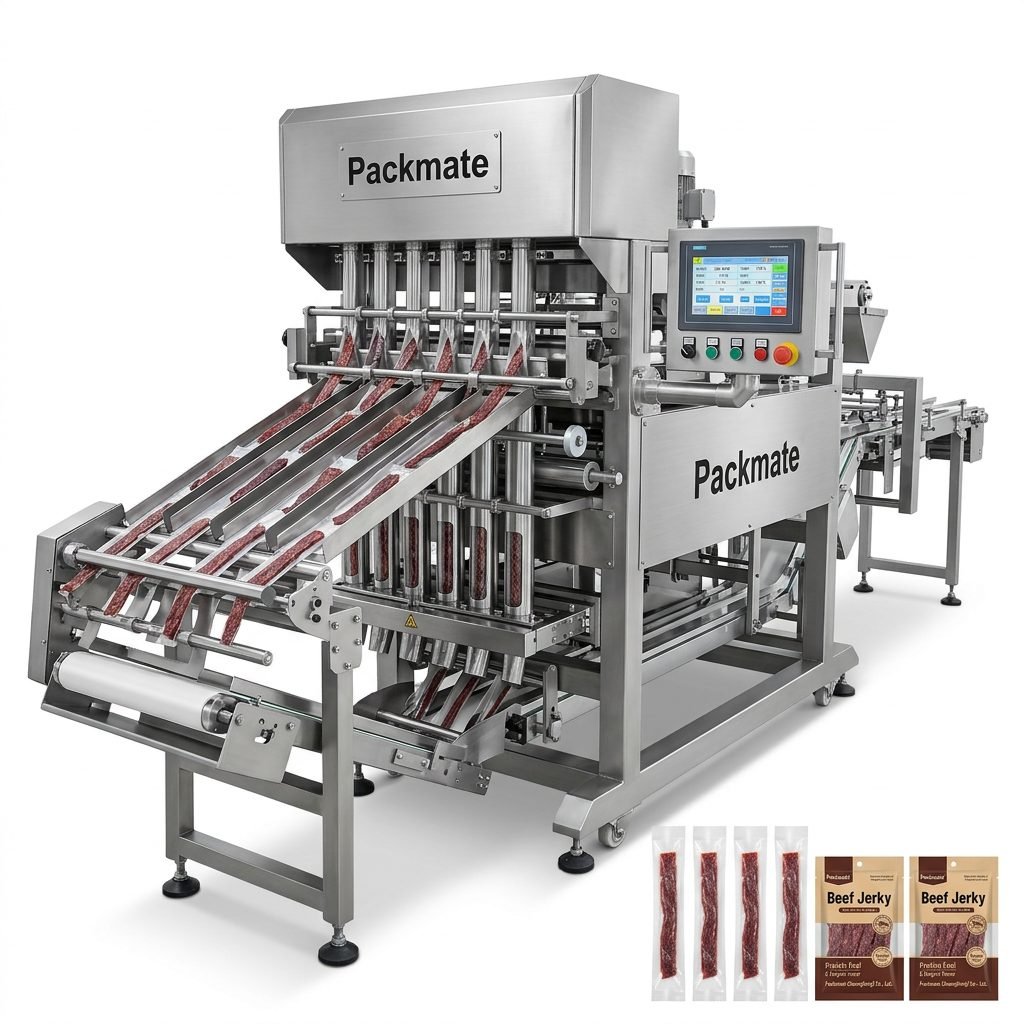
This is where your product meets its immediate container. Common machines include:
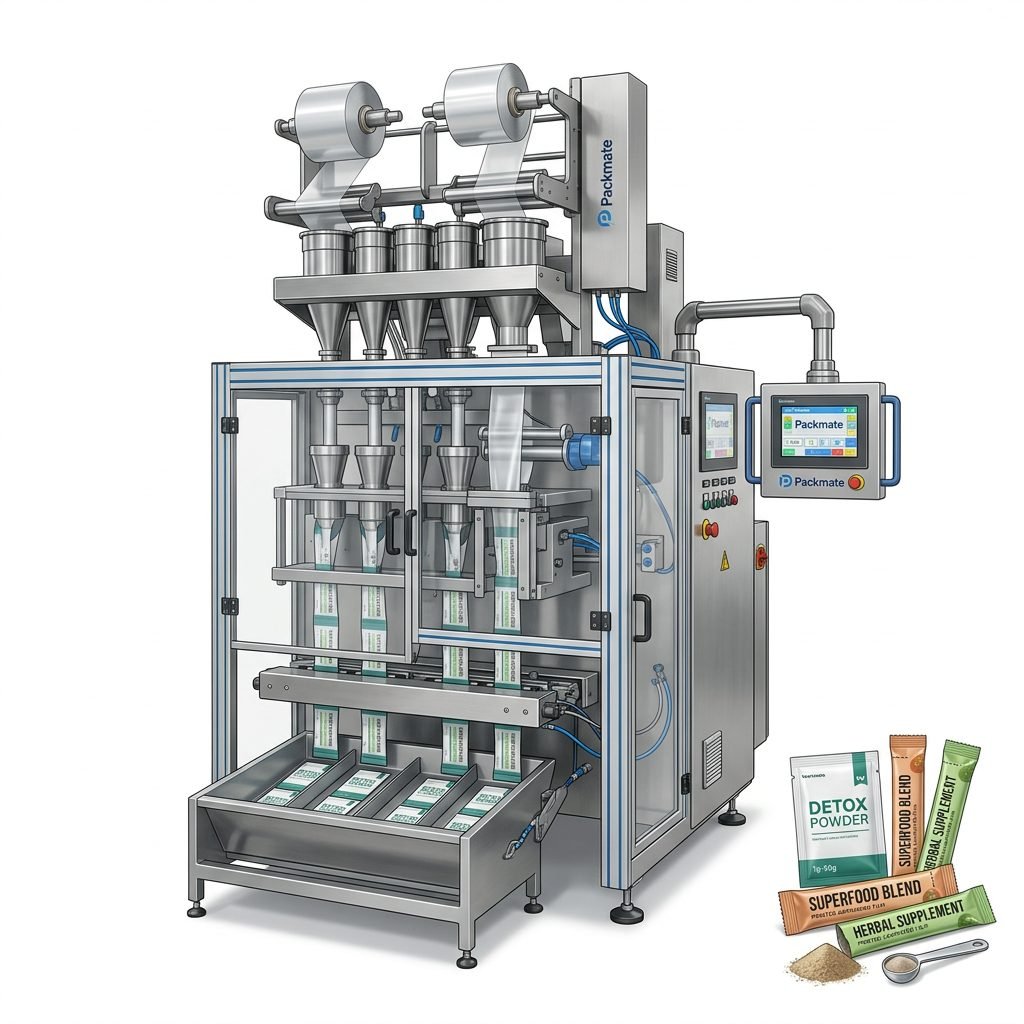
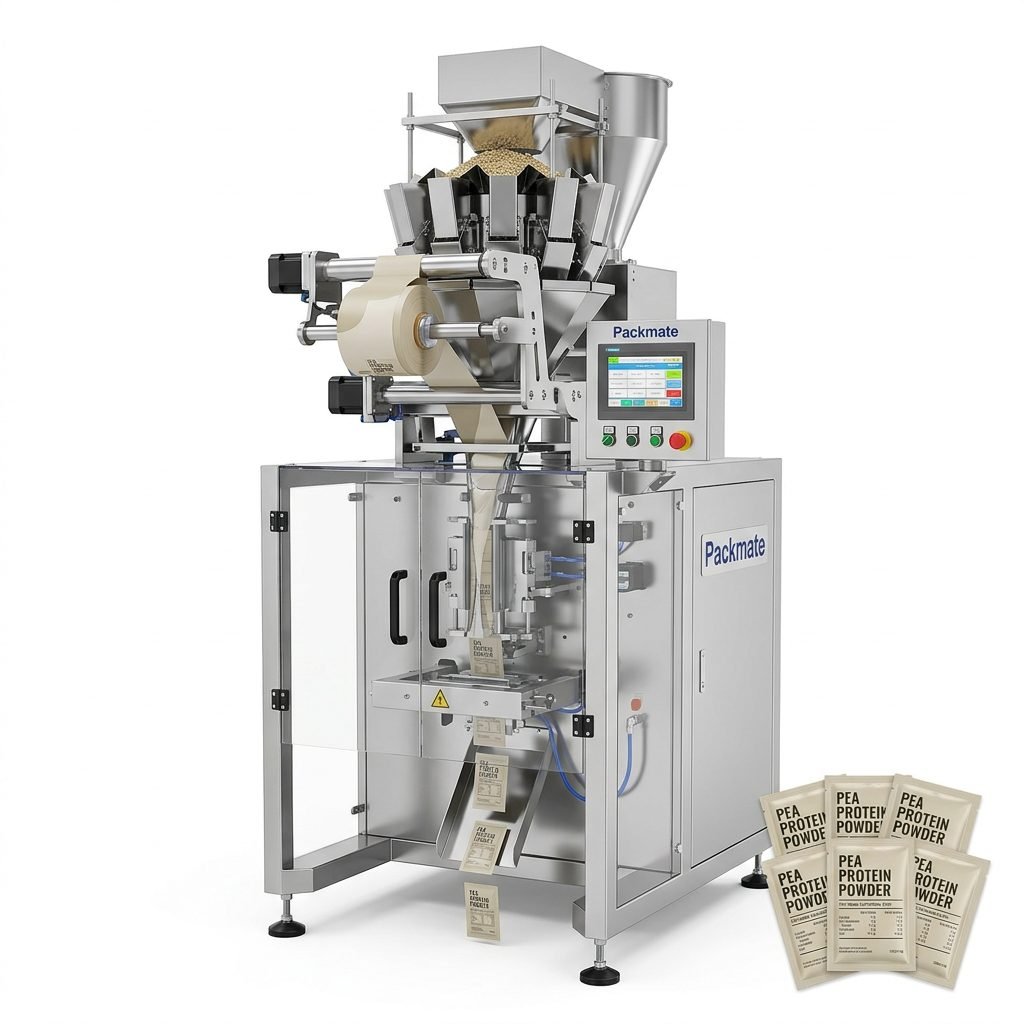
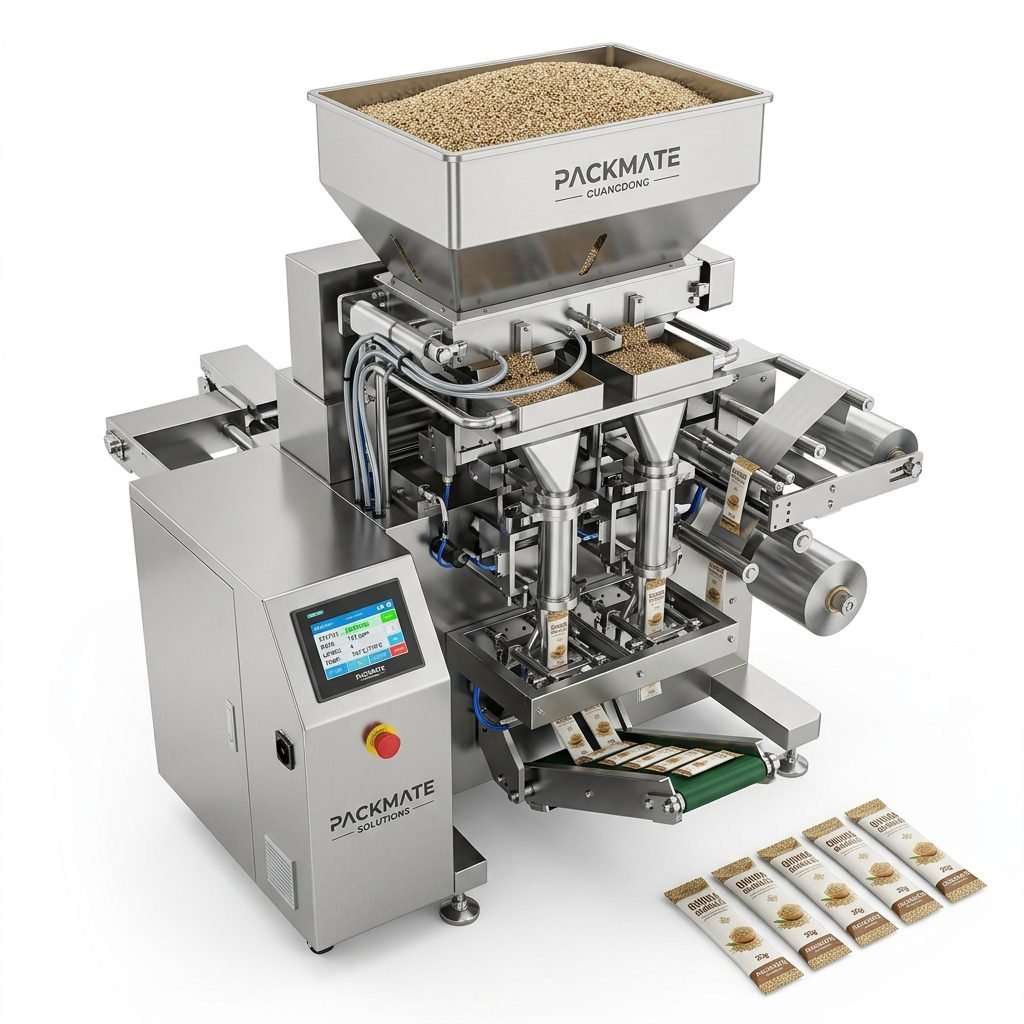
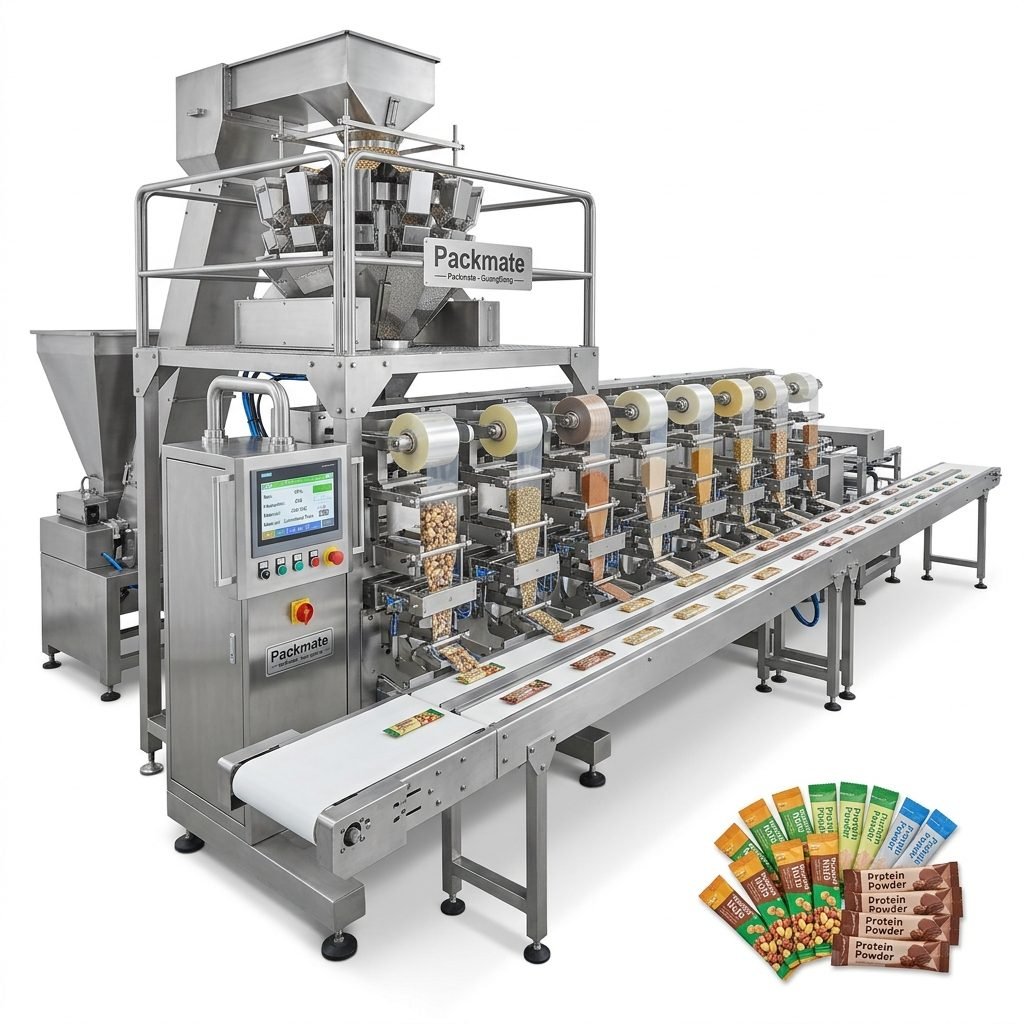
- Vertical Form-Fill-Seal (VFFS) Machines: Ideal for powders, granules, and snacks. They form a bag from a roll of film, fill it with product, and seal it—all in one continuous motion.
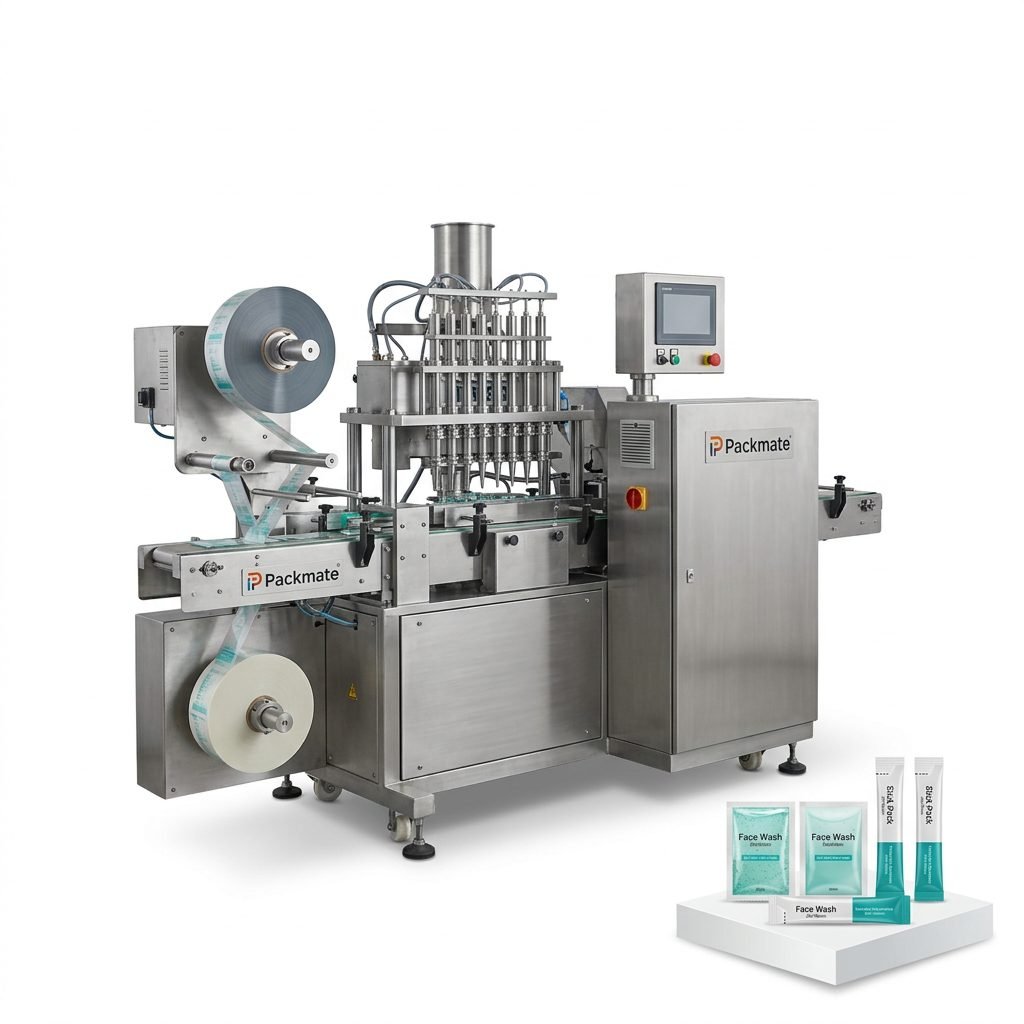
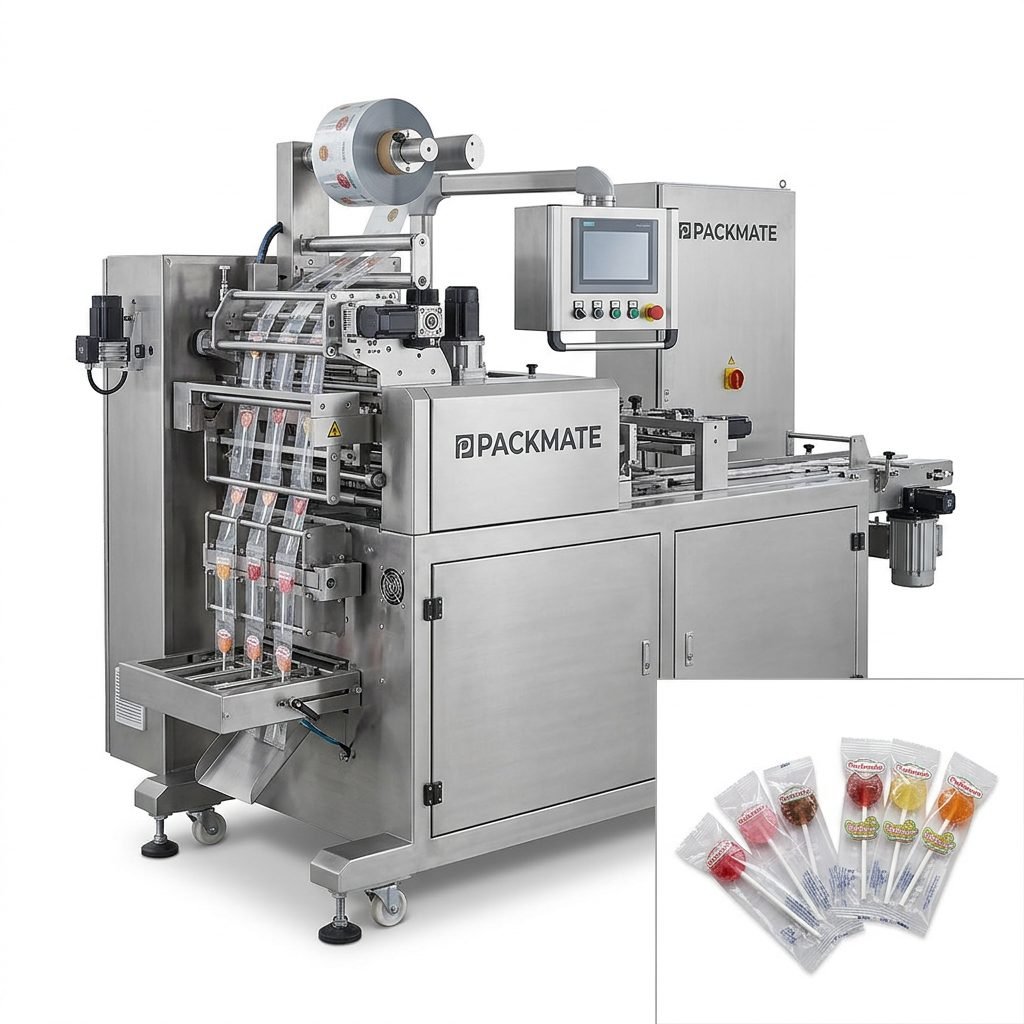
- Horizontal Form-Fill-Seal (HFFS) Machines: Perfect for bars, biscuits, or multi-component products. The product is placed into pre-formed pockets on a film web, which is then lidded and sealed.
- Liquid & Paste Fillers: Precision piston or pump fillers for sauces, dressings, dairy products, and oils into bottles, cups, or sachets.
2. Secondary & Tertiary Packaging: Building for Distribution
Once the primary package is sealed, the line automates its grouping and protection for shipping.
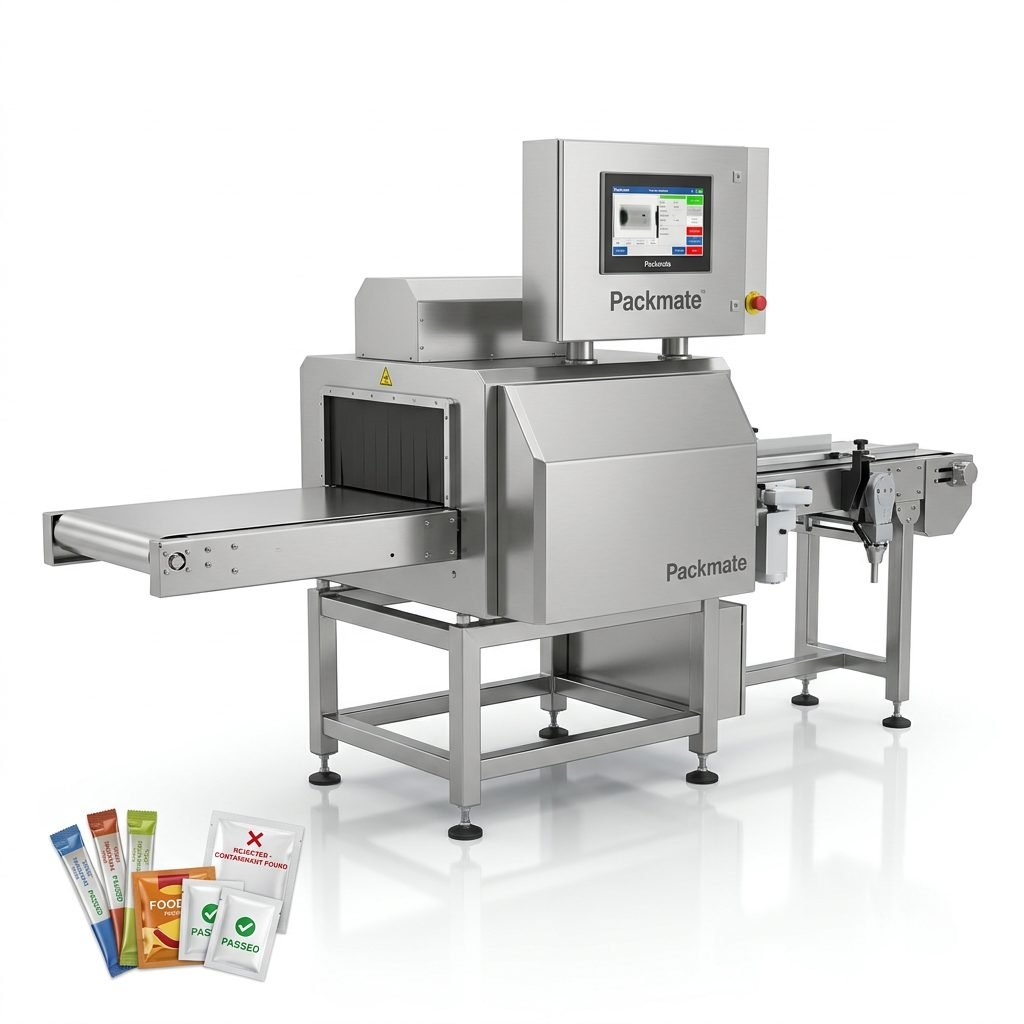
- Checkweighers & Metal Detectors: Critical for quality control and safety, ensuring every pack meets weight specifications and is free from contaminants.
- Cartoners: Automatically erect, load, and seal cartons around primary packages.
- Case Packers & Palletizers: These robots or mechanical systems place cartons into shipping cases and then stack cases onto pallets in stable, transport-ready patterns.
Integration & Control: The Nervous System
What transforms individual machines into a “line” is the integration layer. A centralized Programmable Logic Controller (PLC) or Industrial PC acts as the brain, synchronizing speeds and operations. Modern lines feature Human-Machine Interfaces (HMIs) for easy monitoring and control, and often include Manufacturing Execution System (MES) connectivity for real-time data on output, efficiency (OEE), and downtime. Exploring different packaging solutions will reveal the specific control architectures best suited for your product.
The Strategic Advantages of a Fully Integrated Line
Investing in a turnkey automated line delivers tangible returns across your entire operation.
1. Dramatically Increased Productivity & Throughput: Automation runs 24/7 with consistent speed, far surpassing manual or semi-automated processes. Bottlenecks are engineered out during the design phase.
2. Enhanced Product Safety & Consistency: Minimized human contact reduces contamination risk. Precision machinery ensures every package has the correct weight, seal integrity, and appearance, upholding brand quality. This is paramount in the food sector.
3. Significant Labor Cost & Dependency Reduction: Automating repetitive tasks allows you to reallocate skilled labor to supervision, maintenance, and quality assurance roles, optimizing your workforce.
4. Improved Flexibility & Scalability: Modern lines are designed for quick changeovers. With recipes stored in the HMI, switching between product formats or sizes can take minutes, not hours. This agility allows you to respond swiftly to market demands.
5. Optimal Floor Space Utilization: An integrated line is designed as a compact, logical flow, eliminating wasted space between disparate machines and improving overall factory layout.
The Implementation Journey: From Concept to Production
Successful integration follows a structured path. A reputable supplier like Packmate, with a proven track record of case studies, will guide you through every phase.
Phase 1: Discovery & Design
This collaborative phase defines everything. Engineers analyze your product characteristics (flowability, abrasiveness, hygiene needs), required output speeds, available factory space, and future growth plans. The output is a detailed layout and proposal.
Phase 2: Manufacturing & Factory Acceptance Test (FAT)
Once approved, the line is built and assembled at the supplier’s facility. You are invited to witness a Factory Acceptance Test (FAT), where the line runs with your actual or similar product. This is your chance to verify performance before installation.
Phase 3: Installation & Site Acceptance Test (SAT)
Experienced technicians install the line in your facility, connecting utilities, safety systems, and controls. After commissioning, a Site Acceptance Test (SAT) proves the line performs to specification in its final operating environment.
Phase 4: Training & Ongoing Support
Comprehensive training for your operators, mechanics, and electricians is crucial. A true partner provides detailed manuals, on-site training, and a robust after-sales service plan including spare parts and remote support to ensure long-term success.
Choosing the Right Integration Partner
Your choice of supplier is the most critical decision. Look for:
- Deep Application Expertise: Specific experience with your product type (e.g., hygroscopic powders, oily snacks, viscous liquids).
- Proven In-House Capability: The ability to design, manufacture, and program most core components ensures better integration and accountability.
- Global Support Network: For international businesses, ensure they can provide timely service and spare parts wherever your plants are located.
- Financial Stability & Vision: A partner that invests in R&D will offer you future-proof technology. Reviewing a company’s profile and history offers insight into their stability and commitment to innovation.
The journey toward a fully automated, turnkey packaging line is a strategic investment in the future of your food business. It transcends mere machinery purchase; it is a commitment to operational excellence, brand protection, and sustainable growth. By focusing on seamless integration, choosing an experienced partner, and following a disciplined implementation process, you can unlock unprecedented levels of efficiency, quality, and profitability.
Frequently Asked Questions (FAQs)
1. What is the typical ROI period for an automated turnkey packaging line?
While it varies by scale and complexity, many food producers see a return on investment within 1 to 3 years. Savings are generated through reduced labor costs, lower product giveaway, increased output, and decreased downtime. A detailed feasibility study with your supplier will provide a project-specific forecast.
2. How flexible are these lines for handling multiple products or package sizes?
Modern lines are designed for flexibility. Quick-change features on formers, fillers, and grippers allow for rapid changeover—often in under 20 minutes. The control system stores recipes for different products, automating adjustments for weight, film length, and machine settings.
3. What level of technical expertise is required from my team to operate and maintain the line?
A good supplier designs for user-friendliness. Operators manage the line via intuitive touchscreen interfaces. Maintenance teams receive thorough training on mechanical, electrical, and pneumatic systems. Choosing a partner with clear documentation and reliable remote support is key to long-term operational success.
4. Can the packaging line integrate with our existing ERP or MES software?
Yes, most advanced lines are built with Industry 4.0 connectivity in mind. They can provide OEE data, production counts, and fault logs via standard protocols (OPC UA, MQTT) or APIs, allowing for seamless integration into your factory’s digital ecosystem for real-time production monitoring and analysis.
5. What happens if a critical machine on the integrated line breaks down? Does the whole line stop?
A well-designed line includes buffering or accumulation zones between major stations. This allows one machine to pause briefly (e.g., for a magazine refill or minor fault) without stopping the entire line. Furthermore, a single-source supplier ensures faster, more coordinated service response, as they are responsible for the entire system’s performance.