The landscape of modern manufacturing is undergoing a profound transformation, driven by the relentless pursuit of efficiency, precision, and safety. Nowhere is this more critical than in the food, pharmaceutical, and health packaging sectors, where the integrity of the product is directly linked to consumer well-being. Factory automation solutions have evolved from a luxury to an absolute necessity, offering a pathway to meet stringent regulatory demands, ensure product consistency, and achieve scalable, cost-effective production. For businesses operating in these sensitive industries, integrating a robust, intelligent packaging line is the cornerstone of competitive advantage and operational excellence.
The Imperative for Automation in Sensitive Industries
Packaging lines for food, pharmaceuticals, and health products face a unique set of challenges that manual or semi-automated processes struggle to address. These include:
→ Absolute Hygiene & Contamination Control: Human contact is a significant vector for contamination. Automated systems minimize this risk through enclosed designs, CIP (Clean-in-Place) capabilities, and controlled environments.
→ Regulatory Compliance & Traceability: Regulations like FDA CFR 21 Part 11 and EU GMP mandate strict documentation and process control. Automation provides unalterable electronic records, full batch traceability, and consistent adherence to validated parameters.
→ Precision & Consistency: Whether filling a 5ml sachet of vaccine adjuvant or a 1kg bag of protein powder, automated systems deliver exact weights and volumes every time, eliminating product giveaway and ensuring dosage accuracy.
→ Operational Efficiency & Scalability: Automated lines run 24/7 with minimal downtime, dramatically increasing output per square foot. They can be easily scaled or reconfigured to accommodate new products or packaging formats, future-proofing your investment.
Core Components of an Automated Packaging Line
A complete, turnkey factory automation solution is a symphony of integrated machines, each performing a specific function with robotic precision. Understanding these components is key to designing an optimal line.
1. Automated Feeding & Conveying Systems
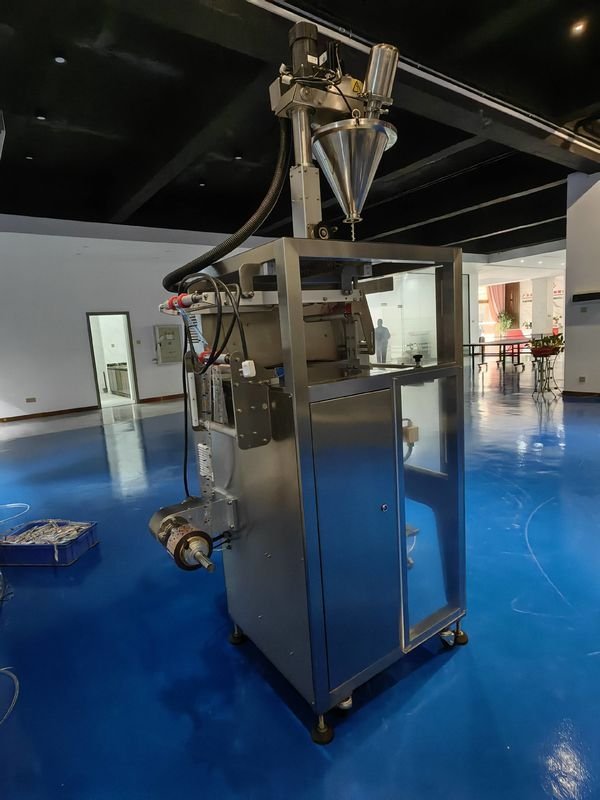
This is the starting point. Systems are designed to gently and reliably handle your specific product form—be it delicate pharmaceutical granules, hygroscopic food powders, or viscous health supplement liquids. Vacuum conveyors, vibratory feeders, and screw feeders ensure a consistent, controlled supply to the filling station.
2. Intelligent Filling & Dosing Machines
The heart of the line. Advanced fillers use technologies like auger filling for powders, piston filling for liquids and pastes, and volumetric cup filling for granules. Integrated checkweighers provide real-time feedback, making micro-adjustments to maintain fill weight within a fraction of a gram, a critical factor for high-value pharmaceutical products.
3. High-Speed Form-Fill-Seal (FFS) Technology
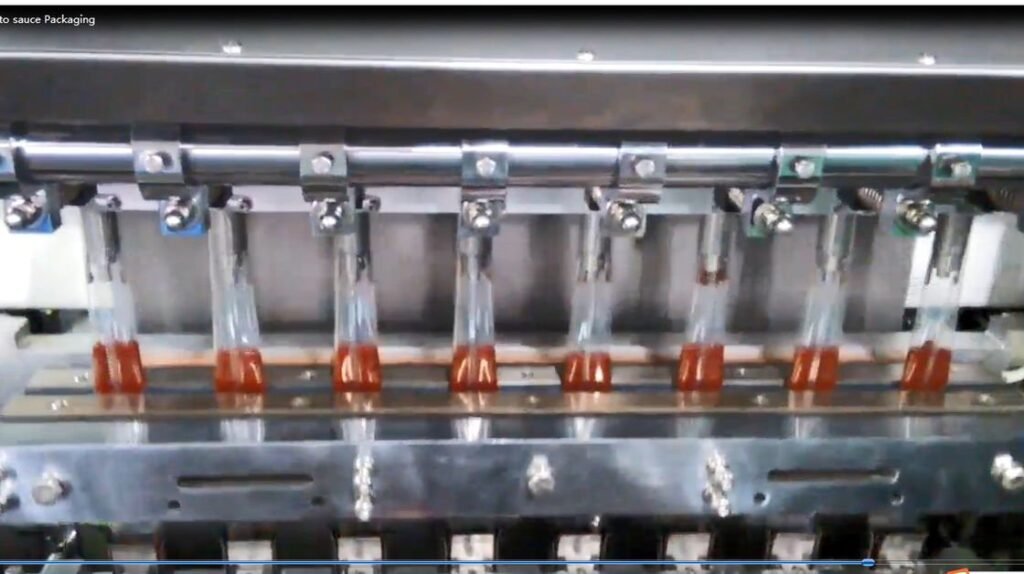
This technology creates the package from a roll of film, fills it, and seals it in one continuous operation. It is ideal for producing stick packs, sachets, and pouches. Modern multi-lane FFS machines can produce hundreds of packs per minute, offering unparalleled speed and material efficiency for items like instant drink mixes, single-dose medicaments, or condiment portions.
4. Secondary Packaging & Robotics
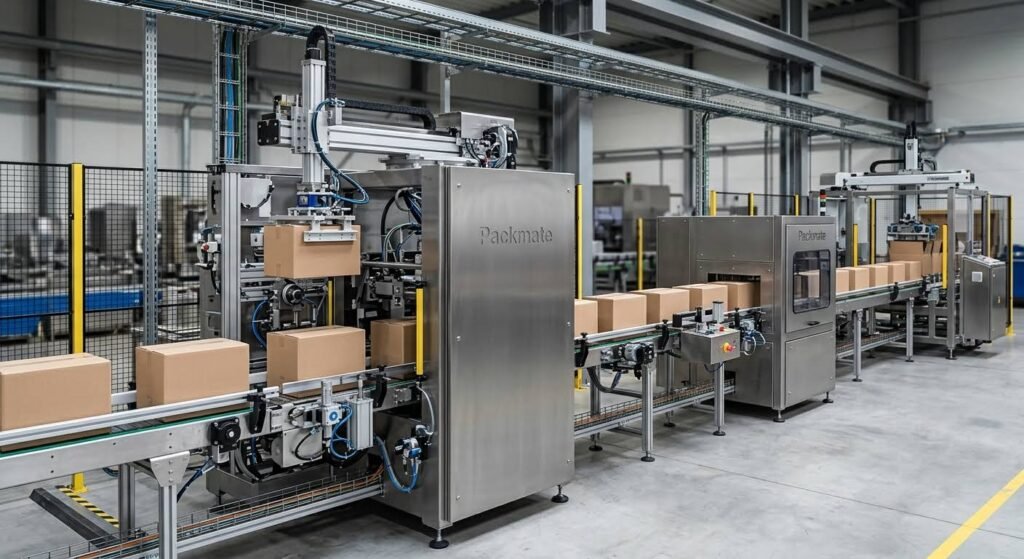
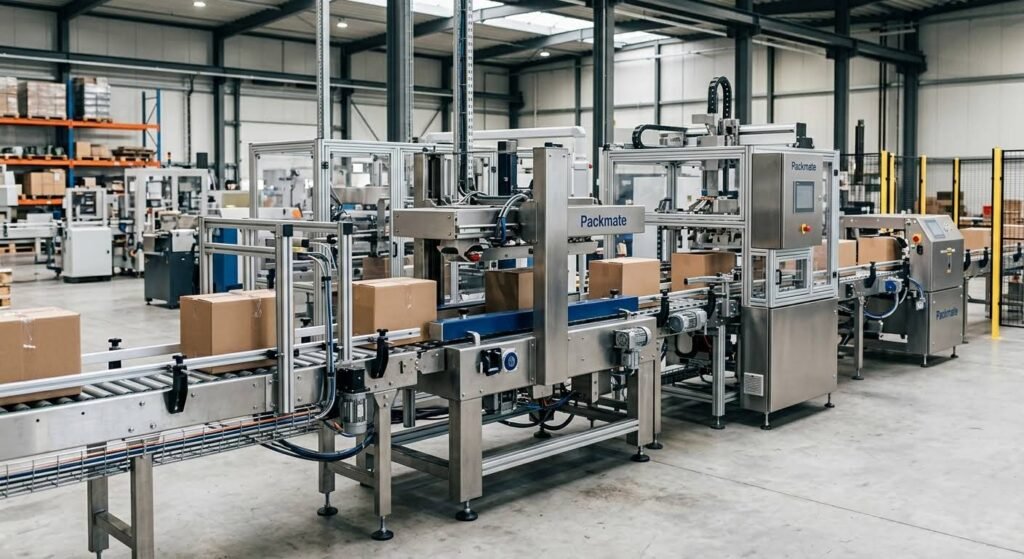
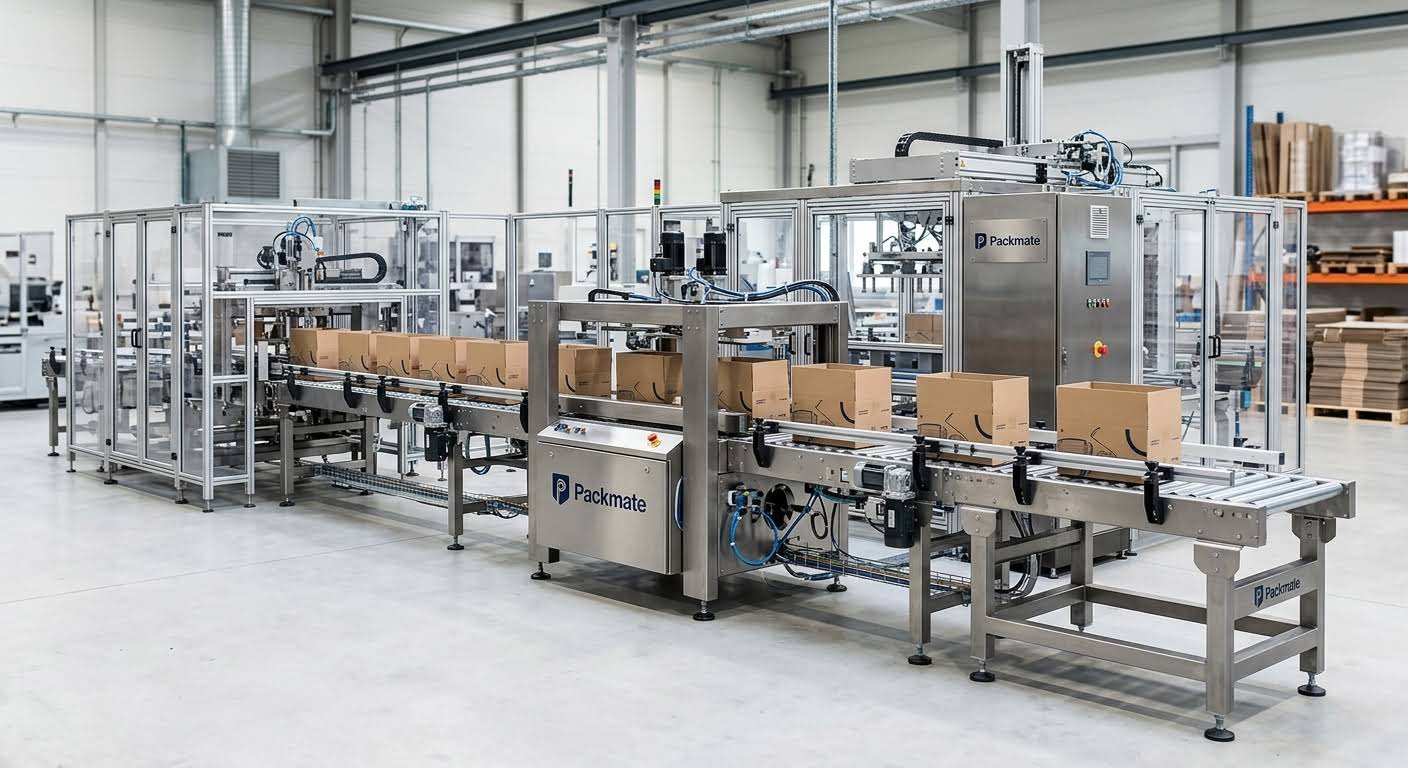
Once primary packaging is complete, automation takes over again. Robotic arms or cartoners collate individual sachets or sticks into boxes, apply labels, and bundle them for shipping. Vision systems inspect for correct labeling, proper sealing, and even print quality, ensuring every unit that leaves the line is perfect. Explore real-world applications in our detailed project case studies.
5. The Central Nervous System: Integrated Control & HMI
All components are governed by a centralized Programmable Logic Controller (PLC) and a user-friendly Human-Machine Interface (HMI). This system monitors every aspect of the line—speed, temperature, pressure, fill weight—and provides operators with clear diagnostics, production reports, and the ability to change recipes at the touch of a screen.
Tailored Solutions for Each Industry
While the principles of automation are universal, their application must be tailored to meet the specific demands of each vertical.
Food Industry Automation
Focus: High-speed production, cost-effectiveness, and flexibility for diverse products (powders, granules, liquids).
Key Features: Machines built with food-grade stainless steel (SS304/SS316), easy disassembly for cleaning, and compatibility with various packaging materials. Lines often incorporate nitrogen flushing to extend shelf life for snacks or coffee.
Example Application: A fully automated line for packaging soup bases or spice blends into stick packs, featuring multi-head weighers for accuracy and high-speed cartoning.
Pharmaceutical & Nutraceutical Automation
Focus: Aseptic or hygienic design, absolute accuracy, and full compliance with cGMP standards.
Key Features: Isolator technology, CIP/SIP systems, validated cleaning protocols, and comprehensive data logging for audit trails. Precision is paramount, often requiring micro-dosing capabilities for active ingredients.
Example Application: An isolator-based sachet packaging line for effervescent tablet granules or powdered supplements, ensuring zero cross-contamination and perfect moisture barrier properties.
Health & Personal Care Automation
Focus: Attractive packaging, product protection, and handling of diverse consistencies (creams, gels, powders).
Key Features: Versatile filling systems for viscous products, integration with high-quality printing for branding, and gentle handling to preserve product structure (e.g., probiotic powders).
Example Application: A liquid filling line for single-use shampoo sachets or a stick pack line for collagen peptide powders, combining aesthetic appeal with robust barrier protection.
Implementing Your Automation Strategy: A Partner-Centric Approach
Successfully deploying a factory automation solution requires more than just purchasing machines. It demands a partnership with a provider who understands your entire process. A leader in this field, such as Packmate (GuangDong) Co., Ltd., brings over two decades of experience in delivering intelligent, turnkey packaging lines. The journey typically involves:
1. Consultation & Needs Analysis: Experts analyze your product, desired output, and facility constraints to recommend the optimal line configuration.
2. Design & Engineering: Custom solutions are engineered, often using 3D modeling, to ensure perfect fit and function within your existing plant layout.
3. Factory Acceptance Testing (FAT): You witness the complete line running with your materials at the supplier’s facility, verifying performance before shipment.
4. Installation & Commissioning: Skilled technicians install the line on-site, calibrate all systems, and train your operators to ensure a smooth handover.
5. Ongoing Support & Service: Reliable after-sales support, including readily available spare parts and remote diagnostics, is crucial for maximizing uptime. Learn more about our commitment to customer success on our dedicated service page.
Conclusion: The Future is Automated, Integrated, and Intelligent
The integration of factory automation solutions in food, pharmaceutical, and health packaging is no longer a forward-looking concept—it is the operational standard. These systems deliver the unparalleled hygiene, precision, and efficiency required to thrive in today’s demanding markets. By partnering with an experienced provider who offers end-to-end solutions, from initial design to lifelong support, manufacturers can unlock new levels of productivity, ensure unwavering quality, and build a resilient, future-ready operation. For a comprehensive overview of our capabilities and machine portfolio, we invite you to download our latest technical catalog.
Frequently Asked Questions (FAQs)
1. What is the typical ROI period for an automated packaging line?
Return on Investment (ROI) varies based on line complexity, output, and labor costs saved. However, for medium to high-volume production, many businesses see a full ROI within 12 to 24 months due to dramatic increases in output, reduced waste, and lower operational costs.
2. Can an automated line handle frequent product changeovers?
Yes, modern lines are designed for flexibility. With quick-change parts and recipe management on the HMI, changeover times for similar product formats (e.g., switching from a 10g to a 15g sachet) can often be achieved in under 30 minutes, minimizing downtime.
3. How does automation ensure compliance with pharmaceutical GMP?
Automated systems provide electronic batch records with audit trails, enforce validated parameter ranges (like fill weight and sealing temperature), and limit operator access to critical settings. This built-in control is essential for demonstrating compliance during regulatory inspections.
4. What level of technical expertise is required to operate these lines?
While the underlying technology is sophisticated, the HMI is designed for intuitive operation. Comprehensive training is provided during commissioning. Day-to-day tasks are simplified, and the system provides clear fault diagnostics, reducing the dependency on highly specialized technicians for routine operations.
5. Can you integrate our existing packaging machines into a new automated line?
In many cases, yes. A skilled automation provider can often retrofit new control systems, feeders, or robots to work with your existing core machines, creating a hybrid solution that upgrades your capability and extends the life of your current assets in a cost-effective manner.