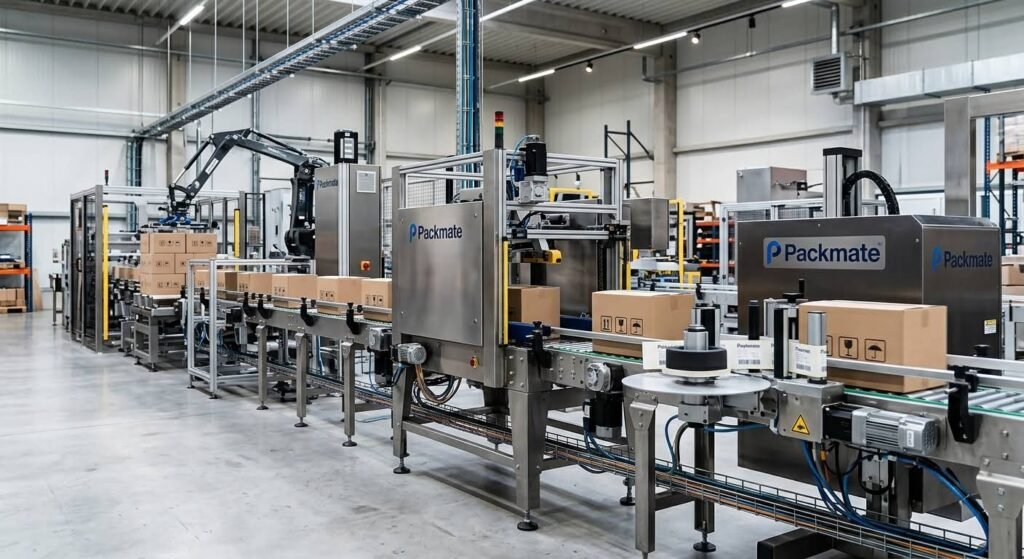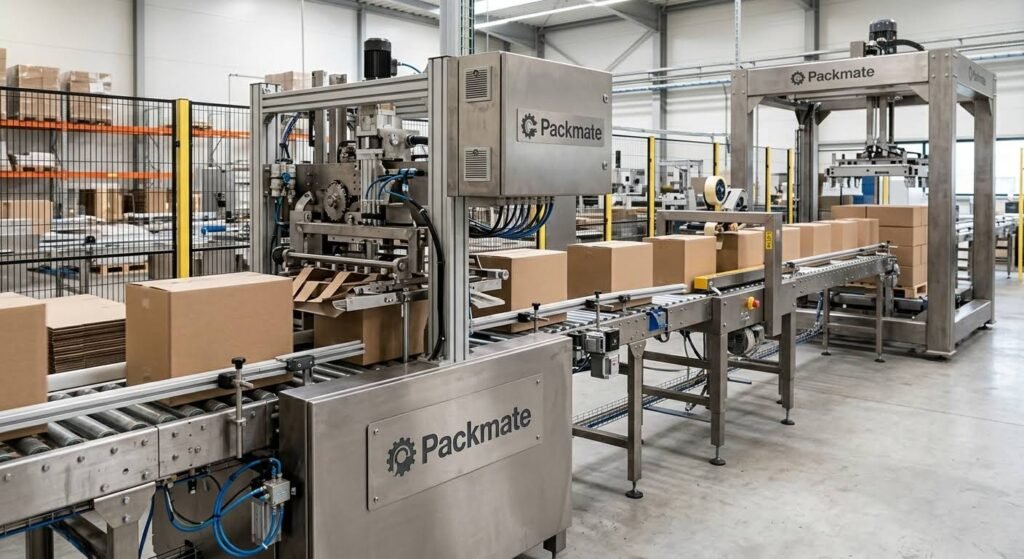
In today’s competitive manufacturing landscape, speed, precision, and hygiene are not just advantages—they are absolute necessities. For producers in the food, pharmaceutical, and health product sectors, the packaging line is the final and often most critical stage of production. It is the point where product integrity meets market presentation, and any bottleneck or inconsistency can have significant financial and reputational consequences. This is where investing in a high-speed, automated packaging line transitions from an operational upgrade to a strategic imperative for business growth and compliance.

The Core Drivers for High-Speed Packaging Automation
The shift towards automation is driven by several converging pressures that modern manufacturers face daily.
Uncompromising Demand for Efficiency and Output
Market demands and just-in-time production models require manufacturers to scale output rapidly without compromising on quality. A high-speed packaging line dramatically increases throughput, handling thousands of units per minute with consistent accuracy. This capability is essential for meeting large-volume orders, managing seasonal spikes, and maximizing the return on investment from upstream production processes.
Key Benefit: By automating the pick, fill, and seal processes, companies can achieve output increases of 200% to 300% compared to semi-automatic or manual lines, directly boosting profitability.
Stringent Hygiene and Contamination Control
This is particularly non-negotiable in the pharmaceutical and health product industries. Regulations like cGMP (current Good Manufacturing Practice) mandate controlled environments to prevent contamination. Modern high-speed lines are designed with sanitary stainless-steel construction, clean-in-place (CIP) systems, and enclosed operational zones that minimize human contact, thereby drastically reducing the risk of particulate or biological contamination.
Precision and Consistency in Every Package
Manual packaging is inherently variable. Automated systems eliminate this inconsistency. Advanced weigh-fillers, volumetric fillers, and vision inspection systems ensure that every sachet, stick pack, or bottle contains the exact specified amount. This precision is crucial for consumer trust, regulatory compliance (especially in pharmaceuticals where dosage is critical), and cost control by minimizing product give-away.
Tailored Solutions for Key Industries
A one-size-fits-all approach does not work in precision manufacturing. The optimal packaging solution must be tailored to the specific physical characteristics of the product and the regulatory environment of the industry.
Food Industry Applications
From instant coffee granules and soup powders to liquid seasonings and sauces, food products demand versatility. High-speed lines for food must handle a range of formats—stick packs for single-serve portions, sachets for powders, and larger pouches for bulk items. Key considerations include material compatibility (barrier properties for freshness), quick changeover capabilities for different product runs, and integration with nitrogen flushing systems to extend shelf life. You can explore specific applications in our detailed packaging solutions portfolio.
Pharmaceutical & Nutraceutical Packaging
Here, the stakes are at their highest. Packaging lines must be validated to meet strict regulatory standards. They often handle potent powders, granules for sachets, or liquid supplements. Features like dust extraction systems, precision micro-dosing fillers, and 100% in-line checkweighing are standard. The ability to produce child-resistant or senior-friendly packaging, and to integrate serialization for track-and-trace mandates, is increasingly important. The reliability of such systems is paramount, as demonstrated in various global project case studies.
Health & Wellness Products
This fast-growing sector includes protein powders, herbal supplements, electrolyte mixes, and CBD products. Packaging needs to be robust to protect the product, aesthetically appealing for retail, and efficient for high-volume production. Stick pack and sachet machines are extremely popular for single-dose convenience, while larger pouches with resealable zippers cater to the home-use market. Speed and flexibility to switch between different product types are key competitive advantages.
Beyond the Machine: The Value of a Turnkey Partner
Purchasing a high-speed packaging line is a significant investment. The greatest value often comes not just from the equipment, but from the partnership with the provider. A true partner like Packmate (GuangDong) Co., Ltd. offers a turnkey solution. This encompasses:
- Customized Line Design: Engineering a layout that fits your factory floor and workflow.
- Integration & Installation: Seamlessly connecting fillers, sealers, coders, and inspection systems.
- Comprehensive Training: Ensuring your team can operate and perform basic maintenance.
- Ongoing Support & Service: Providing spare parts, remote diagnostics, and technical support to maximize uptime.
This holistic approach, backed by over 22 years of company development, ensures the line delivers its promised return on investment from day one.
Key Components of a Modern High-Speed Line
Understanding the core modules helps in specifying the right system.
1. Feeding & Dosing Systems
The heart of accuracy. Choices include auger fillers for powders, volumetric pumps for liquids, and weigh-cell fillers for high-value products. Multi-lane systems allow simultaneous filling of multiple stick packs or sachets, multiplying output.
2. Packaging Material Handling & Forming
High-precision servo motors control the web of packaging film, forming it into precise tubes or pouches. This stage requires exceptional mechanical stability to maintain seal integrity at high speeds.
3. Sealing Technology
Constant heat control systems ensure perfect seals every time, whether using flat jaws or rotary sealing wheels. This prevents leaks and maintains product barrier properties.
4. In-Line Inspection & Quality Control
Vision systems check for print registration, seal integrity, and fill levels. Checkweighers reject under or over-filled packages. This automated QC is essential for achieving zero-defect targets and avoiding costly recalls.
5. Control System & HMI
The brain of the operation. A user-friendly Human-Machine Interface (HMI) allows for easy recipe changes, speed adjustments, and provides real-time data on output, efficiency (OEE), and fault diagnostics for proactive maintenance.
Implementing Your High-Speed Solution: A Roadmap
Successfully integrating a new packaging line requires careful planning.
Phase 1: Needs Analysis & Specification. Collaborate with your provider to define required speed, package types, changeover frequency, and compliance needs. Reviewing a provider’s equipment catalog is a good starting point.
Phase 2: Factory Acceptance Test (FAT). Witness the line running at the manufacturer’s facility with your actual or representative product to verify performance before shipment.
Phase 3: Installation & Site Acceptance Test (SAT). Expert engineers install and commission the line in your facility, training your staff and ensuring it meets all agreed performance criteria on-site.
Phase 4: Long-Term Performance & Support. Leverage the provider’s service and support network for spare parts, preventive maintenance, and upgrades to keep the line running at peak efficiency for years.
For manufacturers aiming to lead in the food, pharmaceutical, and health product markets, the packaging line is a pivotal competitive frontier. By partnering with an experienced provider to implement a tailored, high-speed automated solution, companies can secure the trifecta of unmatched productivity, flawless quality assurance, and unwavering regulatory compliance, paving the way for sustainable growth and market leadership.
Frequently Asked Questions (FAQs)
1. What is the typical lead time for a custom high-speed packaging line?
Lead times vary based on complexity and customization. A standard configured line may take 12-16 weeks from order to shipment, while a fully custom-engineered solution can take 20-24 weeks. A detailed project timeline is provided after the initial technical review.
2. How do you ensure the line will work with our specific product (e.g., a sticky powder or abrasive granule)?
We conduct product tests in our application lab whenever possible. Using a sample of your product, we run trials on relevant machine modules (like fillers) to determine the best technical approach (e.g., specific hopper design, auger type, or nozzle coating) to ensure reliable, consistent performance.
3. Can the packaging line be integrated with our existing production equipment (e.g., mixers or conveyors)?
Yes, integration is a core part of our turnkey service. Our engineering team will design the necessary interfaces for mechanical connection, electrical communication (via PLC), and data exchange to create a seamless production flow from upstream processing to final packaged goods.
4. What kind of training and ongoing support do you provide?
We provide comprehensive on-site training for operators, mechanics, and line supervisors during commissioning. This covers operation, routine maintenance, troubleshooting, and safety. Ongoing support includes a dedicated service contact, remote diagnostic assistance, and a reliable supply of genuine spare parts to minimize downtime.
5. How is the energy consumption and operational noise level of a high-speed line?
Modern lines are designed for energy efficiency, utilizing servo-drive technology which consumes power more intelligently than traditional mechanical systems. Noise levels are significantly reduced through optimized machine design, sound-dampening enclosures, and vibration isolation, typically operating within standard factory noise regulations.
For more questions, please visit our dedicated FAQs page.