In today’s fast-paced manufacturing landscape, efficiency, hygiene, and reliability are non-negotiable, especially for industries handling consumable products. For businesses in the food, pharmaceutical, and health & wellness sectors, the packaging line is the critical final link between production and the consumer. An automatic packaging production line is no longer a luxury but a strategic necessity to ensure product integrity, meet stringent regulatory standards, and achieve scalable growth. These integrated systems handle everything from precise dosing and forming to sealing, coding, and cartoning, all with minimal human intervention.
The Critical Role of Automation in Sensitive Industries
The shift from semi-automatic to fully automatic lines represents a fundamental evolution. Manual or semi-automated processes are prone to inconsistencies, higher contamination risks, and bottlenecks that limit output. A fully integrated automatic line transforms these challenges into strengths.
Key Benefits of Automated Packaging Lines:
- Unmatched Consistency & Quality: Every package is filled, sealed, and labeled with robotic precision, eliminating human error and ensuring every product meets exact weight, volume, and appearance specifications.
- Enhanced Hygiene & Safety: Closed systems and reduced human contact are paramount in food and pharmaceutical packaging. Automated lines minimize contamination risks, a core requirement for GMP (Good Manufacturing Practice) and HACCP compliance.
- Scalable Production Speed: From high-speed sachets for instant drink mixes to large bag fillers for bulk powders, these lines are engineered for volume, easily outpacing manual capabilities and adapting to demand surges.
- Significant Operational Savings: While the initial investment is considered, automation drastically reduces long-term labor costs, material waste from errors, and costly production downtime.
- Comprehensive Data & Traceability: Modern lines integrate with SCADA and MES systems, providing real-time data on output, efficiency (OEE), and maintenance needs. This is crucial for batch tracking and recall protocols in pharma.
Tailored Solutions for Food, Pharma, and Health Products
A one-size-fits-all approach fails in packaging. The requirements for packaging vitamin capsules differ vastly from those for seasoning granules or liquid supplements. Therefore, a true solution provider offers customized packaging line solutions engineered for specific product characteristics and industry regulations.
Food Industry Applications
Food packaging demands speed, freshness preservation, and appealing presentation. Automatic lines excel in packaging:
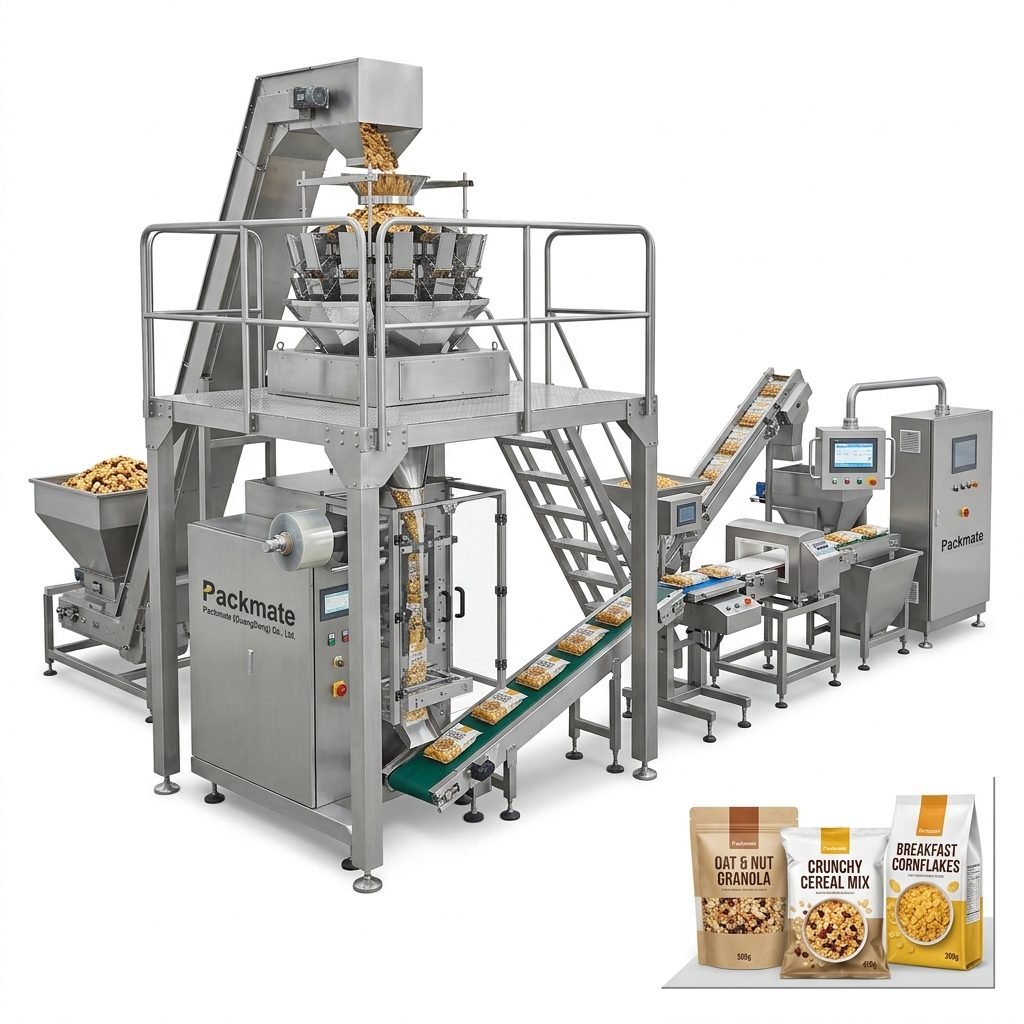
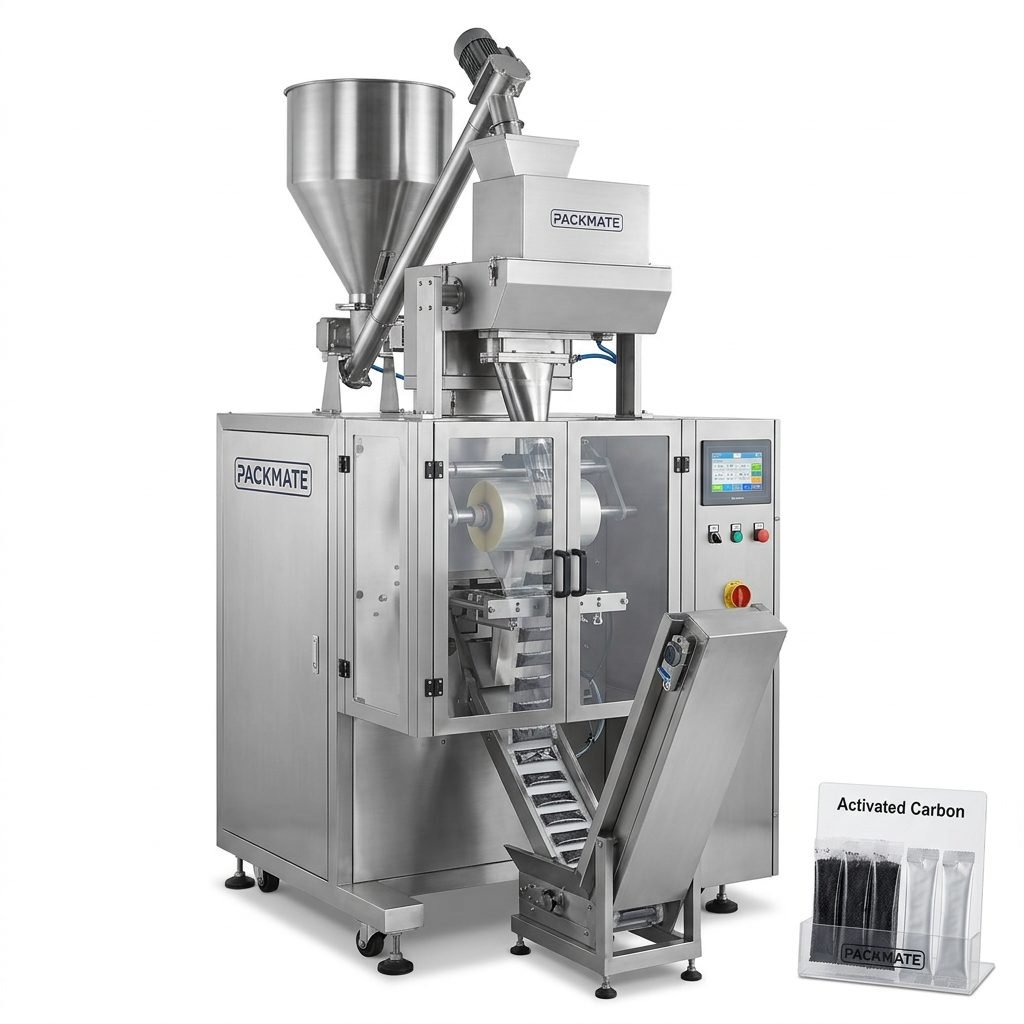
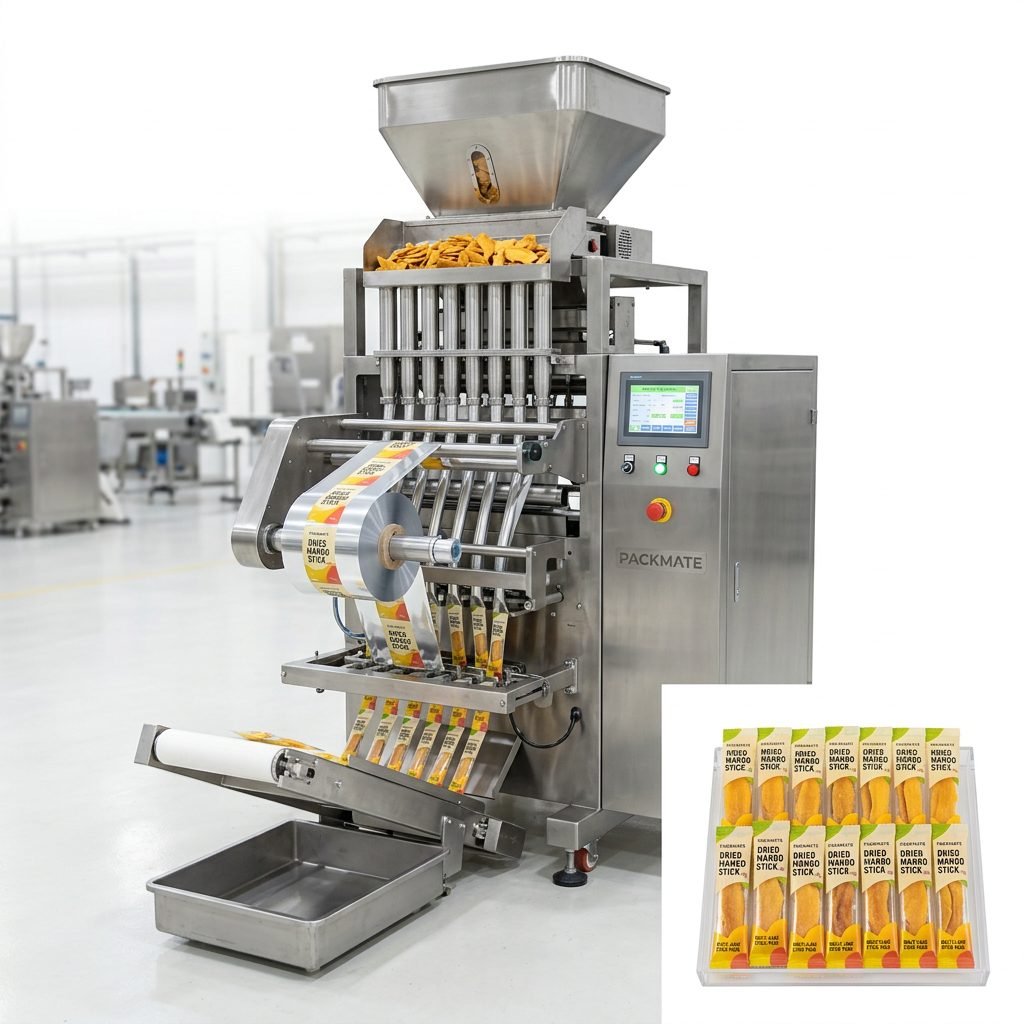
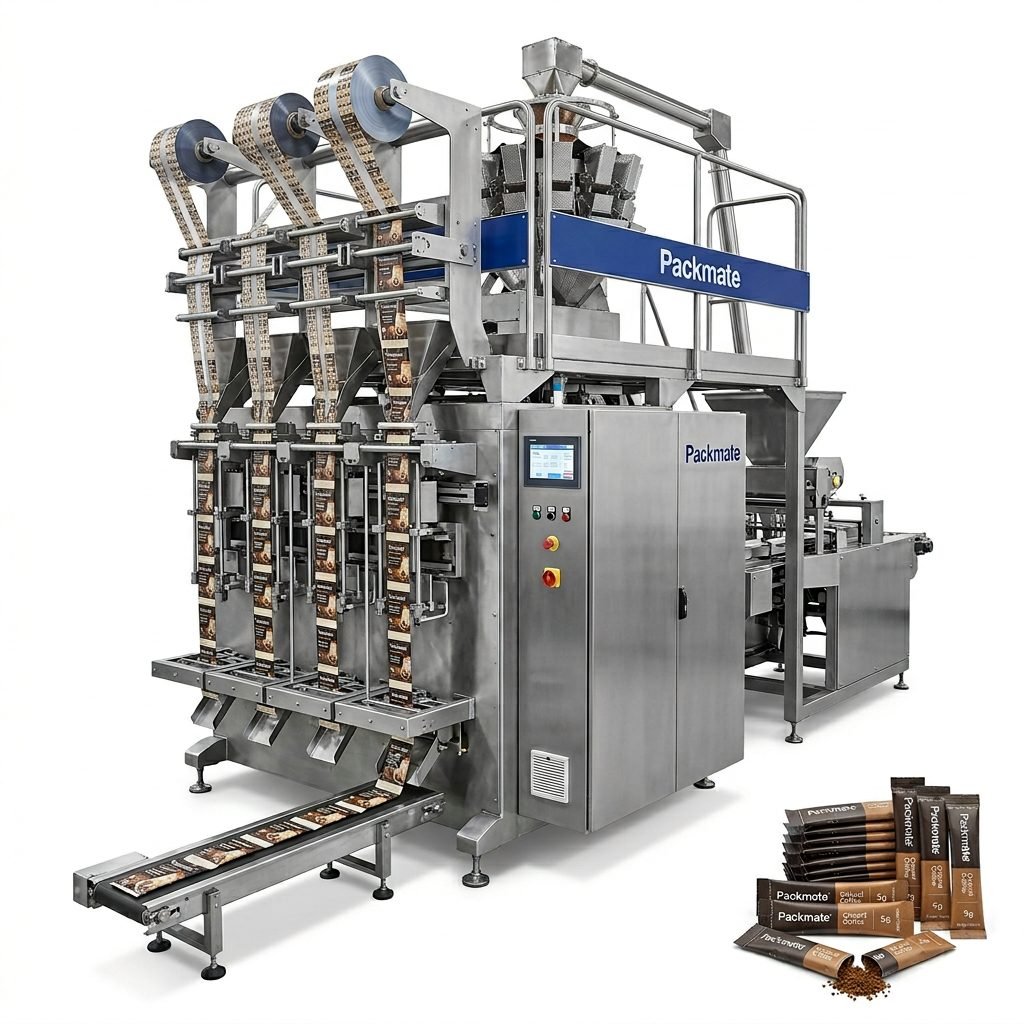
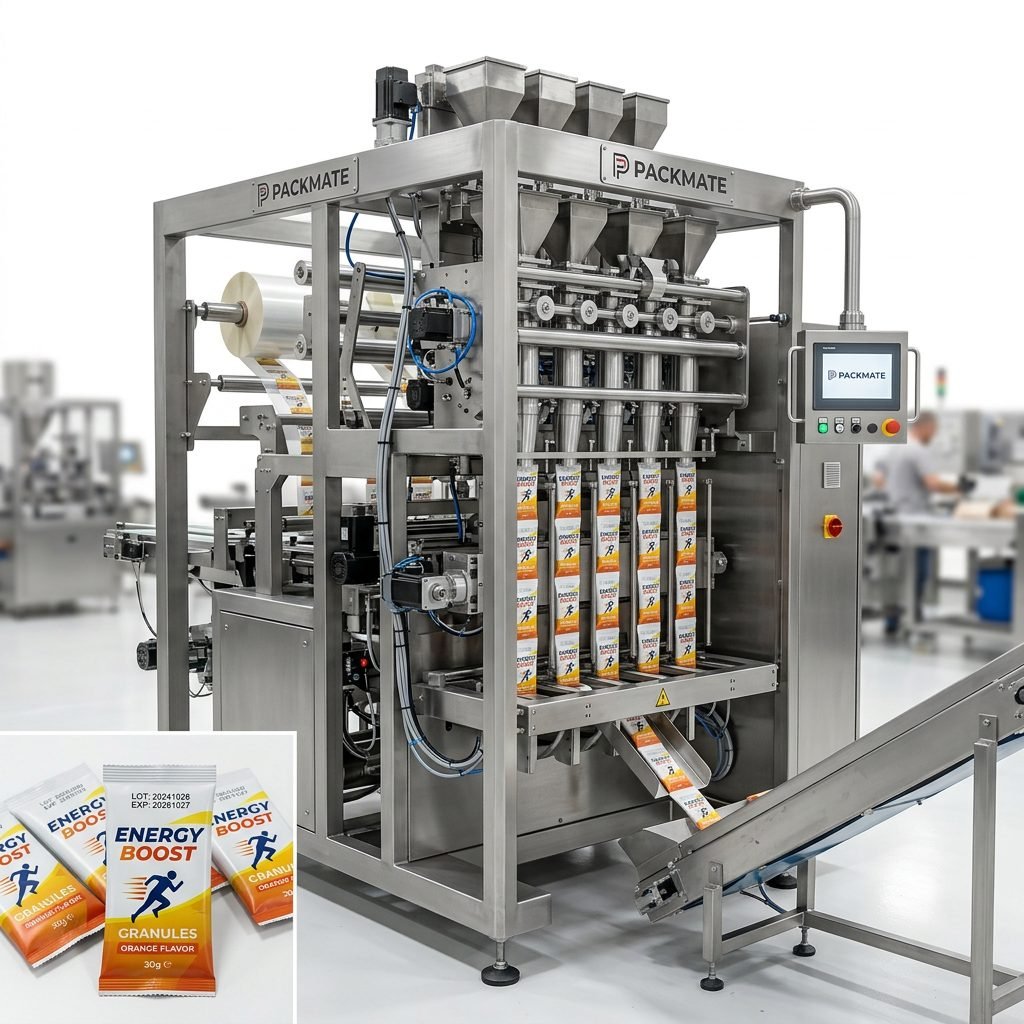
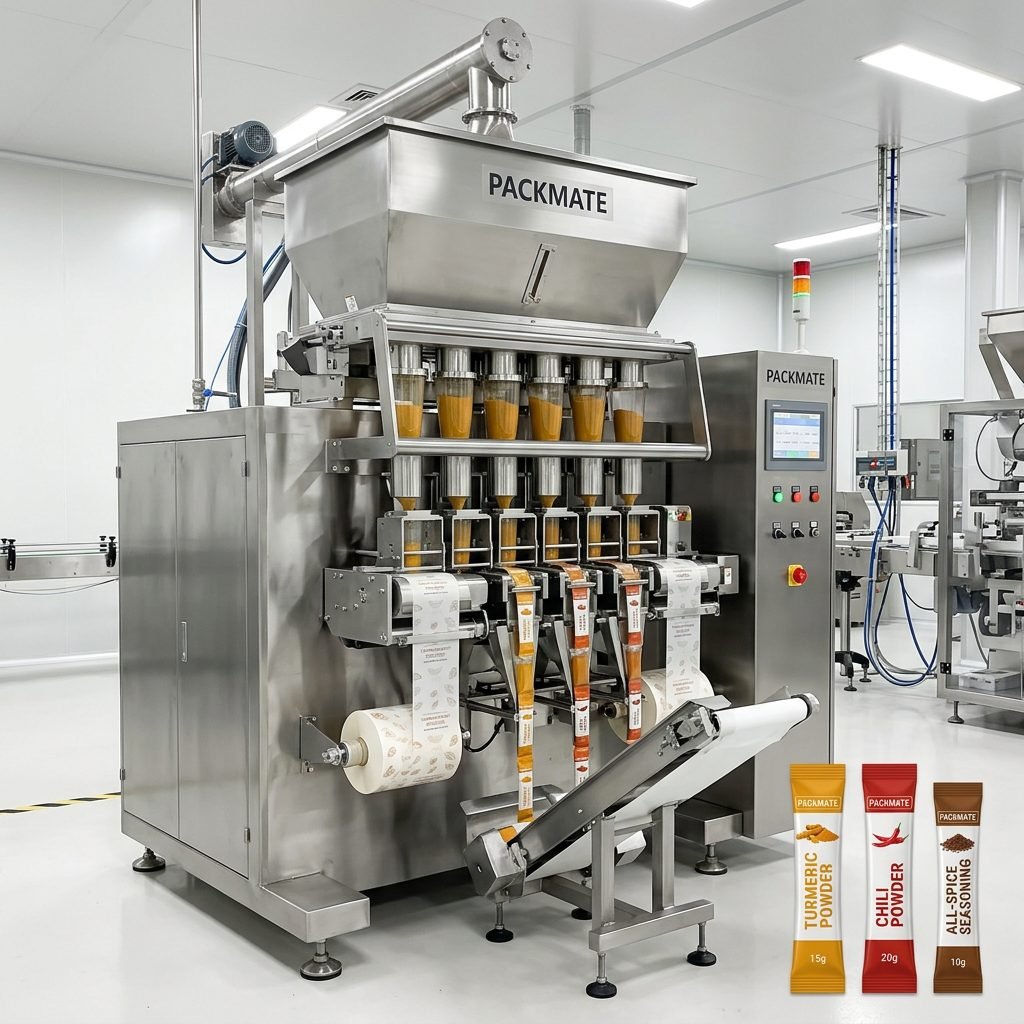
- Granules & Powders: (e.g., instant coffee, sugar, spices) using multi-head weighers and VFFS (Vertical Form Fill Seal) machines for stick packs or pouches.
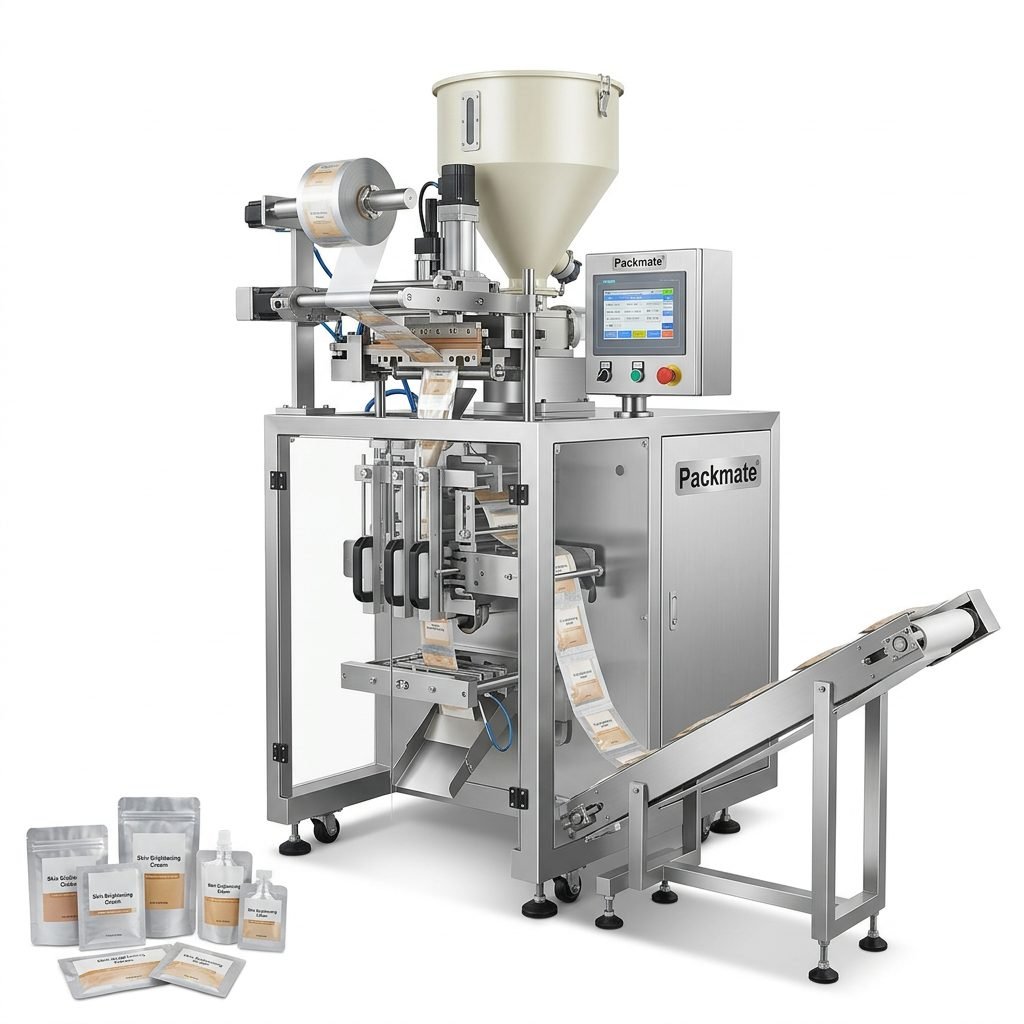
- Liquids & Pastes: (e.g., sauces, honey, edible oils) via precise liquid fillers and piston dosing systems.
- Snacks & Confectionery: using automated cartoning and flow-wrapping technology.
Hygienic design with easy-clean surfaces (e.g., stainless steel) and nitrogen flushing options for extended shelf life are standard features.
Pharmaceutical & Health Product Applications
This sector has the most rigorous standards. Packaging lines must ensure absolute product purity, accurate dosing, and tamper-evidence.
Critical Pharma Packaging Requirements:
- Aseptic & Cleanroom Compatibility: Machines designed for ISO Class 5-8 cleanrooms, with smooth surfaces and minimal particle generation.
- Precision Dosing: Micro-dosing capabilities for potent active ingredients in powders or liquids, with accuracy often within ±1%.
- Compliance-Driven Design: Built to facilitate validation (IQ/OQ/PQ), with full documentation and audit trails. Materials comply with FDA and EMA regulations.
- Serialization & Aggregation: Integration capabilities for printing and verifying unique serial codes (as per DSCSA, EU FMD) on primary and secondary packaging.
For health products like protein powders, herbal supplements, or effervescent tablets, the lines blend pharmaceutical-grade accuracy with the high-speed efficiency of food packaging. Discover how these principles are applied in real-world scenarios through our documented packaging project cases.
Core Components of a Modern Automatic Packaging Line
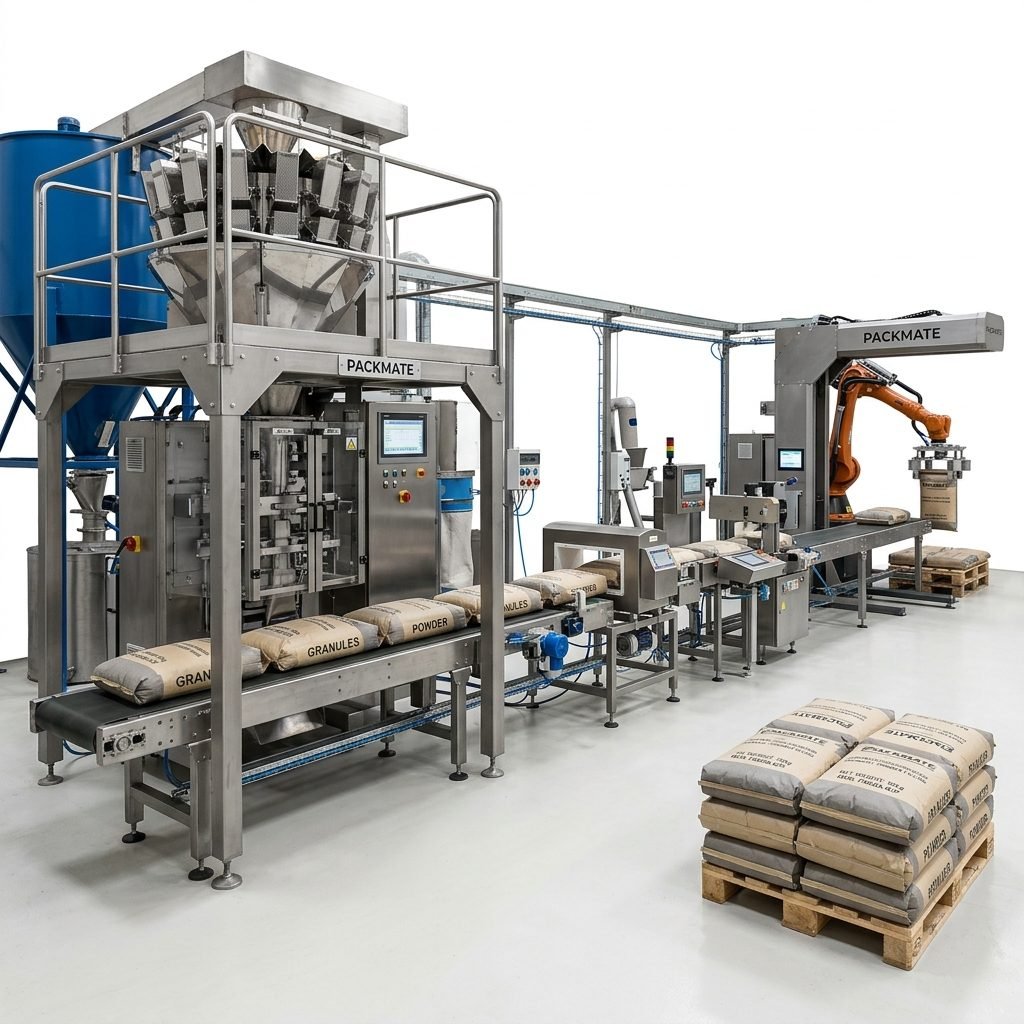
Understanding the line’s anatomy helps in planning. A typical turnkey system integrates several synchronized machines:
- Feeding & Dosing System: This could be a screw feeder, vibratory feeder, multi-head weigher, or precision piston filler, responsible for the accurate transfer of product.
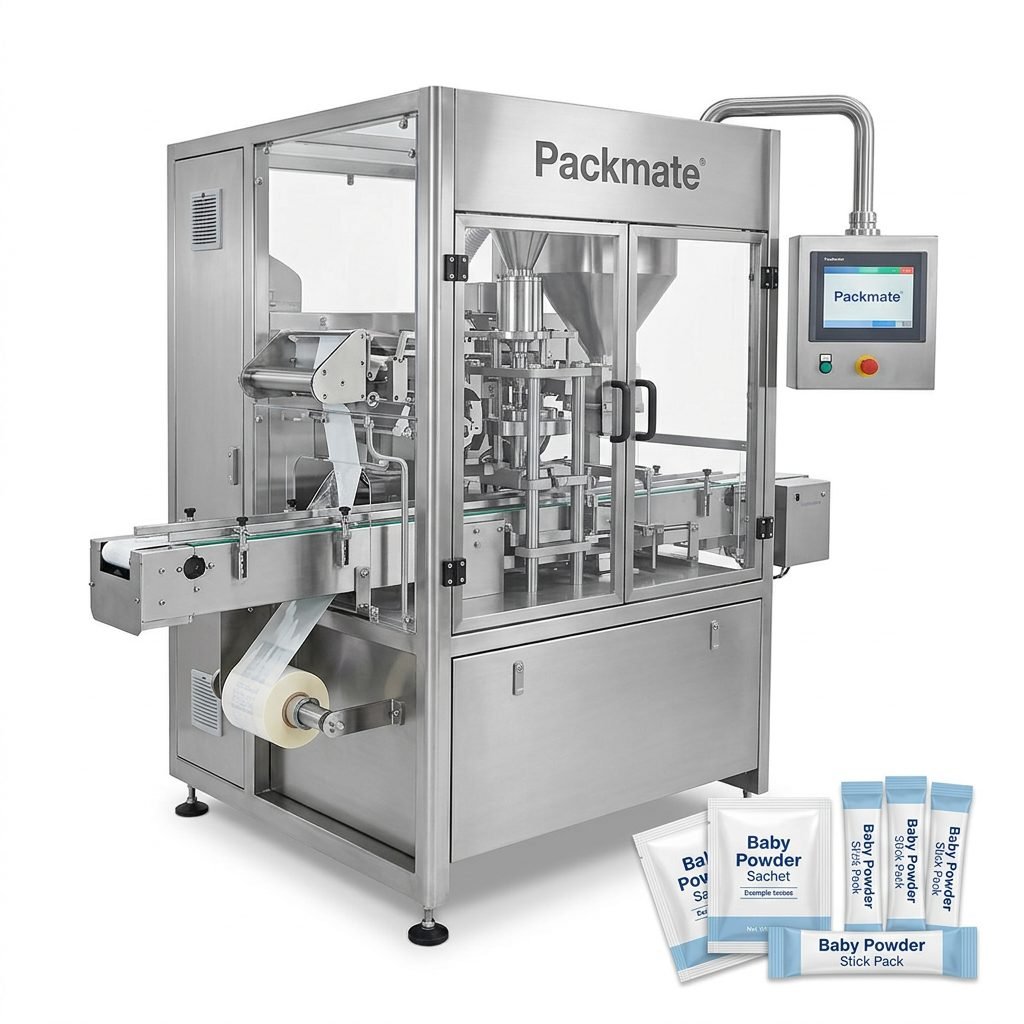
- Forming & Filling Machine (VFFS/HFFS): The heart of the line. It forms packaging from a roll of film (vertical or horizontal), fills the product, and seals the pouch or sachet.
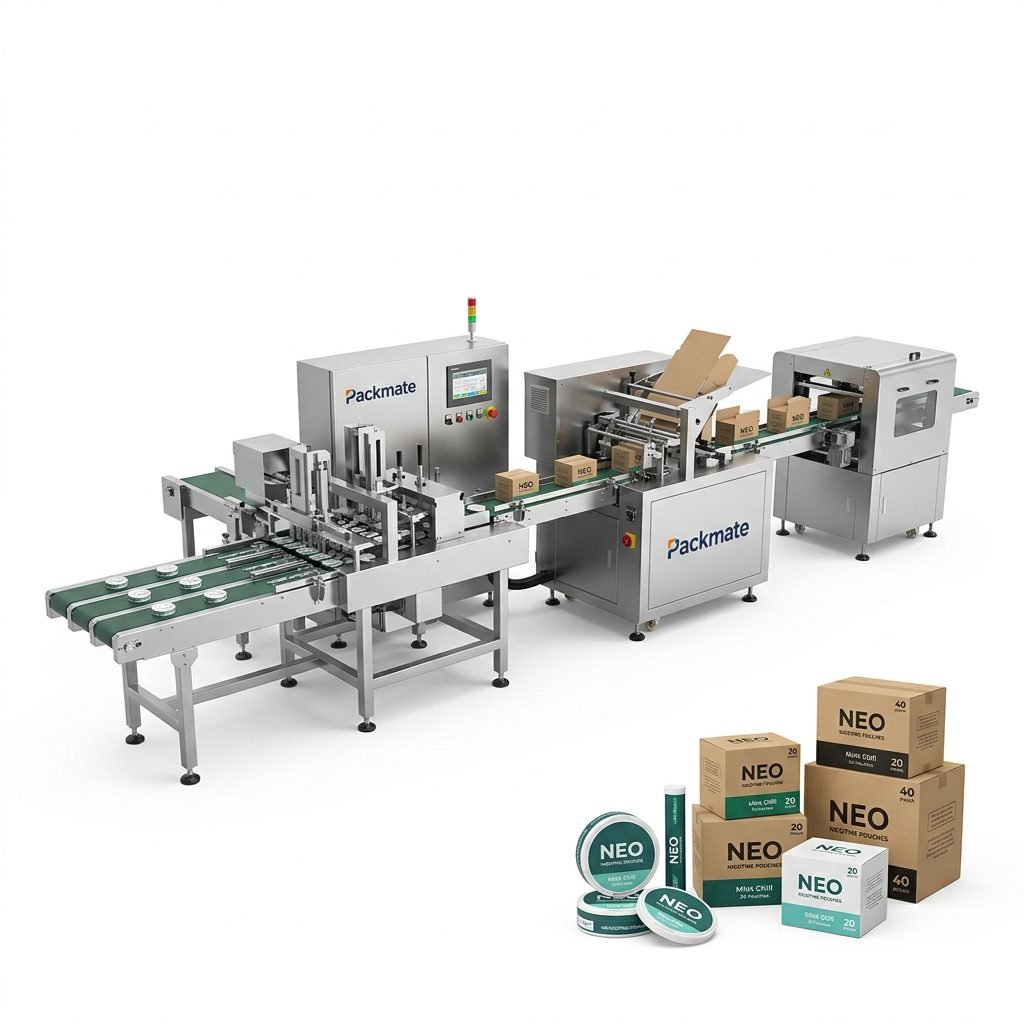
- Secondary Packaging: This includes cartoners, case packers, and bundlers that group primary packages for shipment.
- Labeling & Coding: Inkjet or laser coders print batch/expiry dates, while labelers apply necessary regulatory or branding information.
- Control & Inspection Systems: The brain of the operation. PLCs control the sequence, while checkweighers, metal detectors, and vision systems ensure quality and safety.
Choosing the Right Partner for Your Packaging Line
Investing in an automatic line is a major decision. The technology provider’s expertise is as crucial as the machinery itself. Key selection criteria include:
- Industry-Specific Experience: Proven track record in your specific sector (food, pharma, health).
- Turnkey Capability: Ability to design, manufacture, install, and commission the entire line, ensuring all components work in harmony. Learn more about our holistic approach on our About Us page.
- Compliance & Certification: Machines should come with necessary CE, UL, or other regional certifications, and be built to relevant industry standards.
- After-Sales Support: Comprehensive service, readily available spare parts, and operator training are vital for long-term uptime. Explore our commitment to this in our Service section.
- Scalability & Future-Proofing: The line should accommodate future product changes or output increases.
Companies like Packmate (GuangDong) Co., Ltd. exemplify this partner approach. With decades of focus on intelligent packaging solutions, they leverage deep application knowledge to deliver lines that are not just machines, but integrated productivity engines. You can review their credentials and corporate history in detail on their Company Profile.
Implementation and Integration: The Path to Operation
Successful deployment follows a structured process:
- Consultation & Requirement Analysis: Understanding your product, output goals, and facility constraints.
- Line Design & Simulation: Creating a detailed layout and flow simulation to optimize footprint and efficiency.
- Factory Acceptance Test (FAT): Witnessing the line run at the manufacturer’s facility before shipment.
- Installation & Site Acceptance Test (SAT): Expert engineers install and fine-tune the line at your plant.
- Training & Handover: Comprehensive training for your maintenance and operations teams.
Frequently Asked Questions (FAQs)
1. What is the typical lead time for a custom automatic packaging line?
Lead times vary significantly based on complexity and customization. A standard line may take 3-6 months from order to delivery, while highly complex, GMP-ready pharmaceutical lines can require 6-12 months. This includes design, manufacturing, and factory testing.
2. How do automatic lines handle different package sizes or products?
Modern lines are designed with changeover in mind. Quick-Change parts (like form-fill-seal jaws, dosing heads, and guides) allow operators to switch between similar package formats in minutes. For completely different products, a more extensive changeover may be needed, which is why modular design is key.
3. What kind of maintenance do these lines require?
Preventive maintenance is crucial. Daily cleaning and lubrication, weekly checks of seals and sensors, and monthly inspections of critical mechanical parts are standard. A reliable supplier provides a detailed maintenance schedule and training. Having a service contract ensures access to original spare parts and expert technicians.
4. Can my existing semi-automatic machine be integrated into a new automatic line?
Sometimes, but it depends. While possible in principle, integrating older machines often creates bottlenecks and control complexities. It’s generally more efficient to design a new, harmonized line where all components are matched for speed and communication, ensuring optimal Overall Equipment Effectiveness (OEE).
5. How is the ROI (Return on Investment) calculated for such an investment?
ROI is calculated by comparing the capital and operating costs of the new line against the savings and gains it generates. Key factors include: increased output per shift, reduction in labor costs, decrease in material waste (from overfilling/errors), lower rejection rates, and the value of improved traceability/compliance. Most businesses see a full ROI within 1-3 years.