Designing an efficient packaging line is a critical strategic decision for manufacturers in the food, pharmaceutical, and consumer goods sectors. The layout directly impacts throughput, operational costs, product quality, and scalability. A well-planned line is not merely a collection of machines; it is a synchronized system where material flow, human interaction, and control systems work in harmony. This guide provides a comprehensive framework for designing packaging lines that maximize efficiency, ensure compliance, and adapt to future needs.
Core Principles of Efficient Packaging Line Design
Before selecting equipment, foundational principles must guide the layout process. These principles ensure the line meets both current and future operational goals.
1. Optimize Material Flow
The primary goal is to create a smooth, logical, and uninterrupted flow of materials from infeed to palletizing. The ideal layout minimizes handling, backtracking, and cross-traffic. A U-shaped or linear layout is often preferred over a chaotic arrangement. Consider the entire journey of your primary packaging (e.g., bottles, sachets), secondary packaging (cartons), and tertiary packaging (shrink wrap, pallets).
2. Balance the Line
Line balancing involves matching the production speed of each machine or workstation to prevent bottlenecks and underutilization. The slowest machine dictates the overall line speed. Use time studies and throughput data to identify and address bottlenecks, ensuring each segment of the line operates at a complementary pace.
3. Incorporate Flexibility and Modularity
Market demands change. Designing a line with modular components allows for easier reconfiguration for different package sizes, shapes, or product types. This reduces changeover time and capital expenditure for new lines. Flexibility is key to responding to seasonal demands or new product launches.
4. Prioritize Safety and Ergonomics
A safe line is an efficient line. Design must include clear safety guards, emergency stops, and proper lockout/tagout points. Ergonomic considerations, such as adjustable workstations and easy access for maintenance, reduce operator fatigue and injury, leading to higher productivity and morale.
5. Plan for Maintenance and Access
Ample space must be allocated around equipment for routine maintenance, cleaning, and repair. This includes access panels, clearance for tool use, and safe pathways for technicians. Poor access leads to longer downtime and increased maintenance costs.
Sector-Specific Layout Considerations
While principles are universal, their application varies significantly across industries due to regulatory, product, and market factors.
Food & Beverage Packaging Lines
Hygiene is paramount. Layouts must facilitate easy and thorough cleaning (CIP/SIP where possible) with stainless steel surfaces, sloped floors, and drains. Zones should be defined for raw material handling, processing, and packaging to prevent cross-contamination. Speed and efficiency are critical for high-volume products like snacks or beverages, often requiring high-speed cartoners and robotic palletizers. For more on tailored solutions, explore our dedicated packaging solutions.
Pharmaceutical & Healthcare Packaging Lines
Compliance with cGMP (current Good Manufacturing Practice) and regulatory standards (FDA, EMA) dictates layout. Cleanroom classifications may require airlocks, HEPA filtration, and controlled personnel flow. Track-and-trace systems (serialization) must be integrated, requiring space for vision inspection, coding, and aggregation equipment. Product integrity and sterility are non-negotiable, influencing material choices and machine design.
Consumer Goods Packaging Lines
This sector demands high flexibility to handle diverse SKUs (Stock Keeping Units) and frequent changeovers. The layout must accommodate quick size adjustments on form-fill-seal machines, cartoners, and case packers. Aesthetic quality is crucial, so integration of high-resolution vision inspection for print and label alignment is common. Retail-ready packaging trends also influence secondary packaging equipment selection.
Key Stages in a Modern Packaging Line Layout
A typical automated line consists of several integrated stages. Understanding each helps in planning the overall flow.
1. Product Infeed & Handling
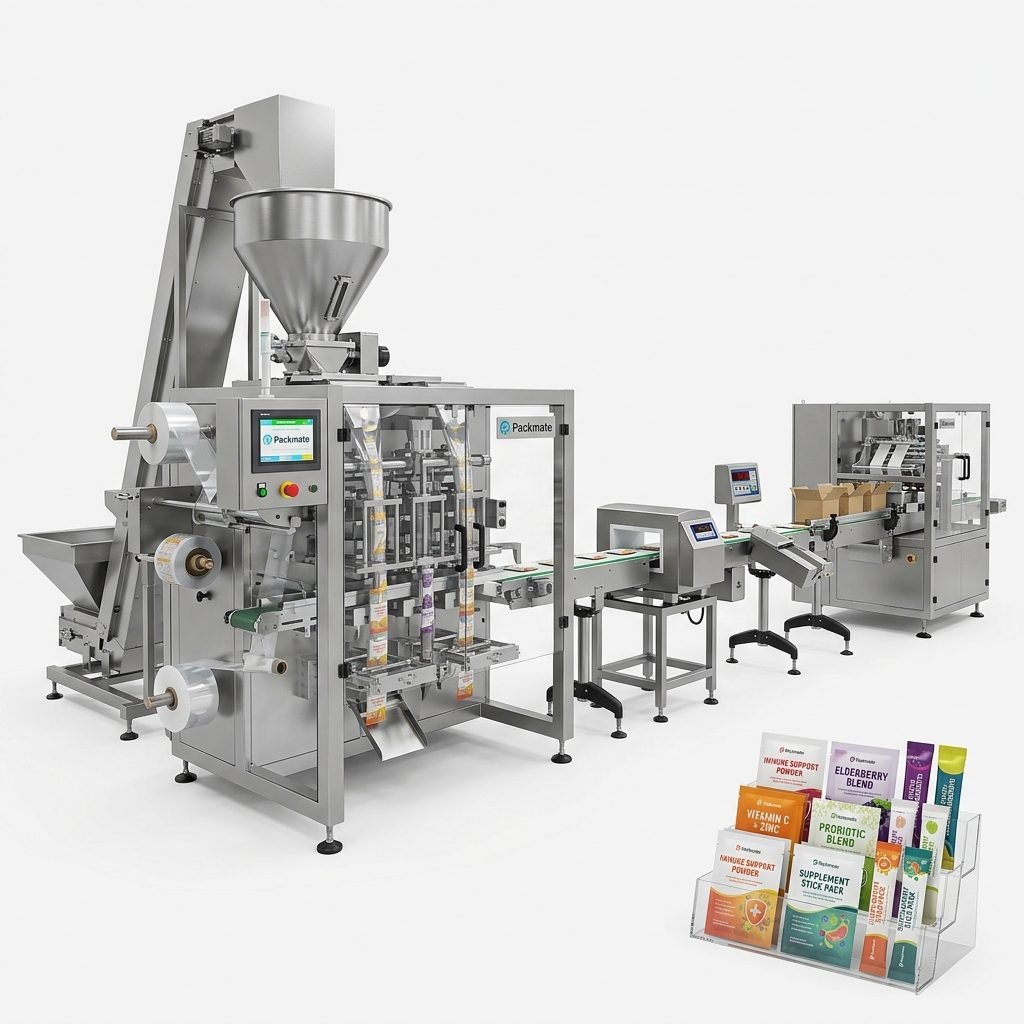
This is the starting point, where bulk product (granules, powder, liquids) or pre-formed containers are introduced. Systems include bulk bag unloaders, silos, elevators, or unscramblers. Layout must ensure consistent, controlled supply to the primary packaging machine.
2. Primary Packaging
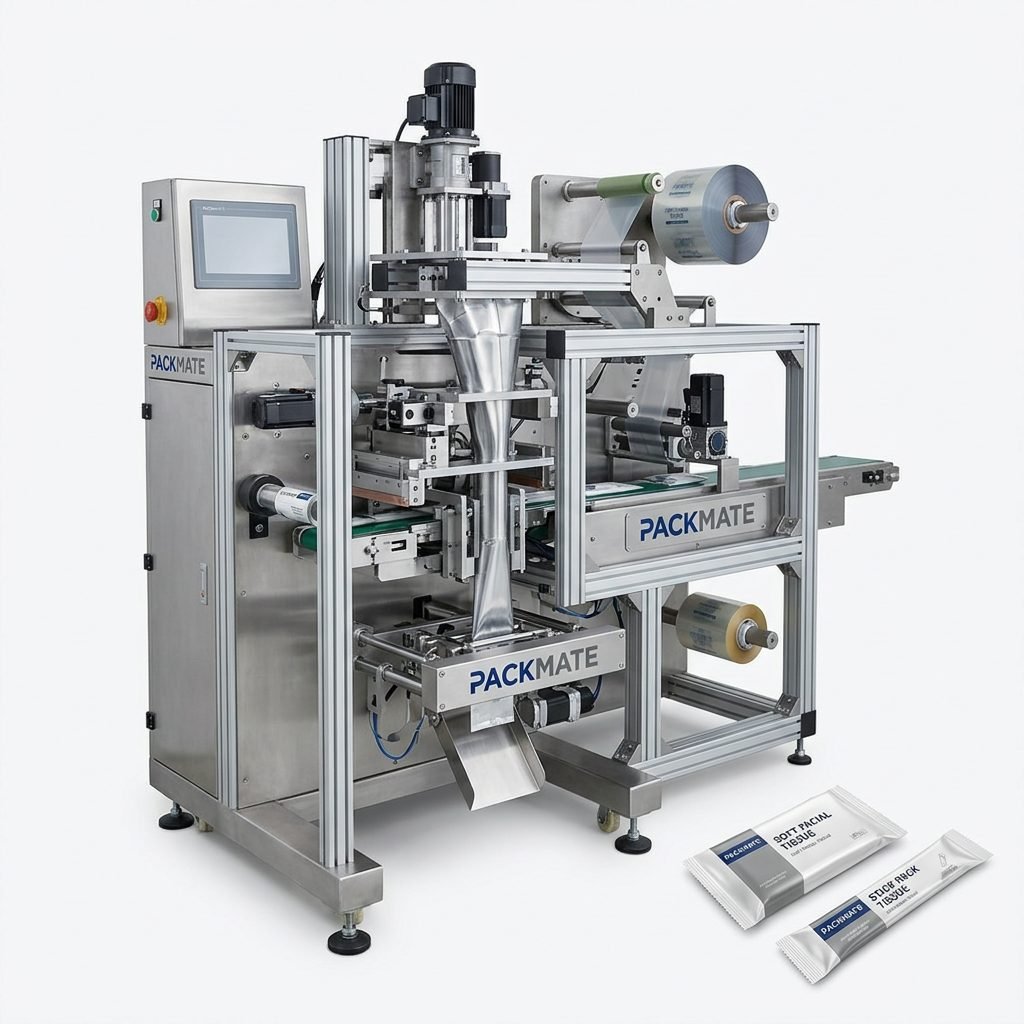
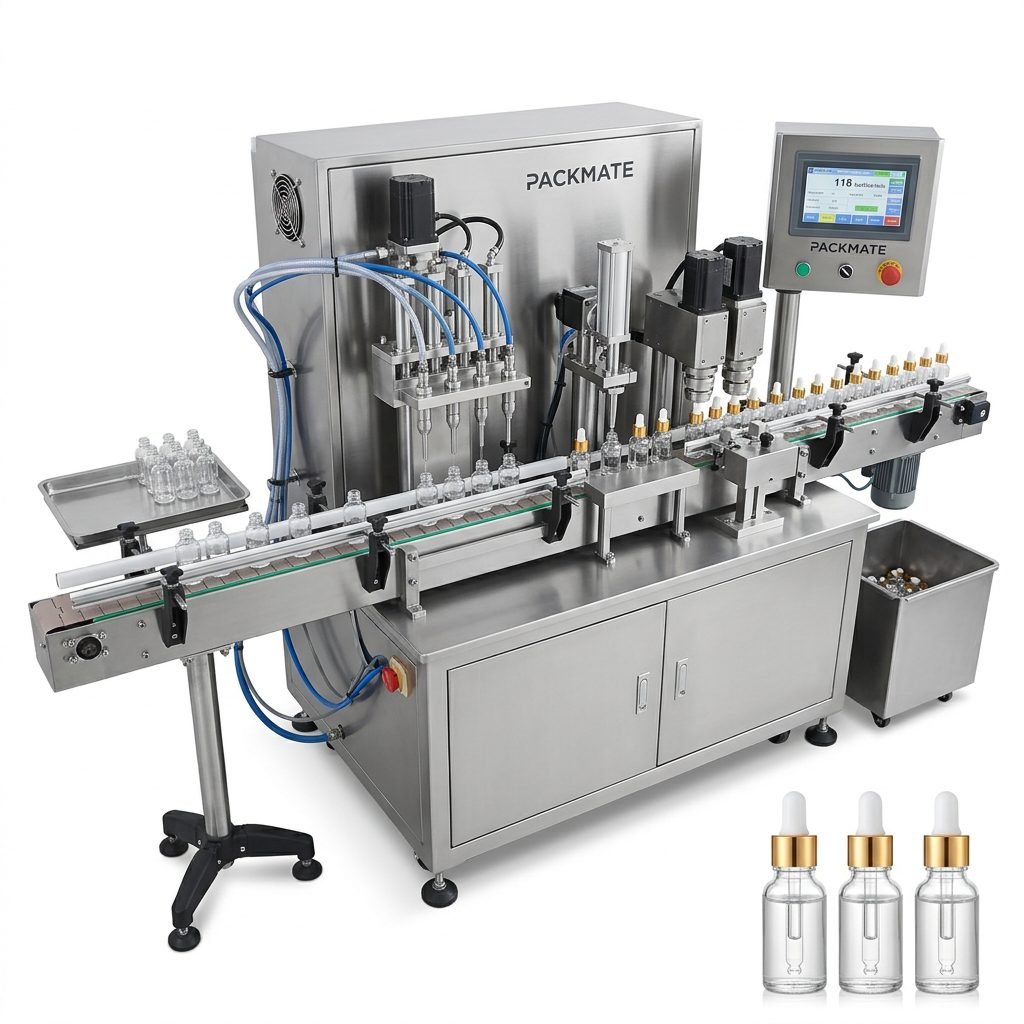
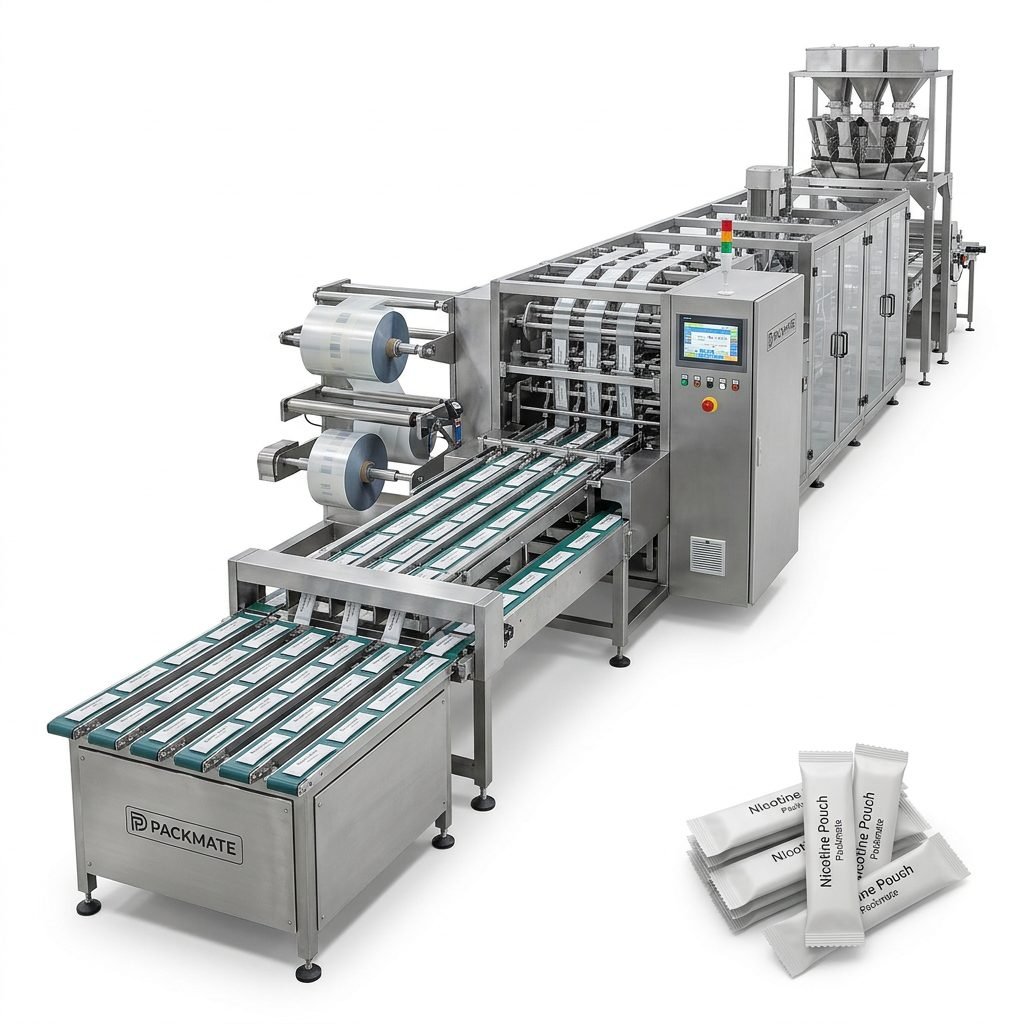
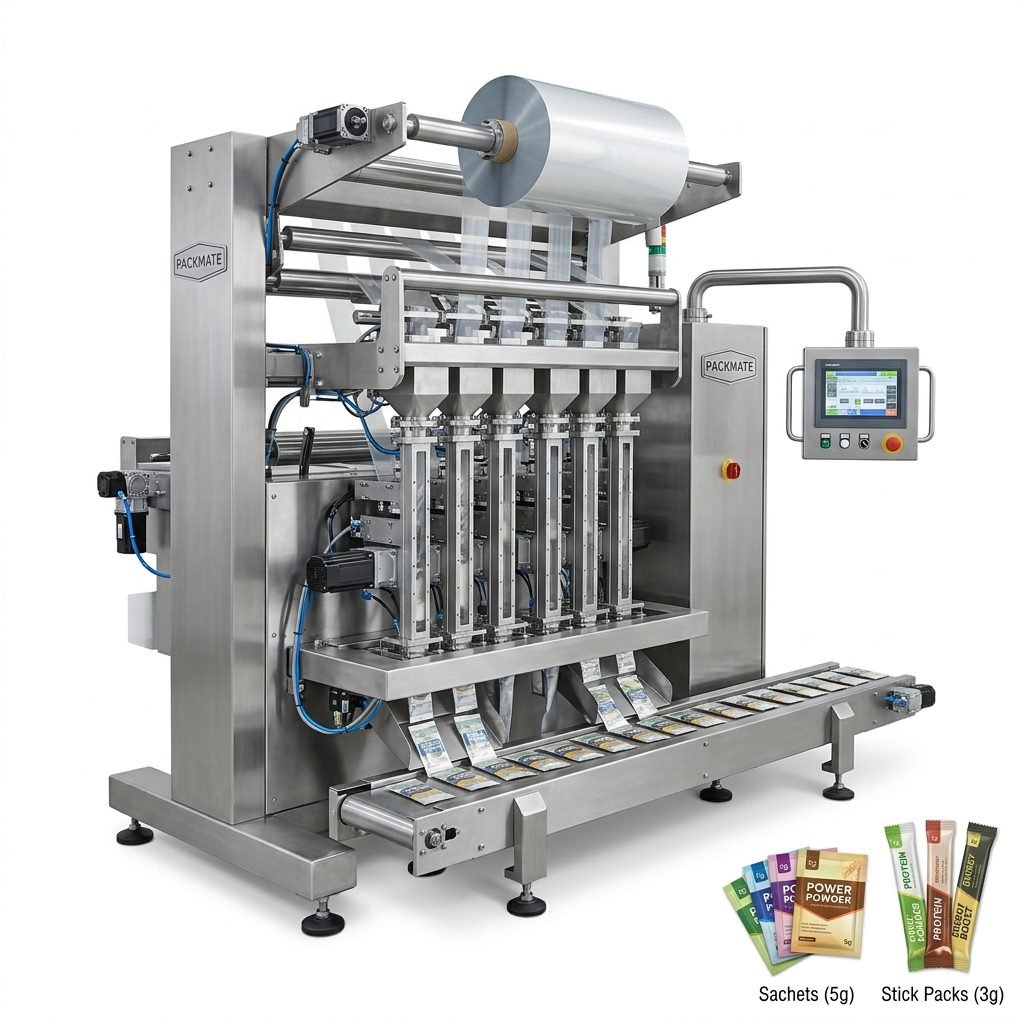
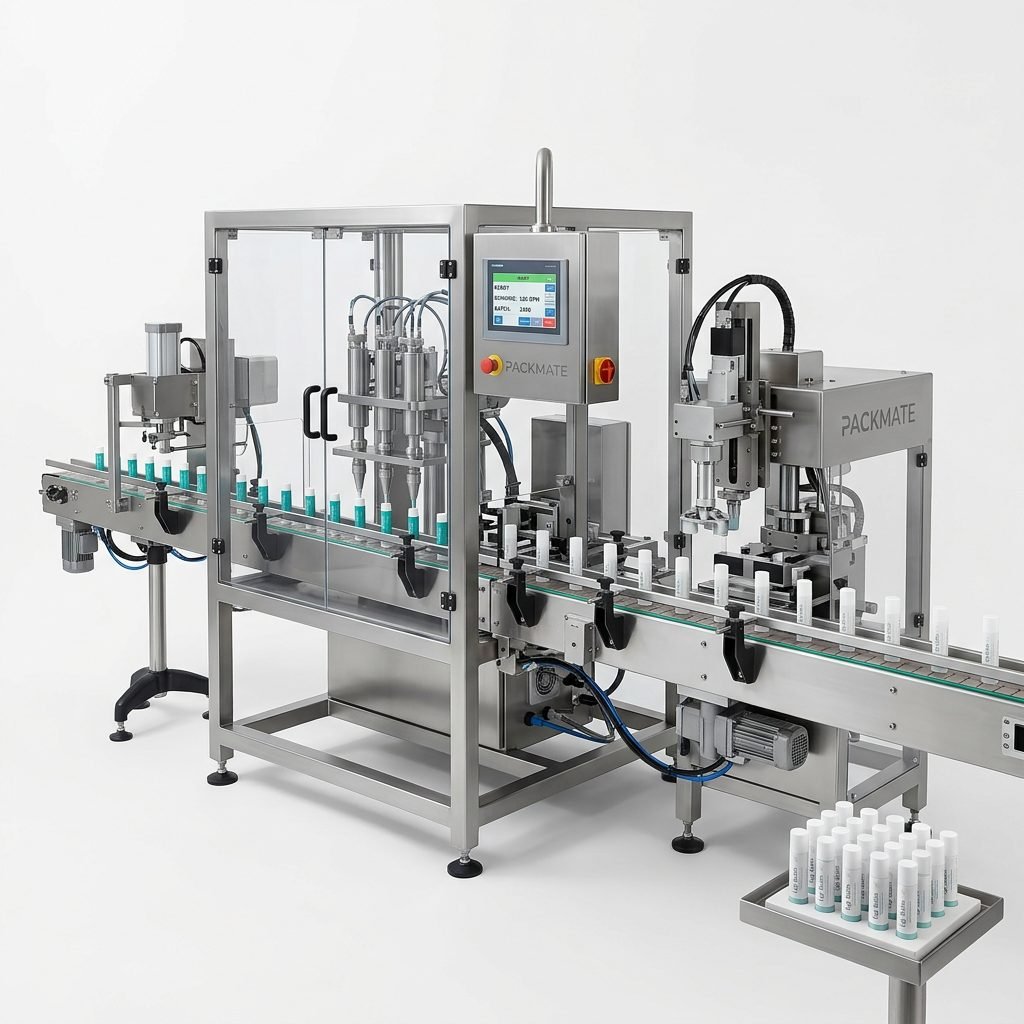
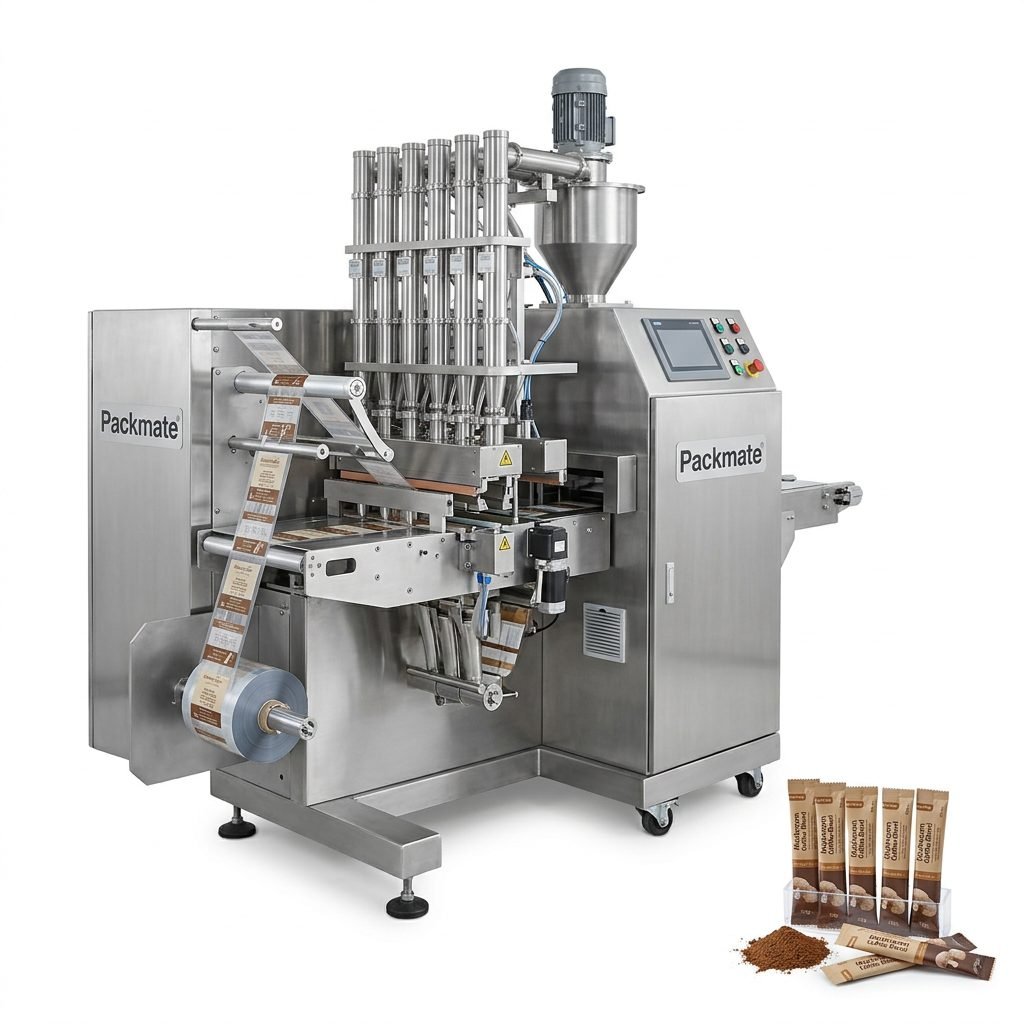
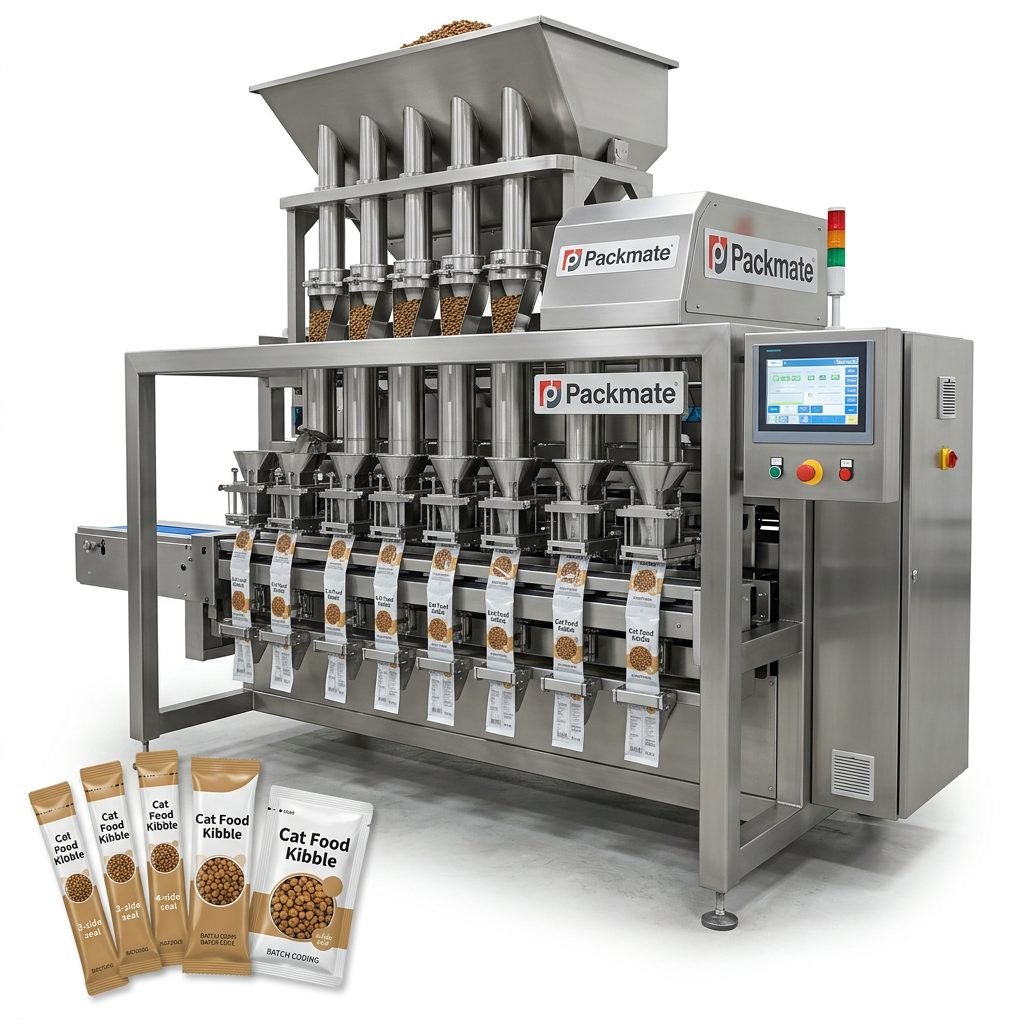
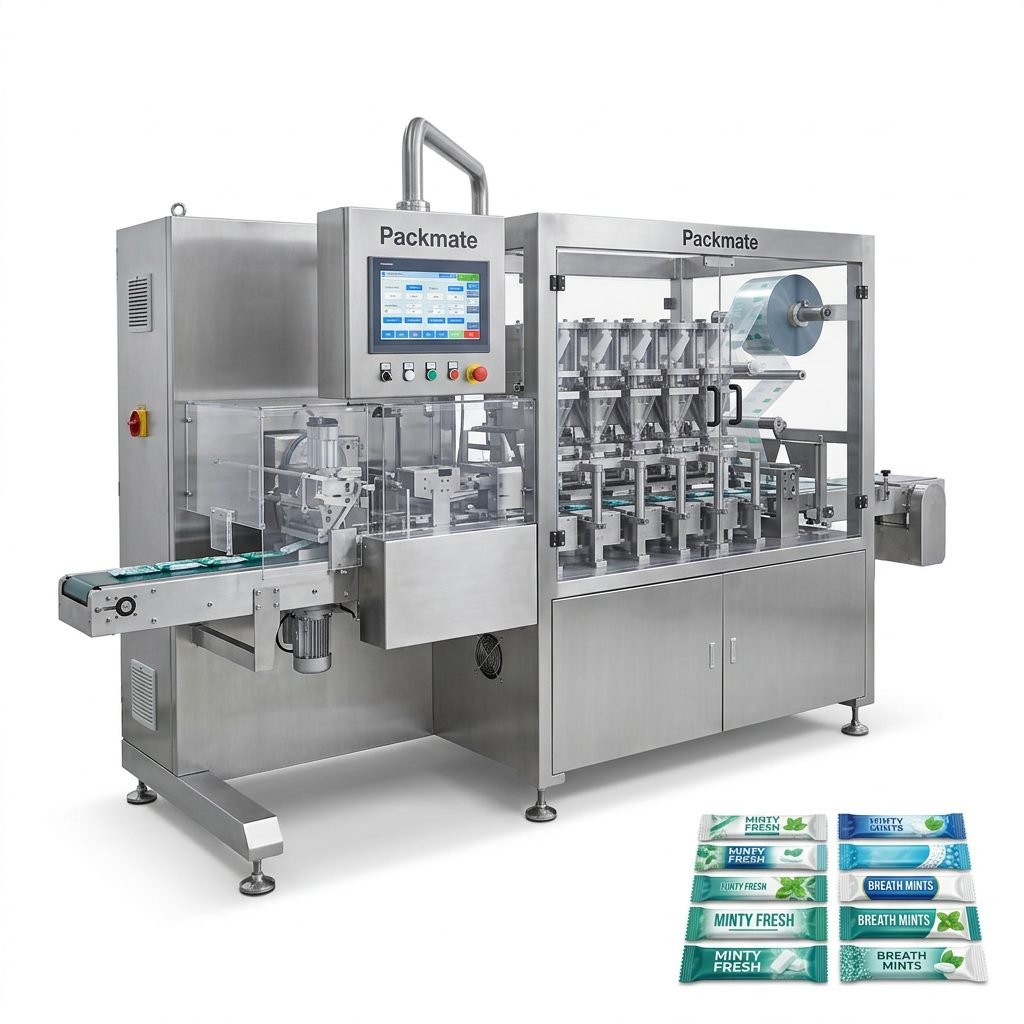
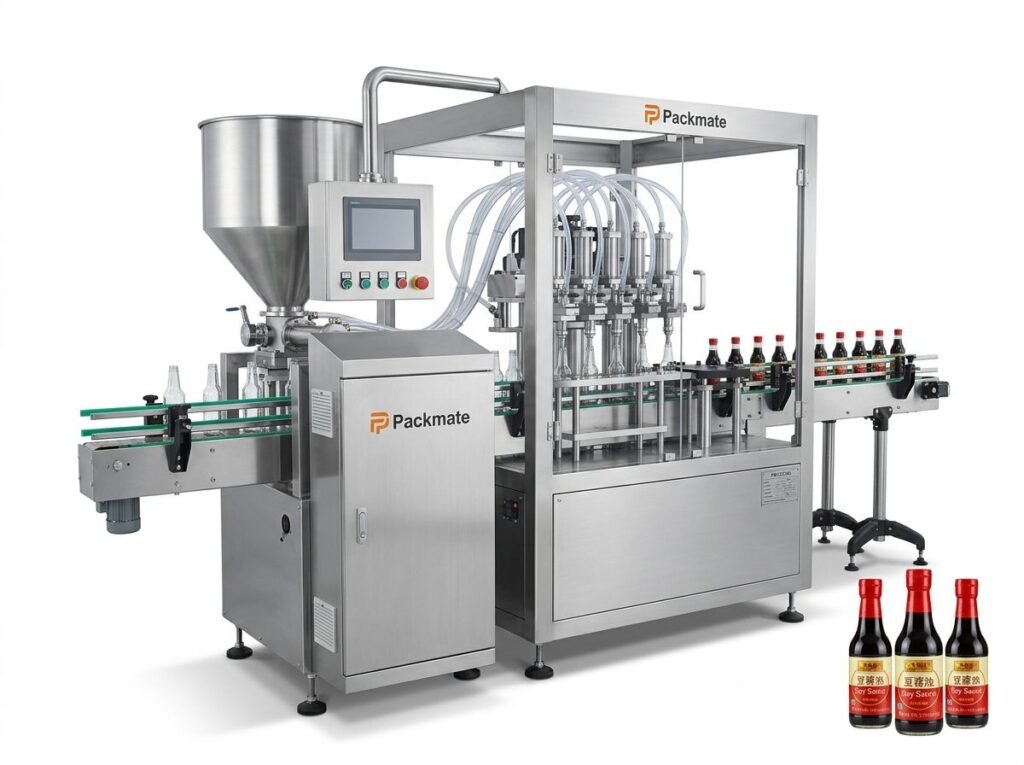
The core operation where the product is placed into its first container. This includes form-fill-seal machines for sachets and stick packs, bottling lines, blister packers, or tube fillers. This stage often dictates the line’s maximum speed.
3. Secondary Packaging
Primary packages are grouped into retail units. This stage involves cartoning, multipacking, bundling, or case packing. Equipment like cartoners, wrappers, and shrink tunnels must be positioned to smoothly receive output from the primary stage.
4. Labeling, Coding & Inspection
Critical for compliance and traceability. Print-and-apply labelers, CIJ (Continuous Inkjet) or TIJ (Thermal Inkjet) coders, and vision inspection systems are integrated at logical points—often after primary and secondary packaging. They require stable product flow for accurate application and reading.
5. End-of-Line & Palletizing
The final steps involve case sealing, palletizing (by robot or conventional palletizer), and stretch wrapping. This area requires significant space for empty pallet storage, full pallet staging, and potential manual intervention. Efficient design here optimizes warehouse and logistics operations. You can see real-world applications in our project case studies.
The Role of Automation and Industry 4.0
Modern layout design is inseparable from digital integration. Industry 4.0 concepts transform a packaging line from a mechanical sequence into a smart, data-driven system.
Robotics: Used for pick-and-place, palletizing, and case packing, offering flexibility and precision. They require defined work envelopes and safety fencing in the layout.
IoT Sensors & SCADA: Sensors monitor machine performance, product flow, and quality parameters. A Supervisory Control and Data Acquisition (SCADA) system provides a central overview, requiring planning for data cabling and HMI (Human-Machine Interface) placements.
Digital Twins: Before physical installation, a digital twin of the line can simulate layout, identify bottlenecks, and optimize performance virtually, saving time and cost.
Partnering with an Expert Provider
Designing and implementing a turnkey packaging line is a complex undertaking. Partnering with an experienced provider like Packmate (GuangDong) Co., Ltd. brings immense value. With over 30 years of experience, we offer more than machines; we deliver integrated solutions. Our process begins with a deep analysis of your product, output goals, and facility constraints. We then design a layout that balances efficiency, cost, and future growth, leveraging our portfolio of over 50 machine models. From our home base in the Greater Bay Area, we support clients globally with comprehensive service, ensuring your line achieves optimal performance.
Frequently Asked Questions (FAQs)
Q1: How much floor space is typically needed for a new packaging line?
A: Space requirements vary drastically based on speed, automation level, and product. A simple sachet line may need 50-100 sqm, while a high-speed bottling line with palletizing might require over 500 sqm. A detailed layout simulation is the best way to determine exact needs, factoring in maintenance aisles and material staging areas.
Q2: What is the most common mistake in packaging line layout?
A: The most frequent error is underestimating the need for buffer zones and accumulation. Without buffers, a minor stoppage at one station (like a label jam) instantly stops the entire upstream process, killing overall equipment effectiveness (OEE). Planning for accumulation tables or conveyors is crucial for decoupling stages.
Q3: How can I make my line more flexible for different products?
A: Invest in modular equipment with quick-change features (e.g., tool-less changeovers for format parts). Use programmable logic controllers (PLCs) with recipe management to store settings for different SKUs. Design the layout with extra utility drops (power, air, data) and space to allow for future addition or re-positioning of modules like checkweighers or vision systems.
Q4: What are the key differences between a food and pharma line layout?
A: While both prioritize hygiene, pharma layouts are governed by stricter regulatory protocols for contamination control. This often means dedicated gowning areas, higher-grade cleanrooms, and rigorous material/ personnel flow segregation to meet cGMP. Food lines focus more on high-speed sanitation and volume efficiency, though allergen control zones are critical in certain applications.
Q5: How long does it take to design and commission a new packaging line?
A: The timeline varies from 6 to 18 months or more for a complex turnkey line. It involves several phases: concept design & quotation (1-2 months), detailed engineering (2-4 months), equipment manufacturing (4-8 months), factory acceptance testing (FAT), shipment, site installation, and final commissioning (2-3 months). Working with an experienced partner streamlines this process.