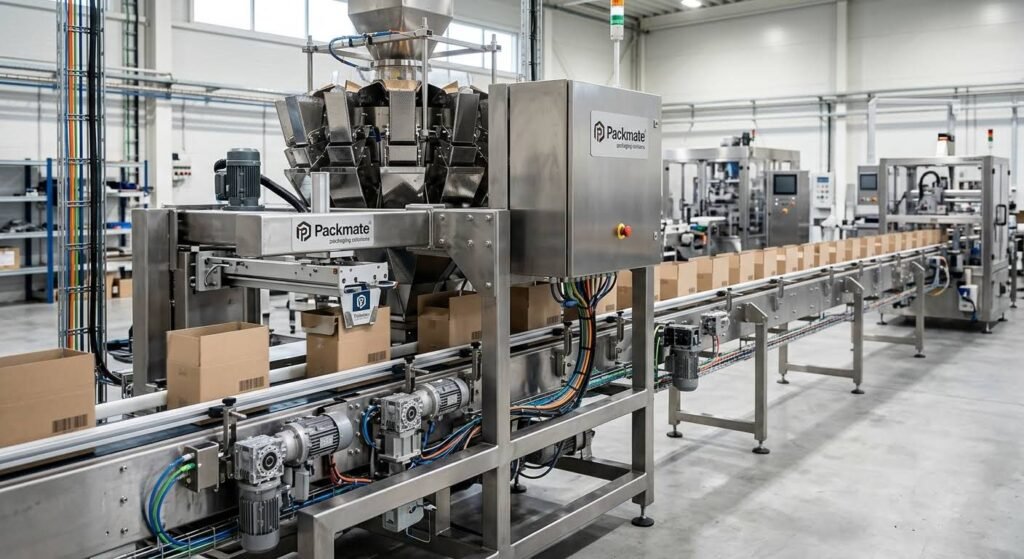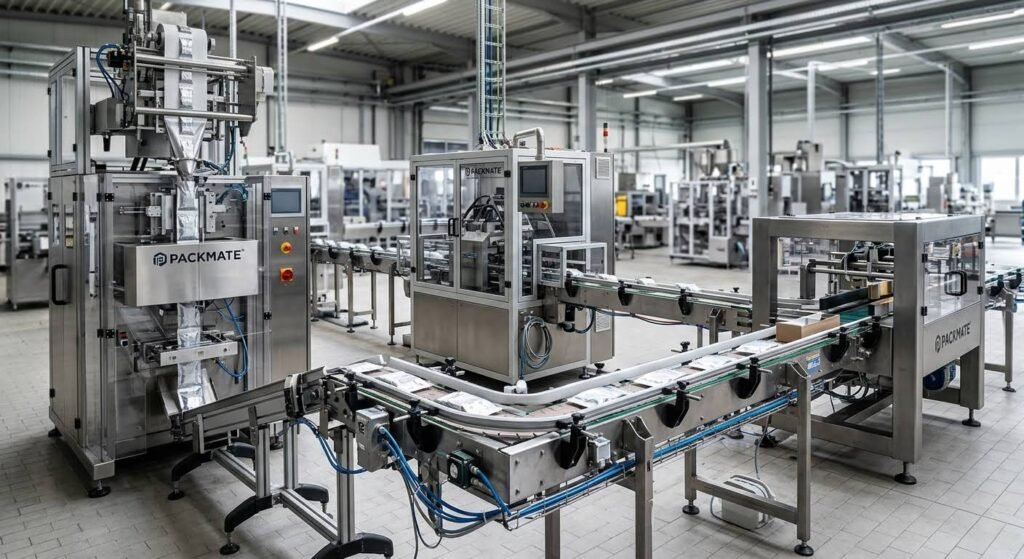
In today’s fast-paced and highly regulated manufacturing landscape, achieving peak efficiency, unwavering consistency, and absolute hygiene is non-negotiable. For industries where product integrity directly impacts consumer health and safety—namely food, pharmaceuticals, and health products—the packaging process is a critical final gatekeeper. This is where the strategic implementation of a fully automatic packaging line transitions from a luxury to a fundamental operational necessity. These integrated systems represent the pinnacle of engineering, designed to handle everything from primary product filling to final cartoning with minimal human intervention.

The Imperative for Automation in Sensitive Industries
The drive towards full automation is fueled by a convergence of market demands and regulatory pressures. Consumers expect flawless, tamper-evident, and informative packaging, while global regulatory bodies like the FDA and EFSA impose stringent Good Manufacturing Practice (GMP) standards. Manual or semi-automated processes struggle to meet these dual challenges consistently, making the case for a comprehensive packaging solution overwhelming.
Core Advantages of a Fully Integrated Line:
- Unmatched Hygiene & Contamination Control: Closed systems drastically reduce human contact, a vital factor for sterile pharmaceutical products and perishable foods.
- Precision and Consistency: Every package receives the exact same weight, volume, and seal integrity, eliminating giveaway and ensuring dosage accuracy.
- Scalable Production Speed: Automated lines can operate 24/7, dramatically increasing output to meet market demand spikes without compromising quality.
- Enhanced Traceability: Integrated vision systems and coding equipment allow for batch tracking, expiry date printing, and real-time quality monitoring.
- Long-term Operational Savings: While the initial investment is significant, automation reduces labor costs, minimizes material waste, and decreases costly recalls due to packaging errors.
Tailored Solutions for Diverse Product Forms
A one-size-fits-all approach does not exist in high-stakes packaging. The morphology of the product dictates the engineering of the line. Leading providers like Packmate (GuangDong) Co., Ltd. specialize in designing lines around specific product characteristics.
1. Granules and Powders (Coffee, Protein Supplements, Pharmaceuticals)
These free-flowing materials require precision auger or cup filler systems to ensure accurate dosing. The line must include de-dusting mechanisms and often incorporates nitrogen flushing before sealing to extend shelf life by displacing oxygen. Stick packs and sachets are popular formats, produced at high speeds on multi-lane machines.
2. Liquids and Viscous Products (Sauces, Syrups, Health Tonics)
Liquid filling demands volumetric or piston filler technology to handle different viscosities without dripping or foaming. Maintaining hygiene is paramount, requiring CIP (Clean-in-Place) capabilities. Spout pouches and bottles are common outputs, with capping or sealing stations integrated seamlessly.
3. Large-Volume and Bulk Packaging (Cereal, Snacks, Powdered Milk)
For family-sized or commercial quantities, the line focuses on high-speed form-fill-seal (FFS) machines for stand-up pouches or bag-in-box systems. Robust weighing systems and strong seal integrity are critical to prevent leaks and maintain product freshness during distribution.
The Anatomy of a Turnkey Automatic Packaging Line
Understanding the components demystifies the automation process. A complete line is a symphony of synchronized machines, each performing a dedicated task.
Key Stations in a Typical Line:
➤ Unwinding & Web Guiding: Pre-printed packaging film is fed from a roll and precisely aligned.
➤ Forming & Filling: The film is shaped into pouches (vertical or horizontal), and the product is dosed in.
➤ Sealing & Coding: Heated jaws create hermetic seals, while inkjet or laser coders print batch info and dates.
➤ Inspection & Rejection: Vision systems check for fill levels, seal defects, and print quality, ejecting faulty packs.
➤ Secondary Packaging: Individual sachets or sticks are collated and loaded into cartons or display boxes.
➤ Palletizing: Finished cases are automatically stacked onto pallets for shipment.
Selecting the right partner to design and integrate these components is as crucial as the technology itself. A provider with deep industry experience, like Packmate, which offers proven case studies across food and pharma, can navigate the complexities of validation, sanitation protocols, and future scalability.
Future-Proofing Your Investment: Trends and Flexibility
Investing in an automatic line is a long-term decision. Forward-thinking manufacturers must consider trends like sustainable packaging materials, the need for smaller batch runs for product diversification, and the integration of Industry 4.0 data analytics. Modern lines should be modular, allowing for easy reconfiguration or the addition of new functions, such as robotic loading or advanced track-and-trace serialization, to meet evolving market and regulatory needs. Exploring a provider’s full equipment catalog can reveal this modular capability.
Ultimately, a fully automatic packaging line is more than just machinery; it is a strategic asset. It safeguards your brand reputation, ensures regulatory compliance, unlocks new levels of productivity, and provides the agility to compete in a global marketplace. For businesses in the food, pharmaceutical, and health sectors, it is the definitive step towards building a resilient, efficient, and quality-driven production foundation. For more insights into implementation and support, reviewing a company’s dedicated service offerings is highly recommended.
Frequently Asked Questions (FAQs)
1. What is the typical lead time for a fully automatic packaging line?
Lead times vary significantly based on line complexity and customization. A standard, pre-configured line may be delivered in 3-4 months, while a highly customized turnkey solution for a unique pharmaceutical product can take 6-12 months from design to factory acceptance testing. Detailed project planning with your supplier is essential.
2. How do we ensure the line meets our specific hygiene standards (e.g., FDA, GMP)?
Reputable suppliers design lines with hygienic principles from the ground up. This includes using stainless steel (304 or 316 grade) for contact parts, designing for easy access and cleanability (no dead zones), and offering CIP/SIP options. Always review the supplier’s compliance certificates and request documentation on material certifications and design hygiene protocols.
3. Can one packaging line handle multiple different products or package sizes?
Yes, through changeover parts and programmable logic controller (PLC) recipes. Modern lines are designed for quick changeovers. By switching out forming tubes, filler parts, and adjusting machine parameters via the HMI screen, you can run different products. The speed and ease of changeover is a key specification to discuss with your provider.
4. What kind of after-sales support and training should we expect?
Comprehensive support is critical. Expect detailed installation supervision, on-site operator and maintenance training, a robust spare parts inventory, and remote diagnostic support. A 24/7 technical hotline and scheduled preventive maintenance visits are hallmarks of a reliable partner, ensuring maximum uptime for your investment.
5. How is the ROI (Return on Investment) calculated for such a capital-intensive project?
ROI is calculated by comparing the capital and operating costs of the new line against the savings and gains it generates. Key factors include: labor cost reduction, increased production output, decrease in material waste (giveaway), reduction in product loss from recalls or rejects, and improved energy efficiency. Most businesses see a full ROI within 2-4 years through these combined efficiencies.