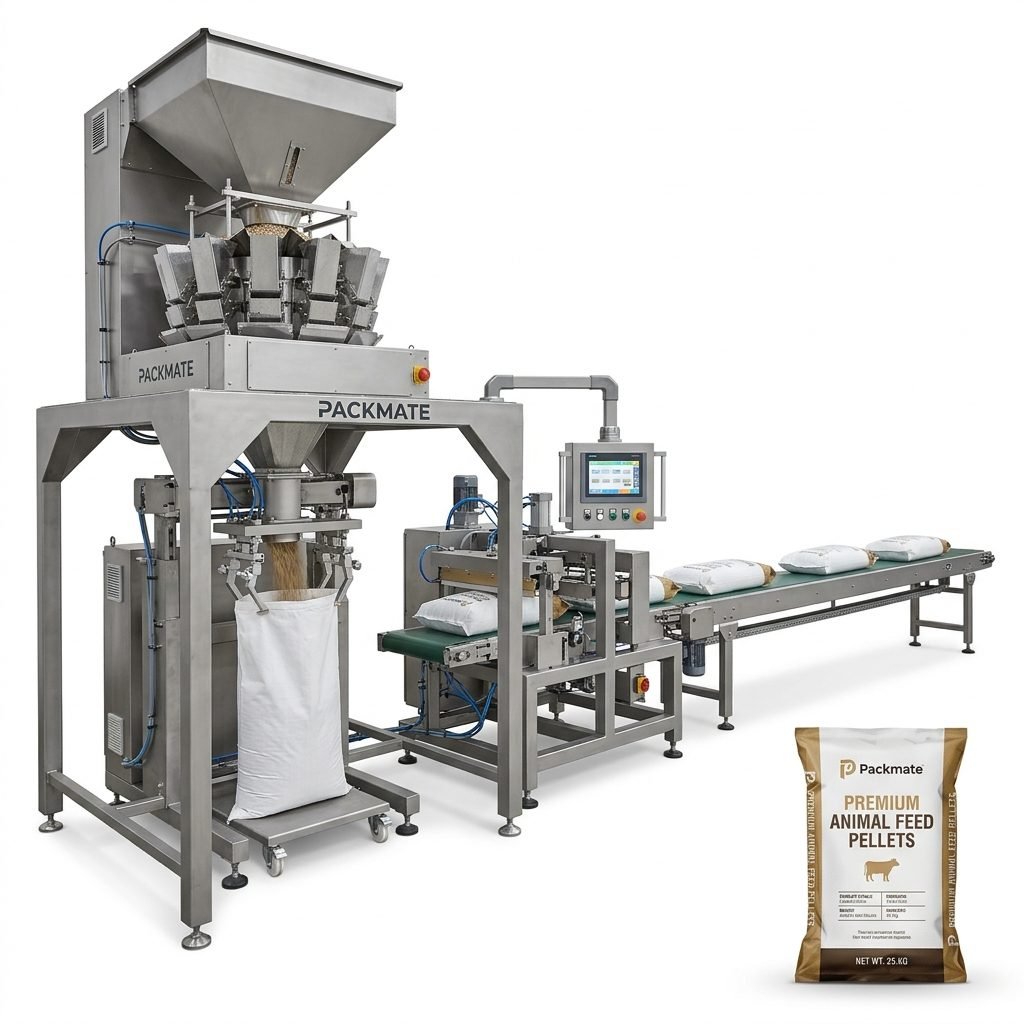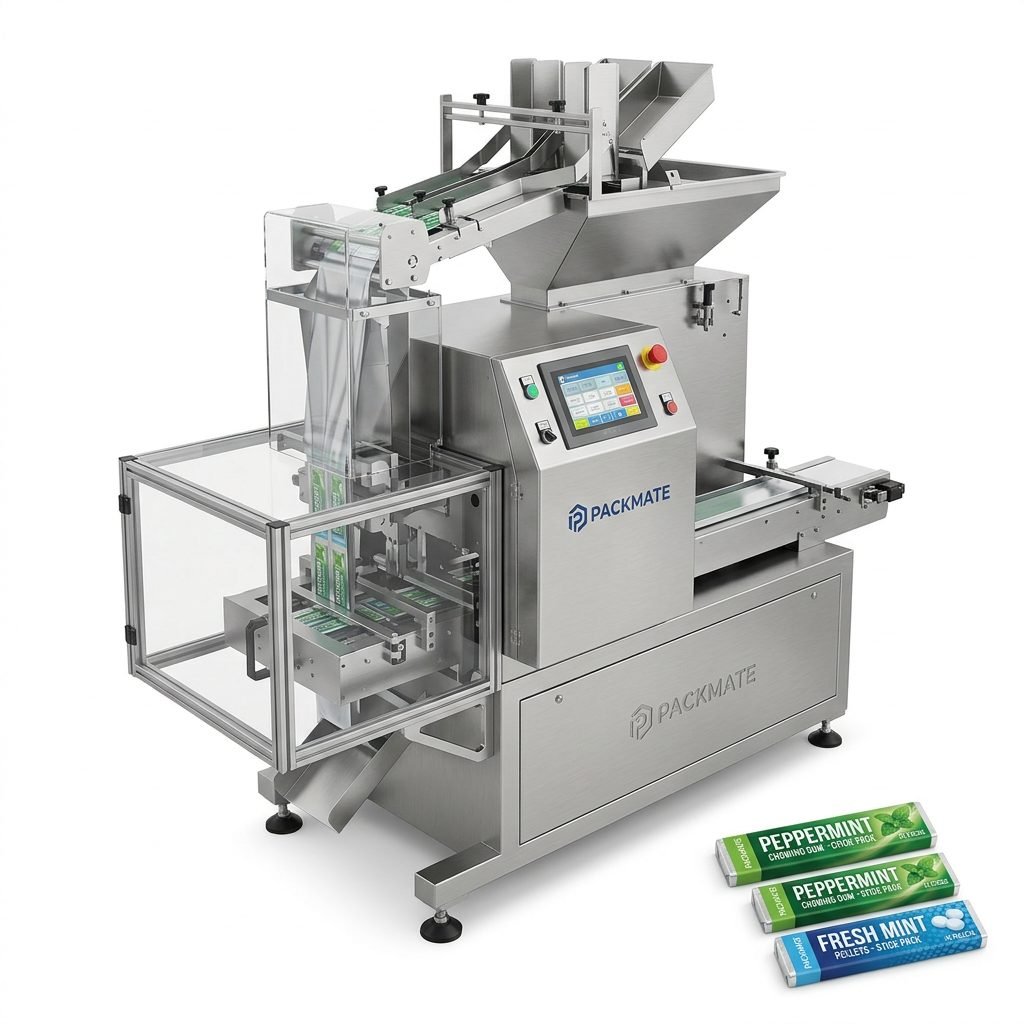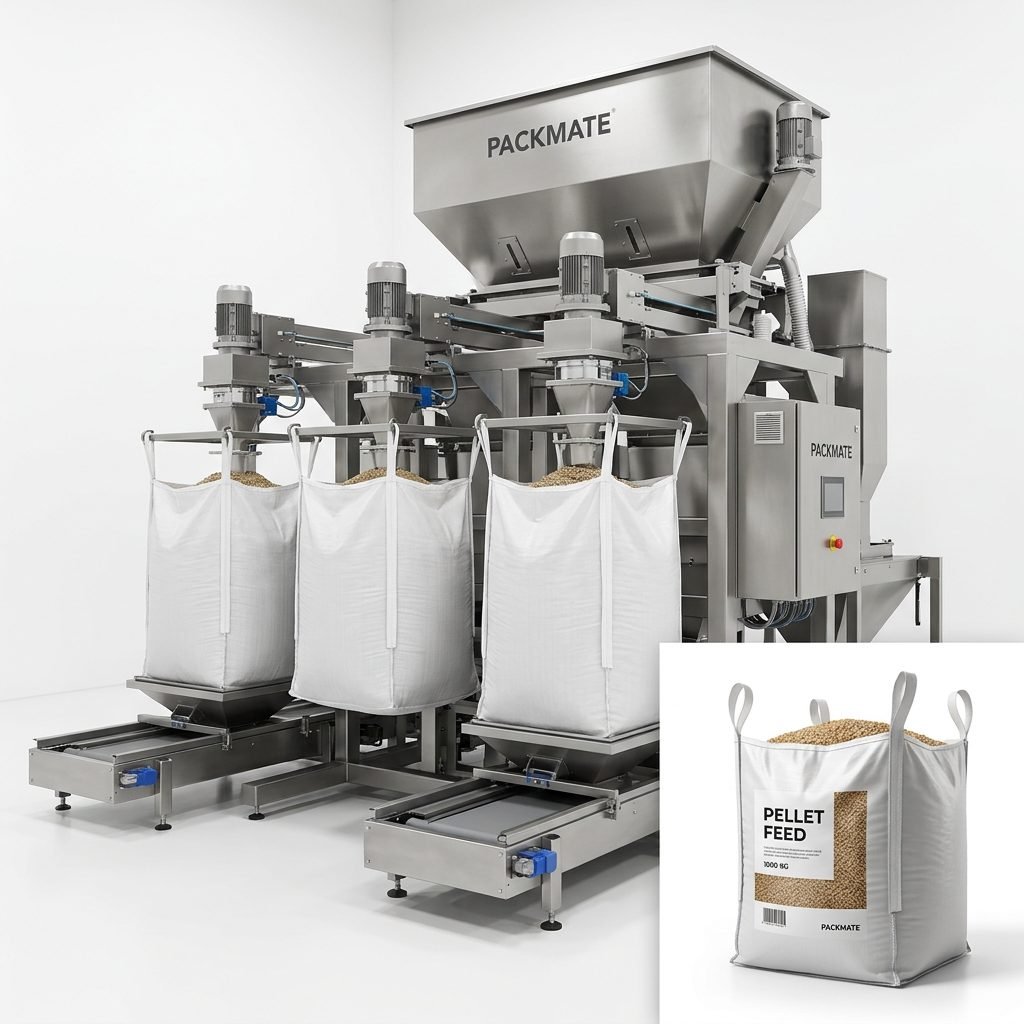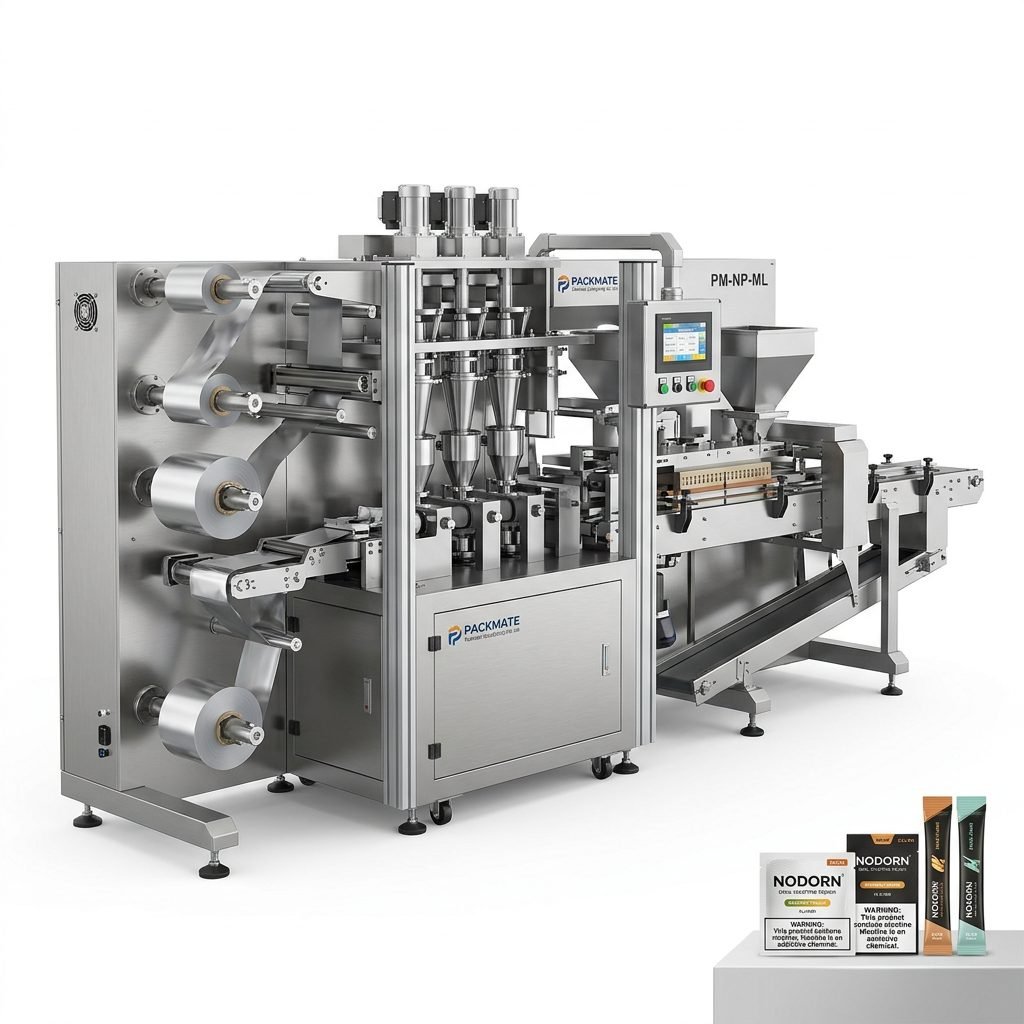
In the competitive world of manufacturing, floor space is a premium commodity. Every square meter dedicated to machinery is a square meter not used for storage, staging, or expansion. This is where the compact palletizer emerges as a game-changer for packaging lines. As a leading provider of packaging solutions, Packmate understands that end-of-line automation must be both powerful and space-conscious. This guide delves into the world of compact palletizers, exploring how they deliver space-saving efficiency without compromising on performance.
What is a Compact Palletizer?
A compact palletizer is a specialized robotic or mechanical system designed to automatically stack and organize finished goods—boxes, bags, or bundles—onto a pallet in a stable, transport-ready configuration. Its defining characteristic is its minimized footprint, often achieved through vertical integration, streamlined mechanics, and intelligent design. Unlike traditional large-scale systems, compact models are engineered to fit seamlessly into existing production layouts, often in tight corners or at the very end of a conveyor line.
Core Advantages of a Space-Saving Design
The primary benefit is obvious: reclaimed floor space. But the advantages extend far beyond mere square footage:
- Reduced Facility Costs: Smaller machinery can allow for a more compact factory design or free up space for additional production lines or value-added processes.
- Enhanced Line Flexibility: Their size makes them ideal for retrofitting into older facilities or for multi-line applications where space between lines is limited.
- Lower Operational Overhead: With a smaller physical presence, energy consumption for operation and facility lighting/conditioning can be marginally reduced.
Integrating Compact Palletizers into Your Packaging Line
Successful integration is key. The goal is to create a smooth, continuous flow from product formation to pallet dispatch. A compact palletizer typically sits at the terminus of your packaging line, receiving products from a collator or directly from a sealing machine. Integration considerations include conveyor height and speed synchronization, pallet dispenser placement, and the strategic location of the finished pallet accumulation area. For a holistic view of how end-of-line automation fits into a complete system, explore our comprehensive packaging line solutions.
Key Integration Steps:
- Layout Analysis: Map the exact available space, including ceiling height, to select a model with the appropriate footprint and vertical stroke.
- Throughput Matching: Ensure the palletizer’s cycle rate meets or exceeds your line’s maximum output to prevent bottlenecks.
- Communication Protocol: The palletizer’s PLC must seamlessly communicate with your main line controller for coordinated start/stop and error signaling.
Technologies Powering Modern Compact Palletizers
Today’s compact palletizers are feats of engineering, utilizing advanced technologies to maximize performance in a minimal space.
1. Robotic Articulated Arms
These offer extreme flexibility in a relatively small base footprint. Using 4-axis or 6-axis robots, they can handle complex patterns and mixed SKUs with precision. Their programming flexibility allows for quick changeovers, which is vital for diverse production runs common in industries like food and pharmaceuticals.
2. Gantry/Cartesian Systems
Built on a fixed frame, these palletizers use moving beams and heads (X, Y, Z axes) to place products. Modern compact gantry systems are highly space-efficient and excel at high-speed, repetitive palletizing of uniform cases, making them a staple in high-volume environments.
3. Hybrid & Layer Forming Systems
Some compact designs use a combination of a low-profile layer former and a compact lift/place mechanism. This separates the pattern formation from the placement action, often resulting in a faster cycle time and a very stable pallet load.
At Packmate (GuangDong) Co., Ltd., our 22+ years of experience in designing complete packaging lines informs our approach to automation. We understand that the palletizer is not an island but a critical component that must work in perfect harmony with fillers, sealers, and coders. Our team leverages a 20,000㎡ modern facility and over 100 advanced equipment pieces to prototype and test integrations, ensuring reliability.
FAQs: Compact Palletizers for Packaging Lines
1. How much space can I actually save with a compact palletizer?
Savings vary by model and application, but compact palletizers can reduce the required floor space by 30% to 50% compared to conventional models. The most significant saving often comes from a reduced “safety zone” footprint and the elimination of extensive infeed conveyor staging.
2. Are compact palletizers suitable for heavy or unstable products?
Yes, but specification is crucial. The key is to match the machine’s payload capacity and gripper technology to your product’s weight and fragility. Many compact robotic arms have payloads exceeding 50kg, and vacuum, clamp, or hybrid grippers can be tailored to handle everything from bags of powder to rigid boxes.
3. What is the typical ROI period for a compact palletizer?
Return on investment typically ranges from 1 to 3 years. The primary savings drivers are labor reduction (eliminating 1-3 manual palletizing stations), increased line speed, reduced product damage, and lower workers’ compensation claims associated with manual lifting. The space saved can also defer costly facility expansions.
4. Can they handle frequent product or pattern changeovers?
Modern compact palletizers, especially robotic ones, excel at this. Changeovers are managed through pre-programmed recipes in the HMI (Human-Machine Interface). Switching from one product pattern to another can often be done in minutes by selecting a new program, minimizing downtime and supporting just-in-time manufacturing.
5. How do I ensure I’m choosing the right compact palletizer for my line?
Engage with an experienced provider like Packmate early in the planning process. Key decision factors include: product dimensions/weight, required throughput (cases per hour), available utilities (electrical, air), facility ceiling height, and desired level of integration with upstream machinery. Reviewing real-world application cases from your potential supplier is highly recommended.