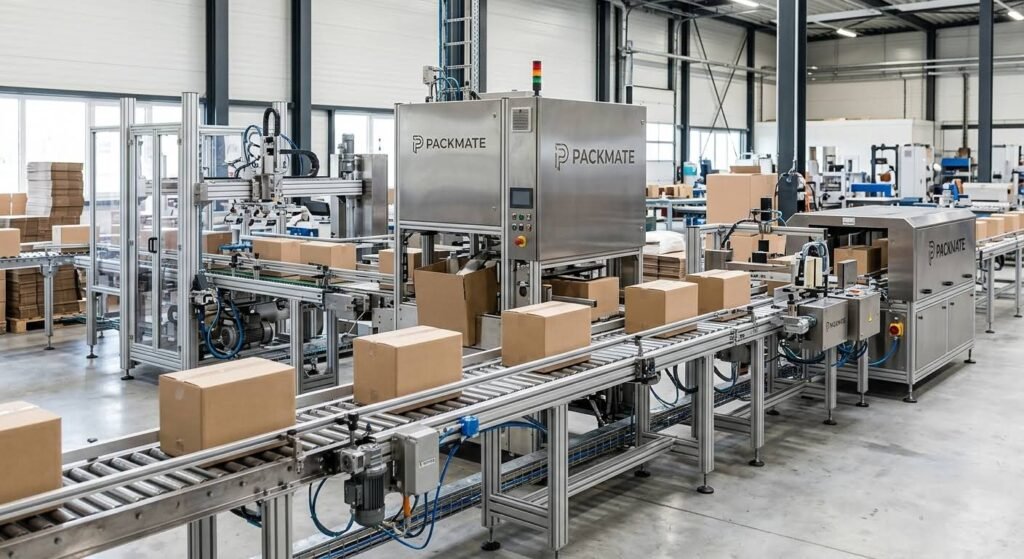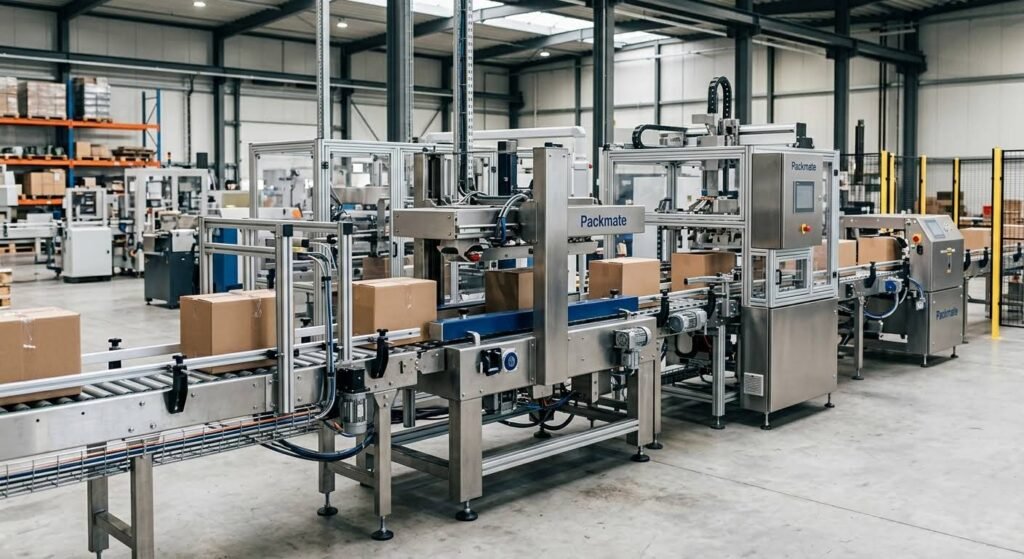
In the fast-paced, highly regulated world of pharmaceuticals and health products, packaging is far more than a final step—it’s a critical safeguard. It protects product integrity, ensures accurate dosing, and communicates vital information to consumers and healthcare professionals. For manufacturers, the efficiency, reliability, and compliance of the packaging process directly impact operational costs, market speed, and brand reputation. This is where the choice of packaging technology becomes paramount. An automatic tablet and capsule case packaging line represents the pinnacle of modern pharmaceutical packaging, offering unparalleled speed, precision, and traceability.

The Critical Role of Automation in Pharma Packaging
Manual or semi-automatic packaging processes are prone to human error, contamination risks, and significant bottlenecks. In an industry where a single mistake can have serious consequences, automation provides the definitive solution. A fully integrated automatic packaging line handles everything from feeding and counting tablets or capsules to forming blisters or cases, sealing, cartoning, and batch coding in one continuous, synchronized flow. This eliminates multiple handlings, drastically reduces the risk of cross-contamination, and ensures every unit meets the exact specifications. For businesses looking to scale production or enter new markets, investing in a robust packaging solution from a trusted manufacturer is not an option but a necessity for sustainable growth.
Key Advantages of an Automatic Case Packaging Line:
- Superior Efficiency & Output: Dramatically increases production speed, allowing for high-volume output to meet large-scale orders and market demands.
- Uncompromising Accuracy: Advanced counting and vision inspection systems guarantee precise fill counts, eliminating underfills or overfills.
- Enhanced Product Protection: Creates a hermetic seal that shields sensitive pharmaceuticals from moisture, light, and oxygen, extending shelf life.
- Stringent Compliance: Designed to meet global GMP (Good Manufacturing Practice) standards, with features that support full batch traceability and documentation.
- Significant Cost Reduction: Lowers long-term operational costs by minimizing labor, material waste, and product loss due to errors.
Core Components of a Modern Packaging Line
A turnkey automatic packaging line is a symphony of specialized machinery, each module performing a specific task with precision. Understanding these components helps in selecting the right system for your product portfolio.
1. Tablet/Capsule Feeding and Counting System
This is the heart of accuracy. Systems use advanced vibratory feeders, precise counting discs, or sophisticated optical counting technology to ensure every blister pocket or case receives the exact number of units. Modern systems are incredibly gentle, handling even fragile coated tablets without damage.
2. Blister Forming, Sealing, and Case Packing Machine
This segment forms the primary packaging. A web of pharmaceutical-grade film (PVC, Aclar, or aluminum) is heated and formed into pockets. Tablets or capsules are deposited, and a lidding material (foil or paper) is sealed on top. The finished blisters are then precisely cut and fed into an automatic case packer, which erects cartons, inserts the blisters, and closes them securely, ready for secondary packaging.
3. Integrated Quality Control & Vision Inspection
Quality is non-negotiable. Integrated vision inspection systems check for critical defects at multiple points: verifying fill count, detecting broken or misshapen tablets, ensuring proper blister seal integrity, and validating print quality on cartons (like expiry dates and batch codes). Any defective unit is automatically rejected, ensuring only perfect products proceed.
4. Centralized PLC Control & HMI
The entire line is governed by a Programmable Logic Controller (PLC) with a user-friendly Human-Machine Interface (HMI) touchscreen. Operators can monitor every parameter—speed, temperature, pressure—in real-time, make adjustments, track production data, and access historical logs for complete oversight and reporting. This centralized control is vital for efficiency and preventive maintenance.
Why Partner with a Specialist Manufacturer?
Selecting a packaging line is a major capital investment. Partnering with an experienced manufacturer like Packmate (GuangDong) Co., Ltd. brings immense value beyond the machinery itself.
The Packmate Advantage: Engineering Excellence Since 1993
With over 30 years of deep industry expertise, Packmate understands the unique challenges of pharmaceutical packaging. Our journey, from a dedicated workshop to a modern 20,000㎡ facility in the Greater Bay Area, is built on a foundation of innovation and reliability. We don’t just sell machines; we deliver complete, turnkey solutions. Our process begins with a thorough analysis of your product characteristics, output goals, and facility layout. Our engineering team then designs a customized line that integrates seamlessly into your operation. From installation and commissioning to comprehensive operator training and ongoing technical support, we ensure your investment delivers maximum ROI. Explore our proven track record through detailed project cases from satisfied clients worldwide.
Customization for Diverse Product Needs
The “one-size-fits-all” approach fails in pharma. A reputable manufacturer offers extensive customization. Whether you package standard round tablets, oblong caplets, tiny pellets, or softgel capsules, the line can be tailored. Changeover between different product formats or packaging sizes should be quick and tool-less, maximizing uptime for facilities running multiple SKUs. Flexibility is key to future-proofing your investment.
Commitment to Compliance and Global Standards
Pharmaceutical regulations (FDA, EMA, etc.) are stringent and constantly evolving. A specialist manufacturer designs equipment with compliance at its core. This includes using certified materials (e.g., 316L stainless steel for contact parts), designing for easy cleaning and sanitization (CIP/SIP capabilities), and incorporating features that support serialization and aggregation mandates for track-and-trace. Their deep regulatory knowledge guides you through the validation process (IQ/OQ/PQ), which is crucial for market approval.
Future-Proofing Your Packaging Operation
The industry is moving towards even greater connectivity and intelligence. The next generation of packaging lines will feature deeper integration with Manufacturing Execution Systems (MES) and the Industrial Internet of Things (IIoT). This enables predictive maintenance, real-time analytics for optimizing Overall Equipment Effectiveness (OEE), and seamless data exchange across the enterprise. When choosing a manufacturer, consider their roadmap for Industry 4.0 technologies to ensure your line remains competitive for years to come. Staying updated with industry trends is easier when you have access to resources like our comprehensive equipment catalog.
Implementing an automatic tablet and capsule case packaging line is a strategic decision that transforms pharmaceutical manufacturing. It elevates quality assurance, unlocks new levels of productivity, and ensures unwavering compliance. By partnering with an established, innovative manufacturer who provides end-to-end support, you secure more than machinery—you gain a reliable partner for long-term growth and success in the global health market.
Frequently Asked Questions (FAQs)
1. What is the typical lead time for a custom automatic packaging line?
Lead time varies significantly based on the line’s complexity, level of customization, and current production schedule. For a standard configured line, it typically ranges from 4 to 6 months from order confirmation to delivery. A detailed project timeline will be provided after the initial technical consultation and design finalization.
2. How do you ensure the line meets our specific product and output requirements?
We begin with a detailed project assessment. Our engineers will analyze your product samples, desired packaging materials, target output (e.g., blisters per minute), and factory floor plan. We often conduct factory acceptance tests (FAT) with your actual products before shipment to guarantee performance.
3. What kind of training and after-sales support do you provide?
We provide comprehensive training for your operators, maintenance technicians, and engineers at your site during commissioning. This covers operation, routine maintenance, troubleshooting, and safety. Our support includes a warranty period, readily available spare parts, and access to remote technical assistance via phone or video call. For more details, visit our FAQs page.
4. Can the packaging line be integrated with serialization and track-and-trace systems?
Absolutely. Modern lines are designed with serialization in mind. We can integrate various technologies like inkjet printers, laser coders, vision verification systems, and aggregation stations to comply with regional pharmacovigilance regulations (e.g., DSCSA in the USA, FMD in the EU).
5. What are the key factors in choosing between different packaging material types (e.g., aluminum foil vs. PVC blister)?
The choice depends on your product’s sensitivity. Aluminum foil (cold-form or thermoformed) offers the best barrier against moisture and oxygen, ideal for highly hygroscopic or oxygen-sensitive drugs. PVC is cost-effective and offers good clarity for product visibility but has a lower moisture barrier. Our technical team can advise on the optimal material based on your product’s stability data and shelf-life requirements.