In the dynamic world of food production, the efficient and hygienic packaging of sugar is a critical final step that directly impacts product quality, shelf life, and brand perception. From the single-serve sachet accompanying your morning coffee to the bulk bags supplying industrial bakeries, each format demands a specialized packaging approach. For manufacturers seeking to optimize their operations, investing in a dedicated sugar packaging line is not just an upgrade—it’s a strategic necessity for competitiveness and growth.
The Core of Modern Sugar Production: Automated Packaging Lines
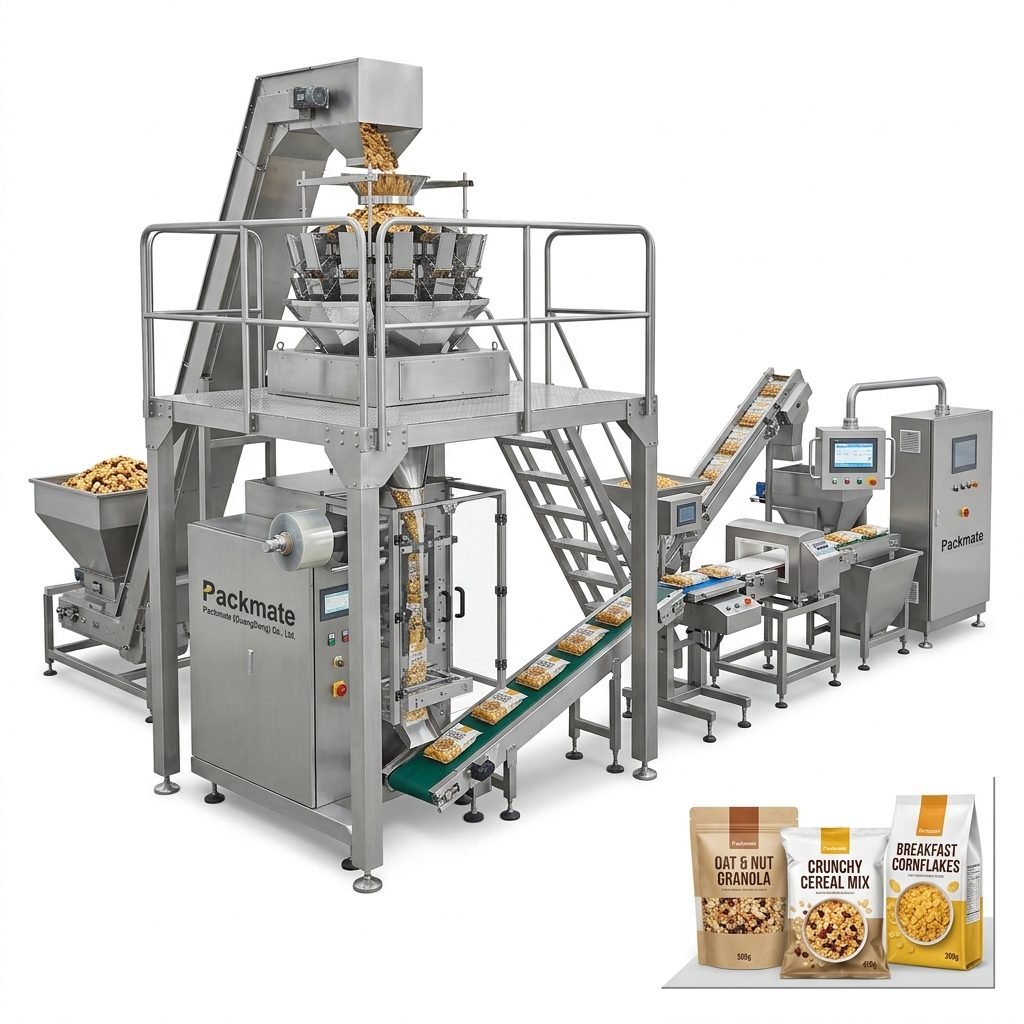
Gone are the days of purely manual, labor-intensive packing. A modern automated sugar packaging line integrates several machines into a seamless, continuous process. This system typically begins with a bulk sugar feeding system, moves through precise weighing or volumetric filling, and concludes with sealing, coding, and cartoning. The primary advantage is unmatched consistency. Every packet, stick, or bag is filled with exact precision, eliminating giveaway and ensuring every customer receives the promised amount. This precision translates directly into significant cost savings on raw materials over time.
Furthermore, automation drastically increases output speed. Machines can fill and seal hundreds, even thousands, of units per minute, a rate impossible to achieve manually. This allows manufacturers to meet high demand, fulfill large orders efficiently, and scale production up or down with ease. Perhaps most importantly in food processing, an enclosed, automated line minimizes human contact with the product. This is crucial for maintaining the highest standards of hygiene and food safety, protecting the product from contamination and protecting the brand’s reputation. To explore how such integration benefits different business scales, reviewing specific case studies can provide valuable insights.
Key Benefits at a Glance:
- Operational Efficiency: High-speed, continuous operation with minimal downtime.
- Cost Reduction: Savings on labor and precise material usage.
- Quality Assurance: Consistent fill weight, secure seals, and superior product presentation.
- Hygiene & Safety: Reduced contamination risk in a controlled environment.
- Scalability: Lines can be configured and expanded to match production growth.
Dissecting the Line: Sachet, Stick Pack, and Bulk Systems
Not all sugar is packaged the same. The choice of packaging format is dictated by the end-user, and each requires a distinct engineering solution within the broader packaging line.
1. Automatic Sachet Packaging Machines
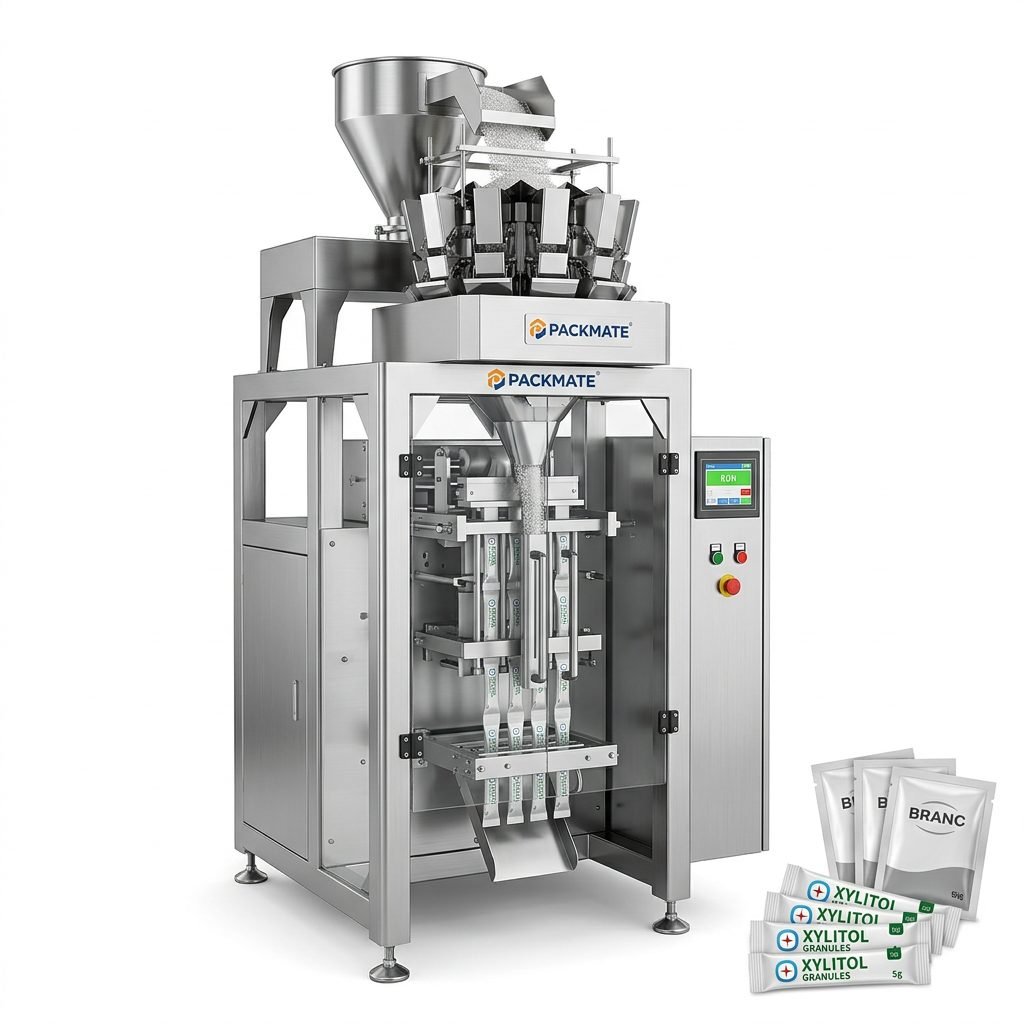
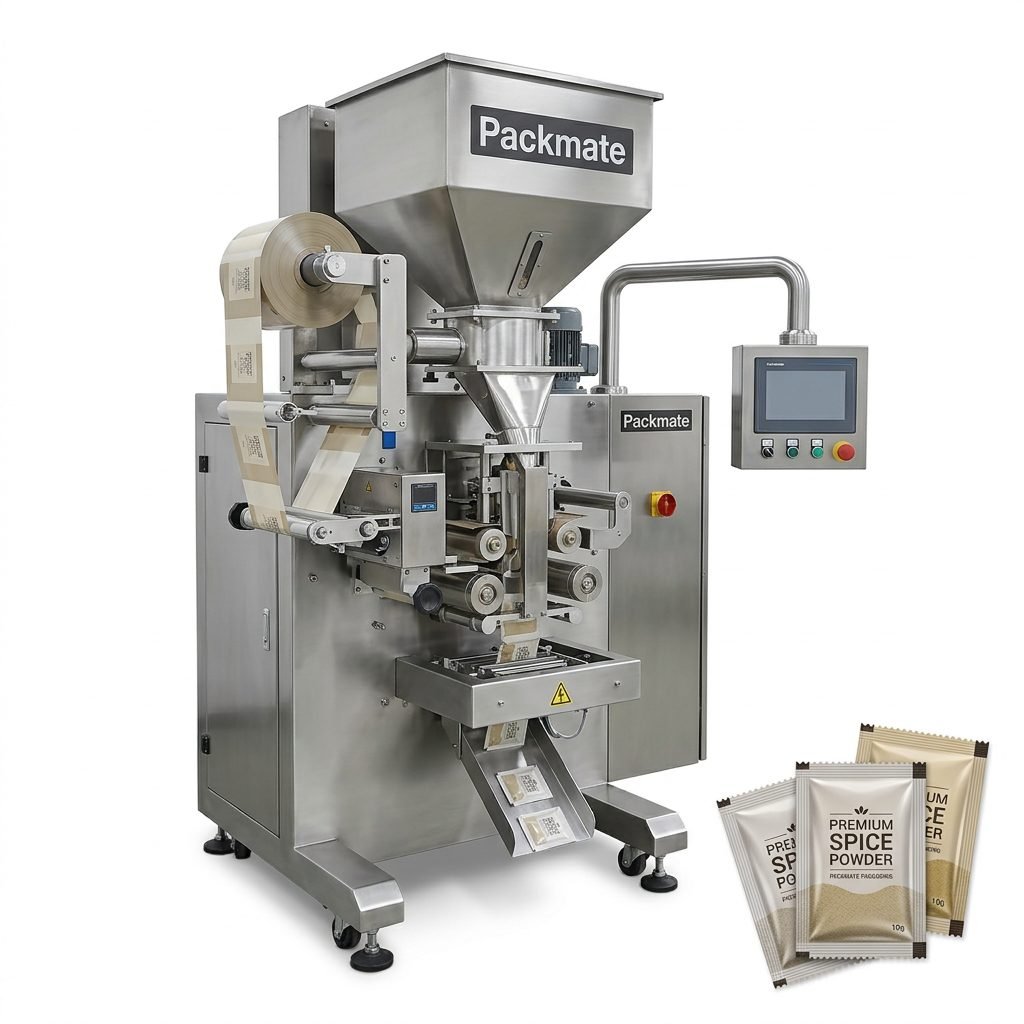
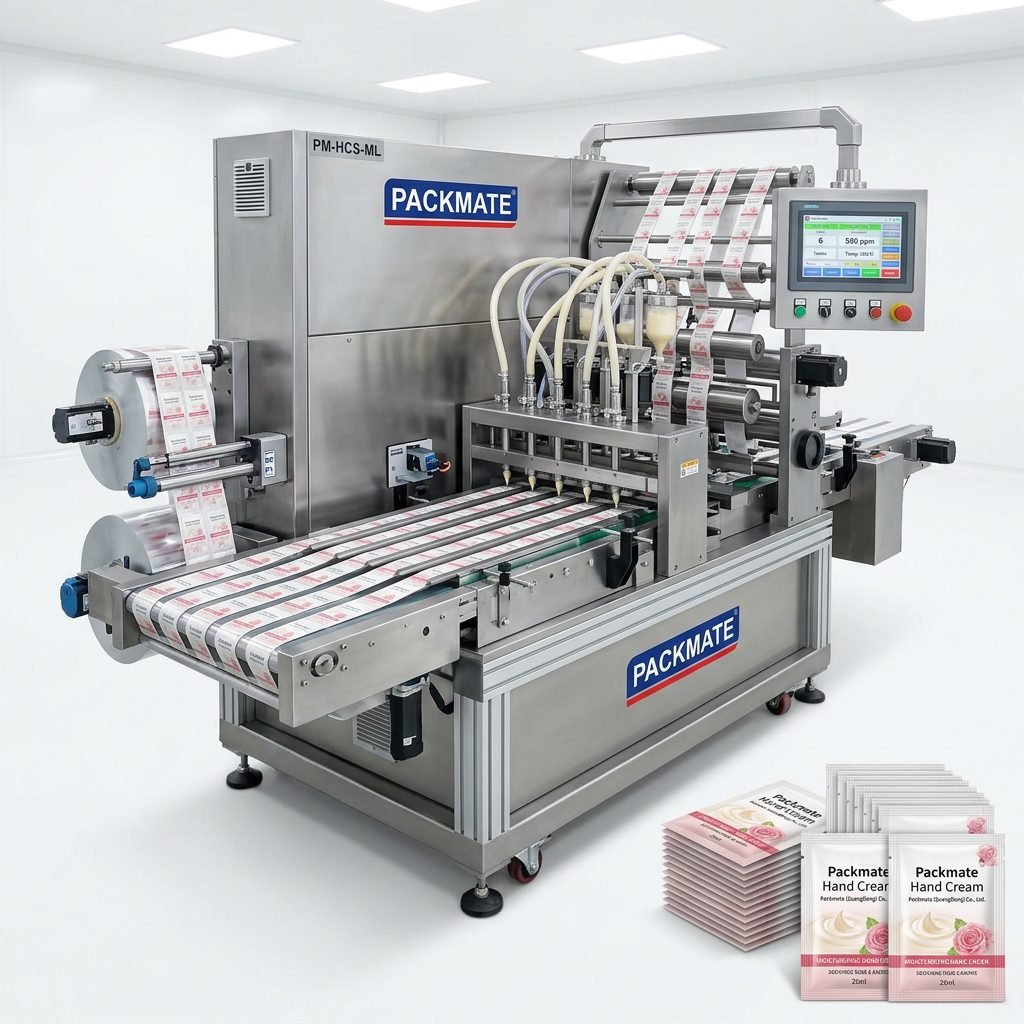
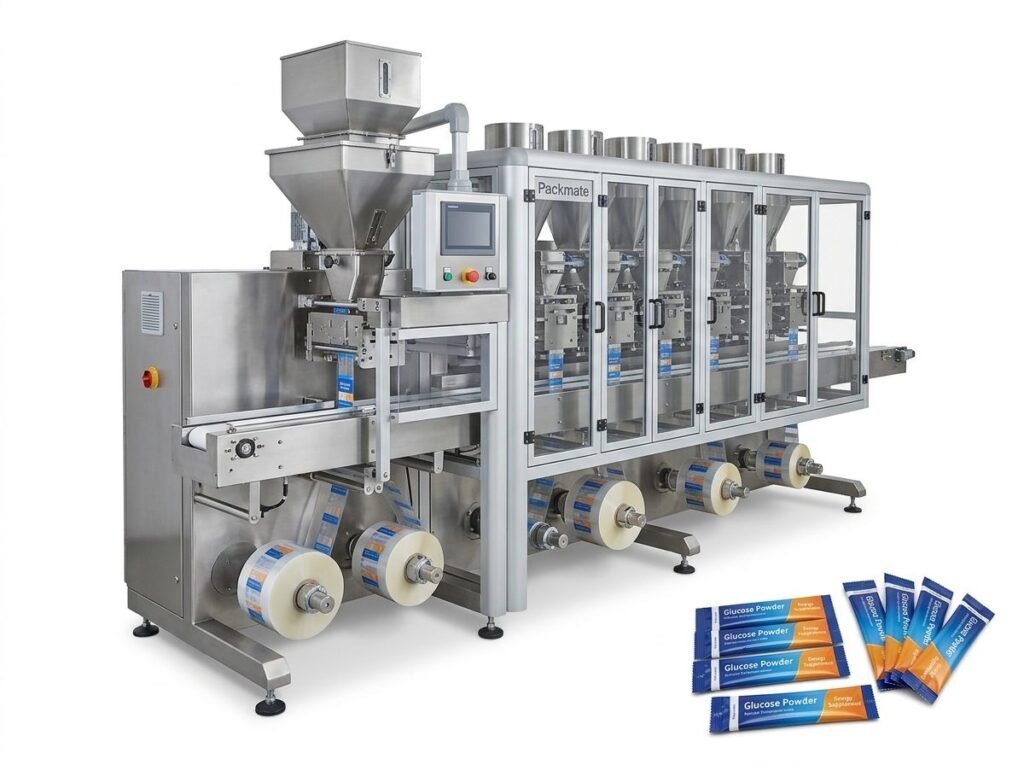
Sachets are the ubiquitous choice for foodservice—restaurants, cafes, hotels, and airlines. An automatic sachet packaging line is engineered for high-volume production of small, sealed packets. It uses roll-fed laminated film, which provides an excellent moisture barrier to keep sugar dry and free-flowing. The process involves forming the film into a tube, filling it with a pre-set dose of sugar, and then making vertical and horizontal seals to create individual packets. These are often produced in connected strips for easy dispensing. Modern sachet machines offer incredible flexibility, capable of producing a wide range of sizes and even handling different granulations, from fine icing sugar to coarse raw sugar. The output is neat, professional, and perfectly suited for portion control in hospitality settings.
2. High-Speed Stick Pack Packaging Lines
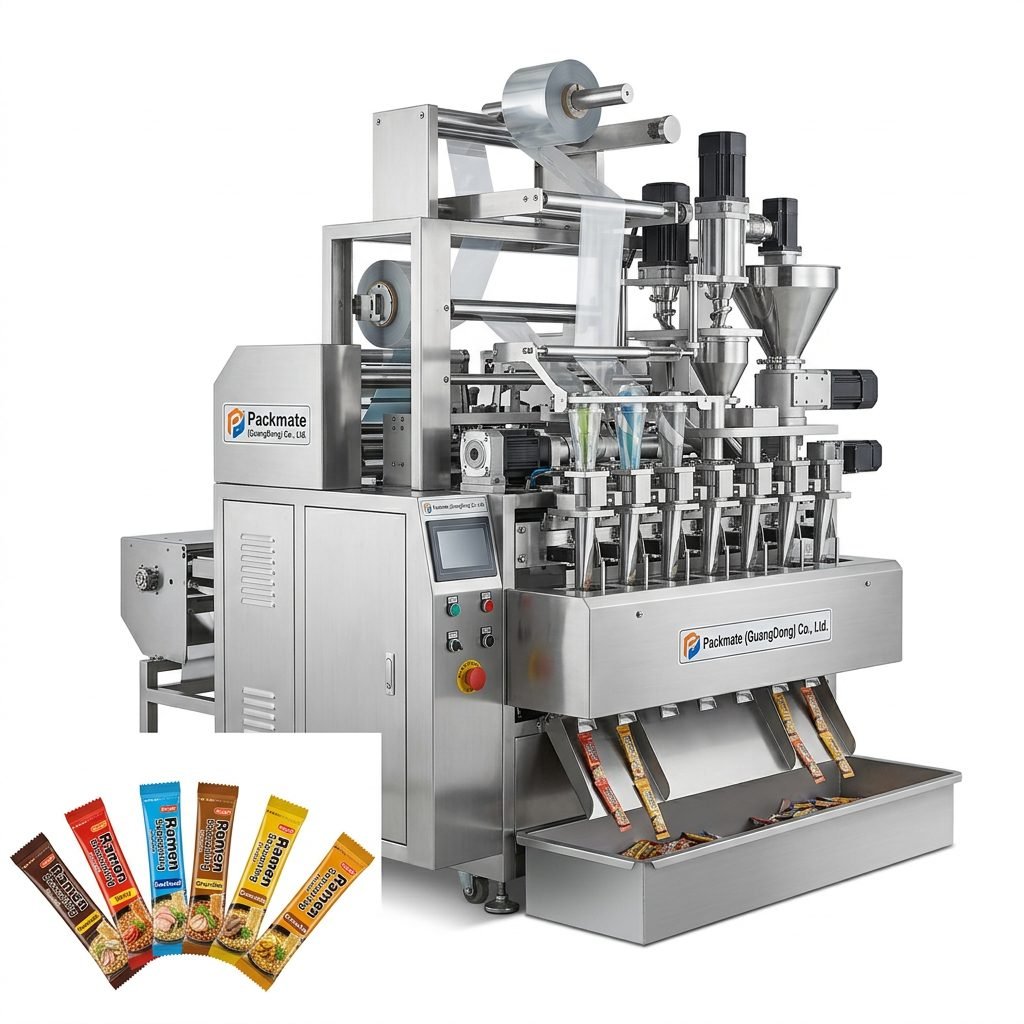
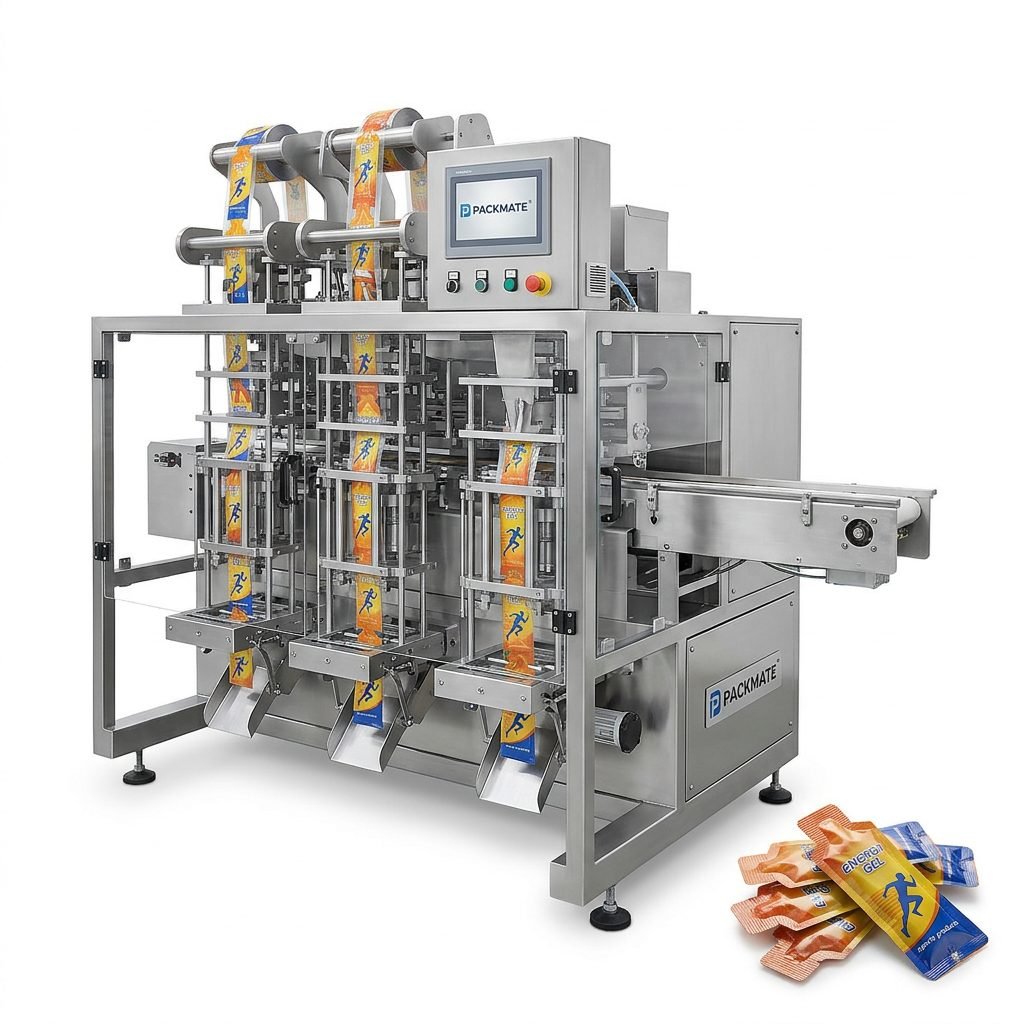
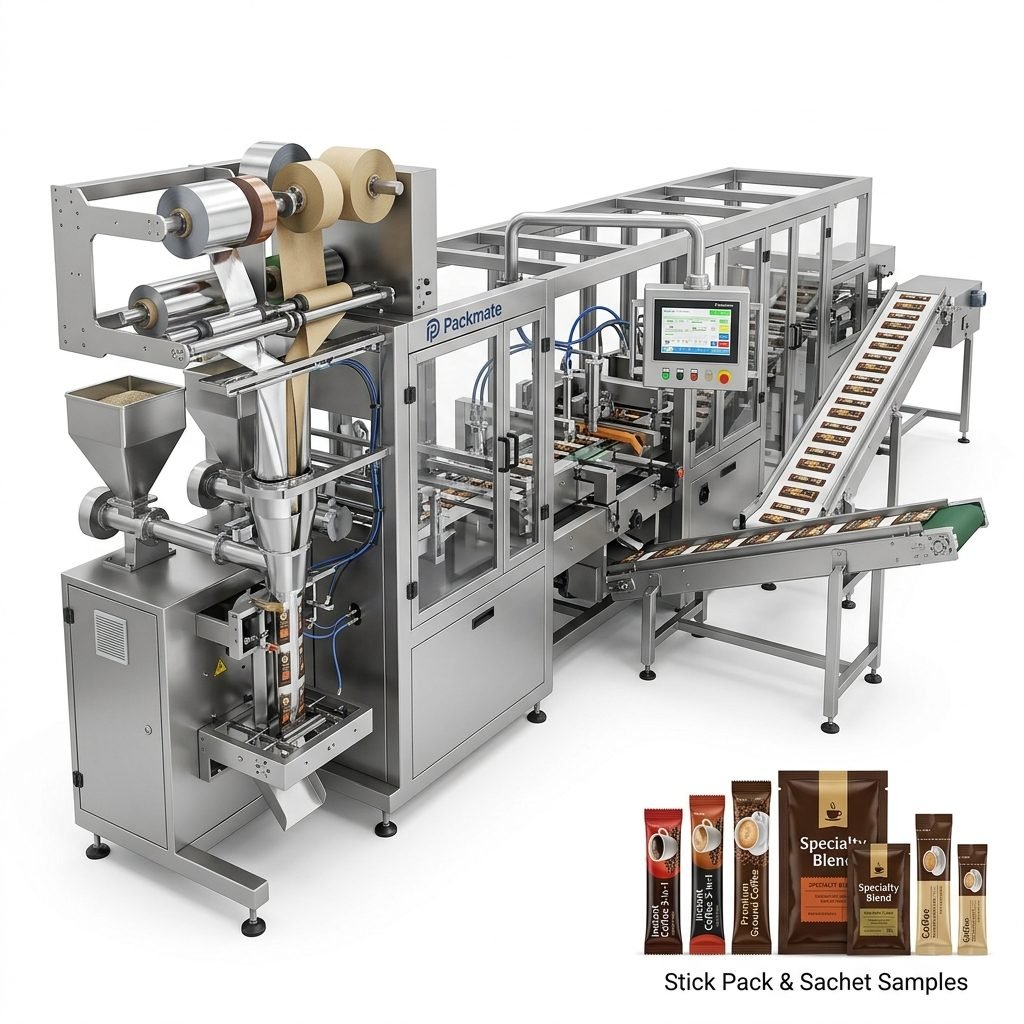
Stick packs represent a sleek, modern, and portable format that has gained immense popularity. Resembling a tall, narrow tube, they are ideal for on-the-go consumption, sample distribution, and premium retail products. A stick pack machine is a marvel of precision, forming, filling, and sealing the pack from a single roll of film at remarkable speeds. The slender shape allows for efficient material use and creates a distinctive brand presence on the shelf. For sugar, this format is perfect for single servings of specialty products like flavored sugars, brown sugar, or organic cane sugar. The line can incorporate multi-lane configurations, where several sticks are produced simultaneously side-by-side, multiplying the output to meet massive demand. The integration of high-resolution date coding and batch numbering is also seamless on these lines.
Choosing Between Sachet and Stick Pack:
➤ Opt for Sachets when: Your primary market is foodservice (hotels, restaurants, cafes). Cost-effectiveness per unit and production of strips for dispensers are key priorities.
➤ Opt for Stick Packs when: Targeting retail consumers, especially for premium or single-serve products. Modern branding, portability, and material efficiency are major advantages.
Our team at Packmate can help you analyze your market and product to determine the most profitable format and corresponding machinery.
3. Bulk Sugar Packing Systems
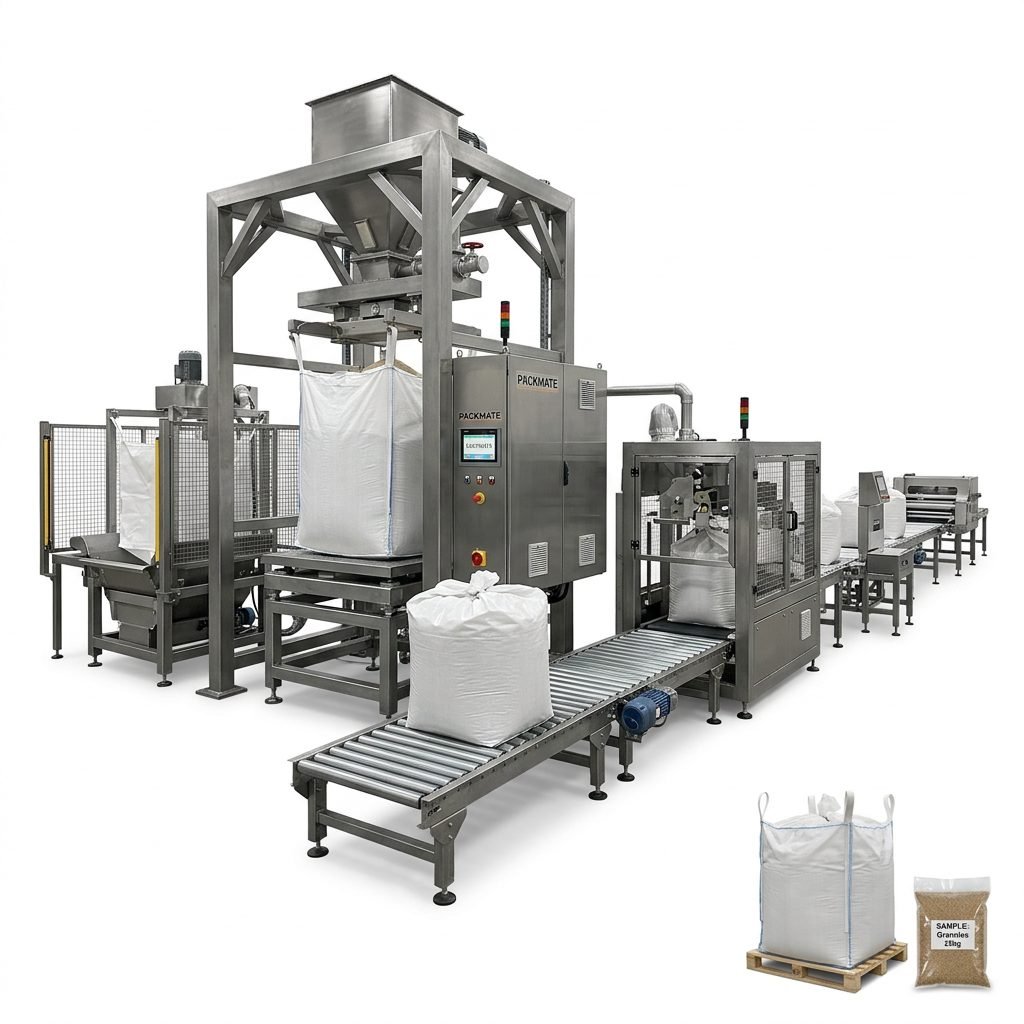
At the other end of the spectrum lies bulk packaging, which supplies industrial users like bakeries, confectionery manufacturers, and beverage companies. Bulk sugar packing systems are robust, heavy-duty lines designed to handle large volumes—typically from 1kg to 50kg bags. These systems often employ advanced net weigh scales or auger fillers for extreme accuracy, as even small percentage errors represent large quantities of product. The process can include automated bag feeding, filling, sealing (through sewing, heat sealing, or patching), and palletizing. For larger operations, form-fill-seal (FFS) machines that create the bag from roll stock, fill it, and seal it in one continuous operation offer the ultimate in efficiency and bag quality. Dust control is a critical consideration in these lines to ensure a clean and safe working environment.
Why Partner with an Experienced Solution Provider?
Selecting individual machines is one thing; implementing a fully functional, reliable, and efficient line is another. This is where the value of a turnkey solution provider becomes undeniable. A partner like Packmate (GuangDong) Co., Ltd. brings over two decades of specialization in packaging automation to the table.
We don’t just sell machines; we engineer complete packaging line solutions. This begins with a deep consultation to understand your specific product (granule size, flow characteristics), desired output, factory footprint, and future goals. Our engineers then design a line that seamlessly integrates feeding, weighing, filling, sealing, and ancillary equipment like checkweighers and metal detectors. Every component is matched for compatibility and performance. Crucially, we handle installation, comprehensive operator training, and provide ongoing technical support and service. This single-point responsibility ensures your line achieves optimal performance from day one and continues to deliver a strong return on investment for years to come.
Frequently Asked Questions (FAQs)
1. What is the typical output speed for a sugar sachet packaging line?
Speeds vary based on the machine model and sachet size. Standard single-lane machines can produce 80-120 packets per minute. High-speed, multi-lane systems from providers like Packmate can achieve outputs of 300-600 packets per minute or more, making them suitable for large-scale foodservice suppliers.
2. Can one packaging line handle different types of sugar (e.g., white, brown, icing sugar)?
Yes, a well-designed line is often versatile. The key considerations are the filler type (auger fillers are highly adaptable) and potential adjustments for different granulation and flow properties. It’s essential to discuss all product variants with your solution provider during the design phase to ensure the line is configured correctly.
3. How important is the packaging film material, and what do you recommend?
It is critically important. The film must provide an effective moisture barrier to prevent the sugar from caking. Standard structures often use laminates of PET/PE or MET/PE. For premium or organic products, recyclable or compostable film options are increasingly available. Your machinery supplier can recommend trusted film vendors and test material runnability on their equipment.
4. What kind of maintenance does an automated sugar packing line require?
Regular preventive maintenance is vital for longevity and avoiding unplanned downtime. This includes daily cleaning to remove sugar dust, periodic lubrication of moving parts, and inspection of seals and wear parts. A reliable provider will offer a clear maintenance schedule and readily available spare parts.
5. Where can I see examples of these packaging lines in operation?
Reputable manufacturers typically have video demonstrations and detailed solution pages on their website. The best evidence comes from visiting their facility for a live test with your own product or reviewing documented case studies from existing clients in similar industries.