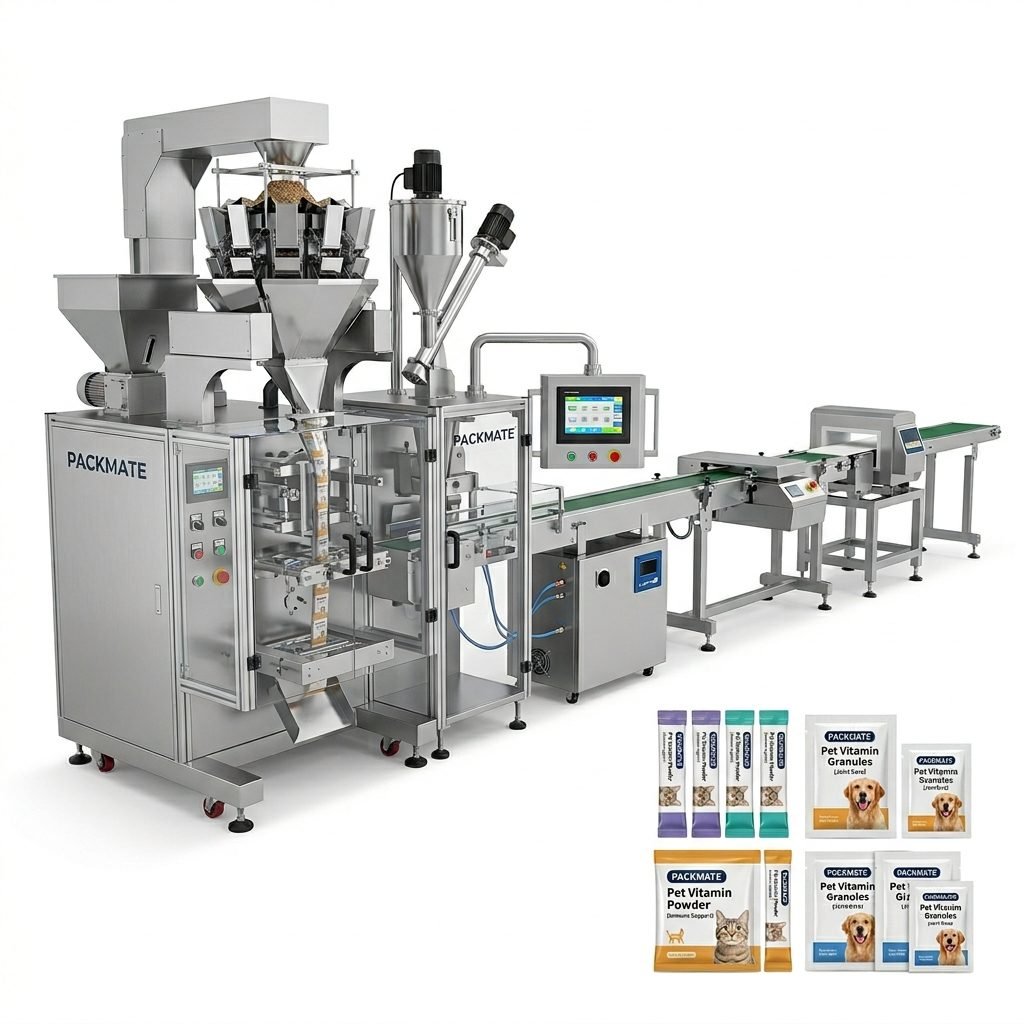
In the fast-paced world of bakery production, efficiency and consistency are paramount. Every loaf, baguette, and roll represents not just a product, but a promise of quality to the consumer. For bakery owners and production managers, the final packaging stage is often a critical bottleneck. Manual bundling and wrapping are labor-intensive, prone to inconsistencies, and struggle to keep up with high-volume output. This is where the transformative power of automation, specifically a Bread Dual Splice Packaging Line, becomes an indispensable asset. This advanced system is engineered to seamlessly bundle two rows of bread products simultaneously, dramatically boosting throughput while ensuring perfect, hygienic packaging every time.
Core Advantage: Doubling Output, Halving Complexity
The “Dual Splice” design is the heart of this solution. Traditional single-lane wrappers process one row of bread, but this innovative line integrates two parallel lanes. This means it can handle the output of two production lines or a single high-capacity oven, merging them into one efficient packaging operation. The result is a direct doubling of packaging speed without doubling the floor space or operational complexity. It’s the ideal answer for bakeries looking to scale up their production to meet growing market demands or to fulfill large wholesale contracts reliably.
How the Automatic Bread Dual Splice Packaging Line Works
The operation of this automated line is a symphony of precision engineering. It begins with the gentle transfer of baked bread from the cooling conveyor. The products are then automatically aligned and divided into two synchronized lanes. Each lane feeds into the splicing mechanism, where products are grouped into the desired bundle count (e.g., 4, 6, or 8 pieces). The two grouped rows are then conveyed into the wrapping station. Here, a continuous roll of food-grade film—be it polypropylene, polyethylene, or other specified materials—is formed around the bundles. The process involves precise cutting, sealing, and crimping to create a tight, secure, and visually appealing package ready for retail. The entire sequence is controlled by a user-friendly PLC (Programmable Logic Controller) interface, allowing for quick changeovers between different bread types and bundle sizes.
Key Components and Their Roles
- Infeed & Alignment Conveyor: Ensures orderly and gentle product handling.
- Dual-Lane Dividing System: The core mechanism that creates and manages the two parallel product flows.
- Automatic Splicing & Grouping Unit: Counts and groups bread into precise bundles for wrapping.
- High-Speed Wrapping Machine: Applies and seals the packaging film with consistent tension and seal integrity.
- PLC Control Panel: The brain of the operation, enabling easy setup, monitoring, and adjustment.
- Outfeed Conveyor: Transports finished, wrapped bundles to the next stage, such as cartoning or case packing.
Tangible Benefits for Your Bakery Operation
Investing in an automated dual splice line delivers a rapid and measurable return on investment across multiple facets of your business.
1. Unmatched Production Efficiency
By packaging two rows at once, these lines can achieve speeds significantly higher than single-lane machines, often reaching 100-200 bundles per minute or more. This eliminates packaging as a bottleneck, allowing your ovens to run at full capacity. You can explore more about scaling your operation on our dedicated Solution page.
2. Significant Labor and Cost Savings
Automation reduces dependency on manual labor for repetitive wrapping tasks. This translates to lower long-term labor costs, minimized human error, and the ability to reallocate your skilled workforce to more value-added areas like quality control or product development.
3. Superior Packaging Consistency and Hygiene
Every package is identical—tight, neat, and professionally sealed. This enhances brand image on the shelf. Furthermore, the reduced human contact during packaging adheres to the highest food safety and hygiene standards, a critical concern for modern consumers and regulatory bodies.
4. Enhanced Flexibility and Reduced Downtime
Modern dual splice lines are designed for quick changeovers. Adjusting bundle size, film type, or product positioning can often be done in minutes through the PLC interface, maximizing uptime. This flexibility is crucial for bakeries producing a variety of bread types. See real-world applications in our Case Studies.
Choosing the Right Partner for Your Packaging Line
The success of integrating such a sophisticated system hinges on the expertise of the manufacturer. It’s not just about buying a machine; it’s about investing in a complete, reliable production solution and a long-term partnership. This is where a company with deep experience and a proven track record becomes vital.
For over three decades, Packmate (GuangDong) Co., Ltd. has been at the forefront of this industry. Operating under the Packmate Packaging Line brand, we specialize in intelligent, turnkey packaging solutions. Our journey, from a small workshop founded by Mr. Jiang Sha in 1993 to a modern enterprise with a 20,000㎡ facility, has been driven by a passion for automation and efficiency. We understand that a packaging line is the final, critical touchpoint in your production process, and we engineer our solutions accordingly.
Why Partner with Packmate?
✔ Turnkey Expertise: We don’t just sell machines; we deliver complete, integrated lines—from initial design and manufacturing to installation, training, and after-sales Service.
✔ Proven Technology: With over 50 machine models developed from 30+ years of R&D, our dual splice bread lines are built for reliability and high performance.
✔ Global Support: Our solutions serve clients worldwide, backed by a professional team and robust support network.
✔ Customization: We work with you to tailor the line to your specific bread dimensions, throughput requirements, and factory layout.
Implementing a Bread Dual Splice Packaging Line is a strategic decision that propels a bakery from traditional, constrained production into a realm of modern, scalable efficiency. It addresses the core challenges of labor, speed, consistency, and hygiene head-on. By automating the most repetitive stage, you unlock the full potential of your baking operations, ensuring that your delicious products are presented to the world in perfect packaging, batch after batch. For a detailed discussion on how this technology can transform your bakery, we invite you to Contact Us directly.
Frequently Asked Questions (FAQs)
1. What types of bread are suitable for a dual splice packaging line?
These lines are highly versatile and can handle a wide range of bread products, including sandwich loaves, hot dog and hamburger buns, dinner rolls, baguettes, and artisan breads. The key is proper configuration of the infeed and grouping systems to match the product’s size and shape.
2. How does the speed compare to a single-lane wrapper or manual packaging?
A dual splice line typically operates at double the speed of a comparable single-lane machine. Compared to manual wrapping, the increase in speed is exponential, often boosting output by 300-500% or more while ensuring consistent quality.
3. Can the machine handle different packaging materials?
Yes, most advanced dual splice lines are designed to work with various food-grade flexible films, such as BOPP, CPP, PE, and laminates. The wrapping mechanism can be adjusted to accommodate different film thicknesses and sealing properties.
4. What is the typical footprint of such a packaging line?
While integrating two lanes, the design is space-efficient. The exact footprint depends on the required speed and configuration, but a professional supplier like Packmate will design the line to fit optimally within your existing production floor layout.
5. What kind of training and after-sales support can we expect?
Reputable manufacturers provide comprehensive on-site installation, commissioning, and operator training. They also offer ongoing technical support, readily available spare parts, and service plans. You can learn more about our commitment to clients on our FAQs and support pages.