In today’s fast-paced and highly regulated manufacturing landscape, efficiency, hygiene, and precision are non-negotiable. For industries like food, pharmaceuticals, and health products, the packaging process is not merely the final step—it is a critical component of product integrity, safety, and market success. This is where complete turnkey packaging systems come into play, offering a seamless, automated solution from product filling to final cartoning. This article explores the transformative power of automated packing line solutions tailored for these sensitive sectors.
The Imperative for Automation in Sensitive Industries
The food, pharma, and health product industries share unique challenges that make automation not just beneficial but essential. Stringent regulatory standards, the need for absolute contamination control, and the demand for high-volume, consistent output create a complex operational environment. Manual or semi-automated processes introduce risks of human error, cross-contamination, and production bottlenecks.
Key Driver: The primary driver for adopting automated lines is the assurance of product safety and compliance. Automated systems minimize human intervention in critical zones, dramatically reducing the risk of particulate or microbial contamination—a paramount concern for pharmaceuticals and nutraceuticals.
Core Components of a Turnkey Packaging System
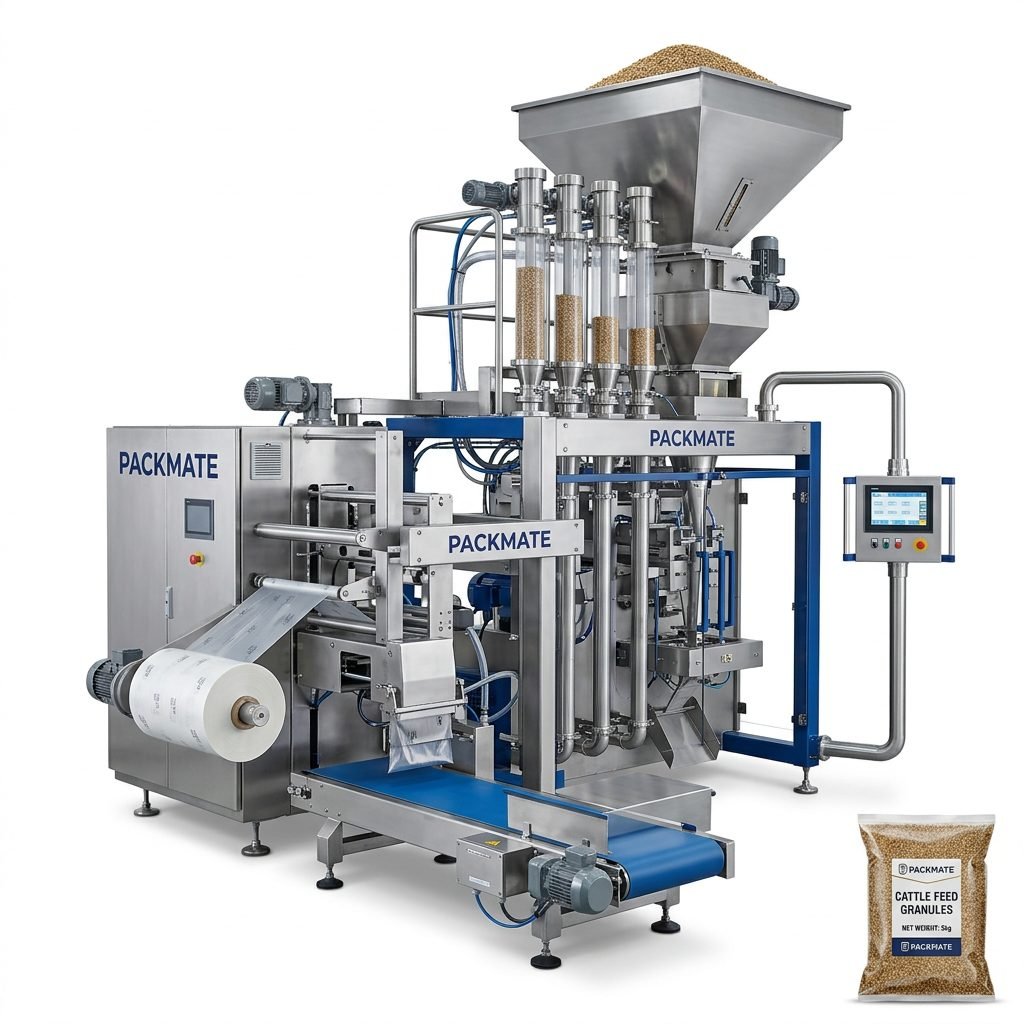
A true turnkey solution is a fully integrated ecosystem of machines working in harmony. For packaging granules, powders, liquids, and large-volume items, a typical line from a provider like Packmate encompasses several key stages:
1. Feeding & Dosing Systems
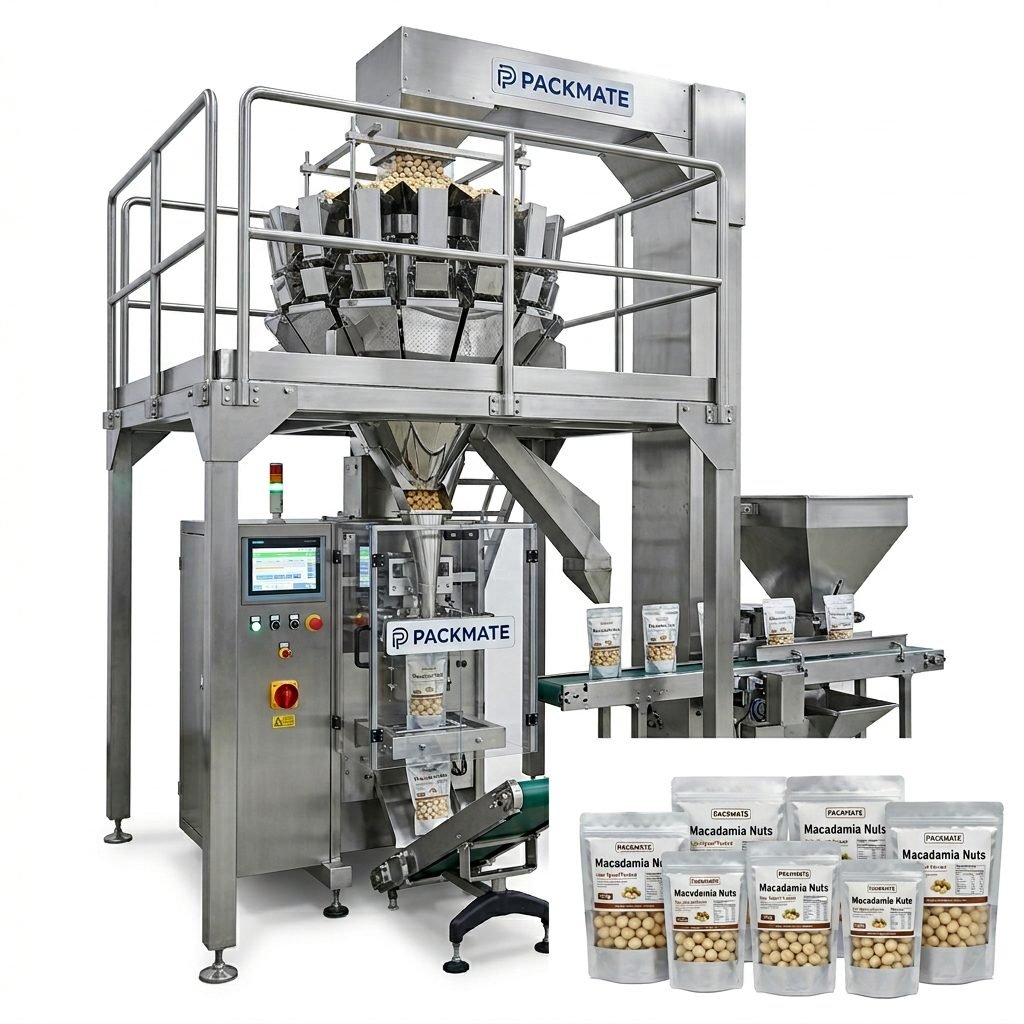
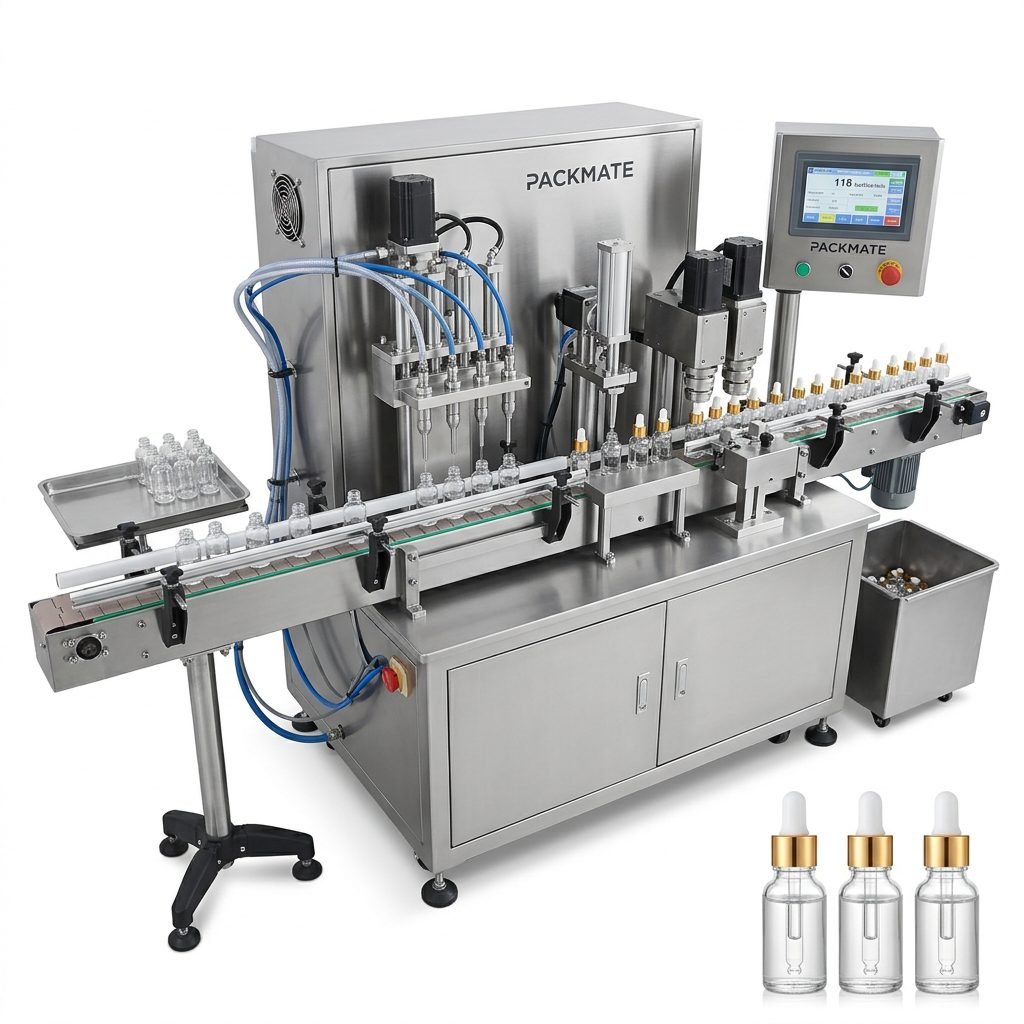
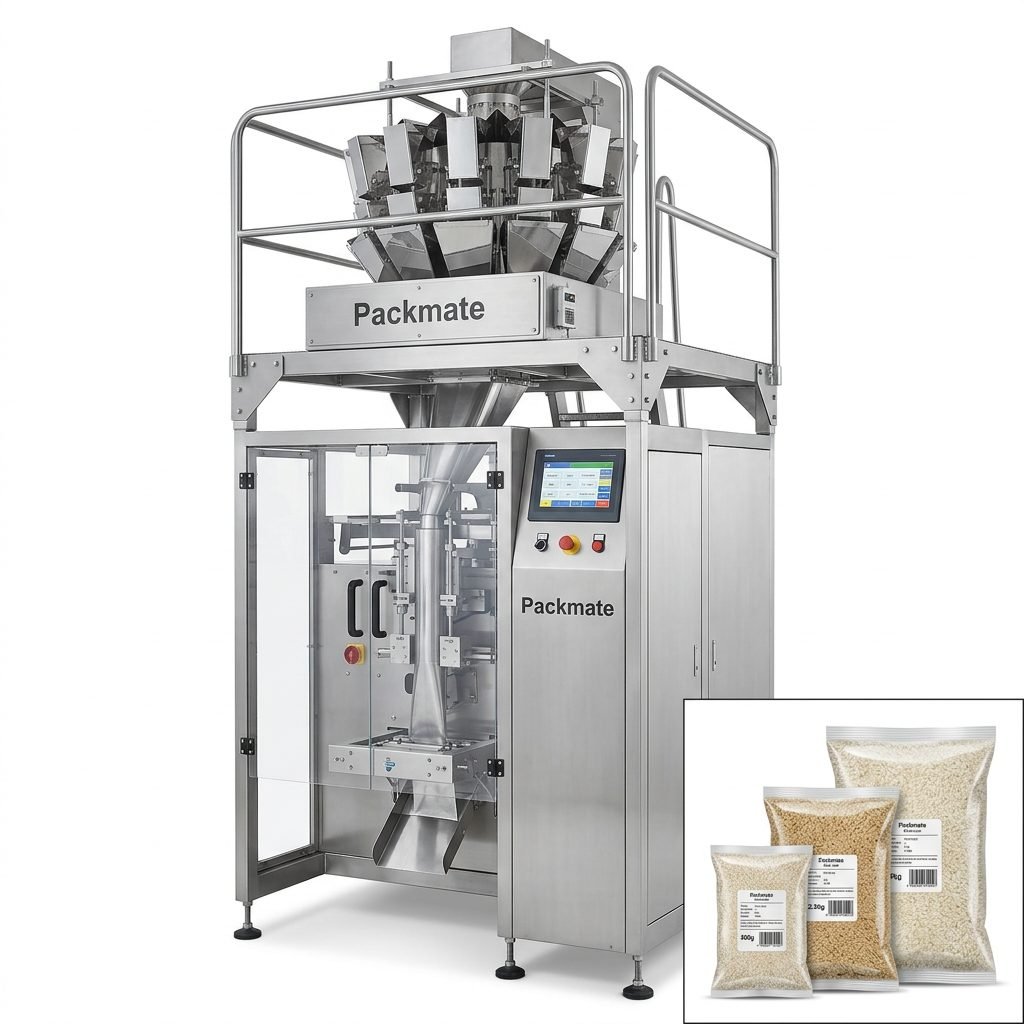
Precision begins here. Volumetric or auger fillers ensure exact weight or volume control, crucial for pharmaceutical dosing and food portion consistency. Advanced systems feature checkweighers for real-time feedback and rejection of off-spec products.
2. Form-Fill-Seal (FFS) Machinery
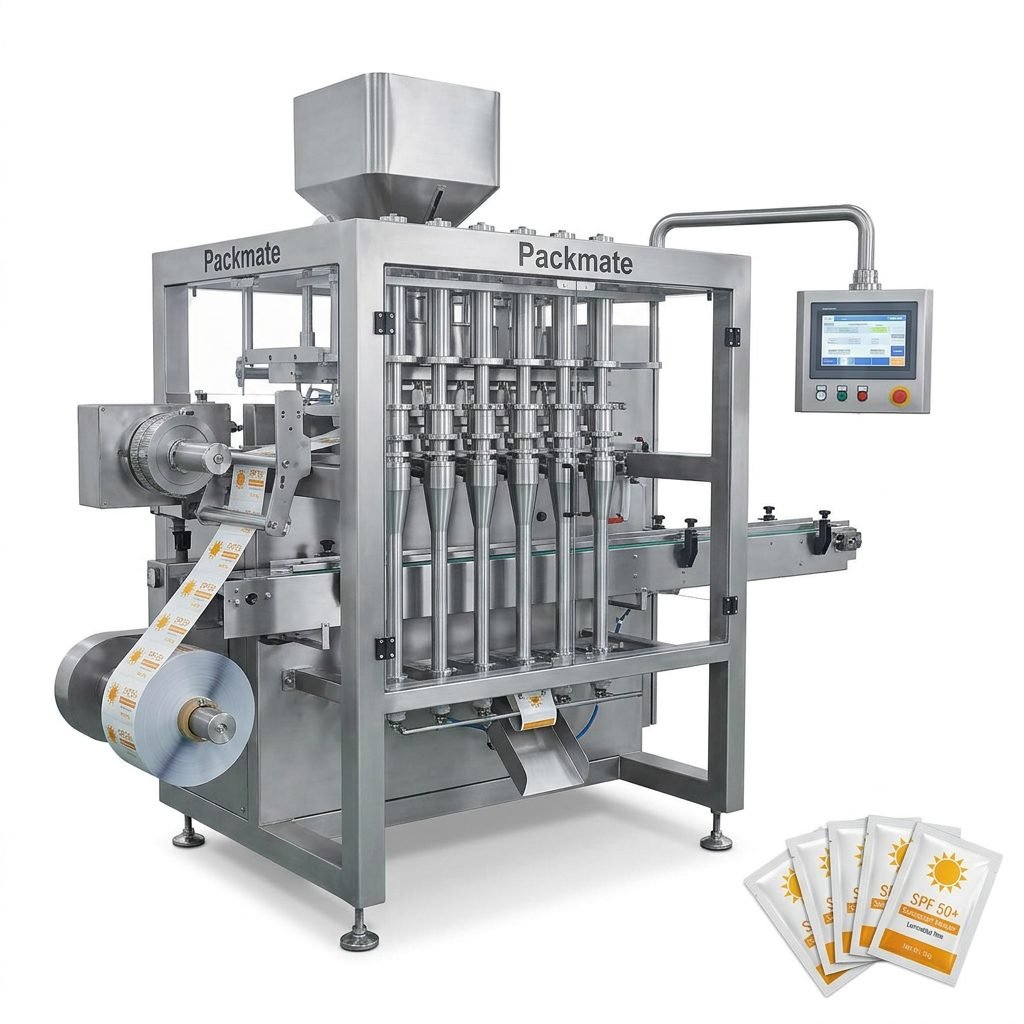
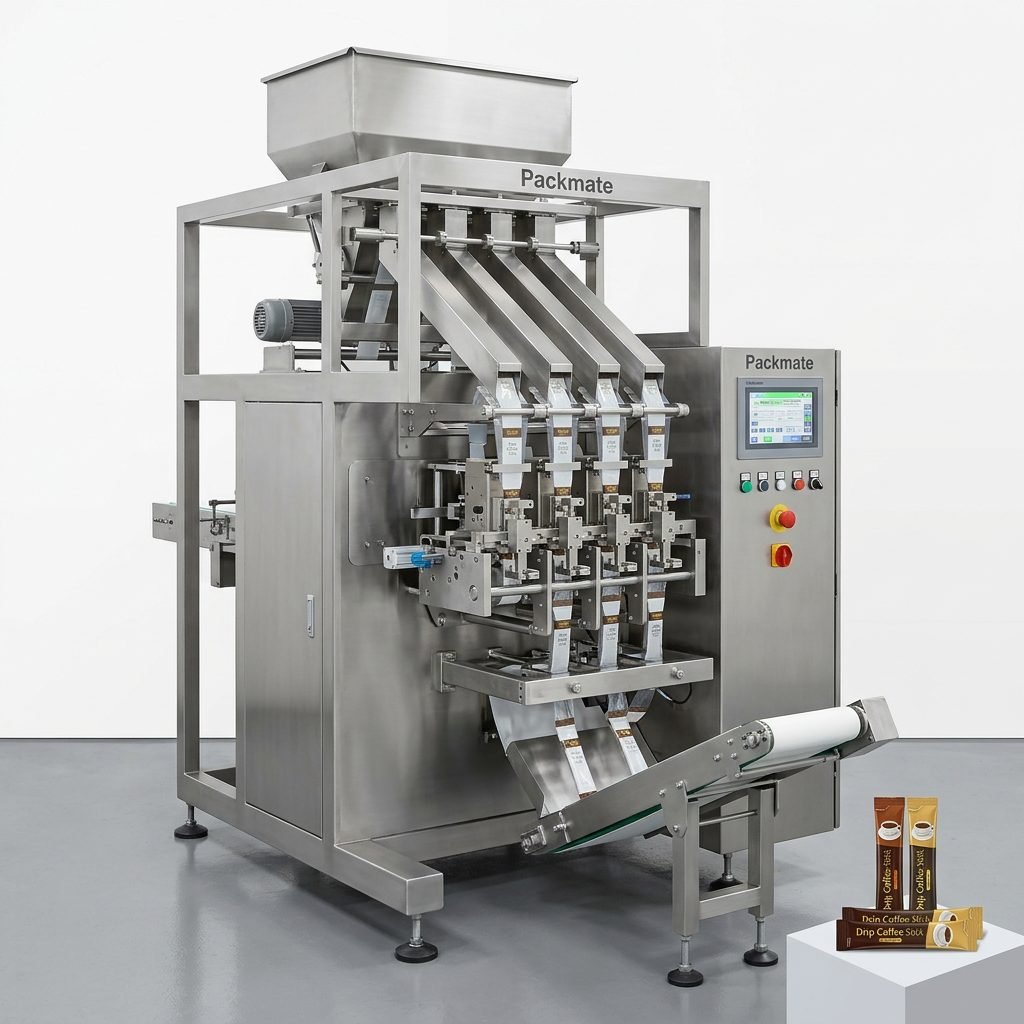
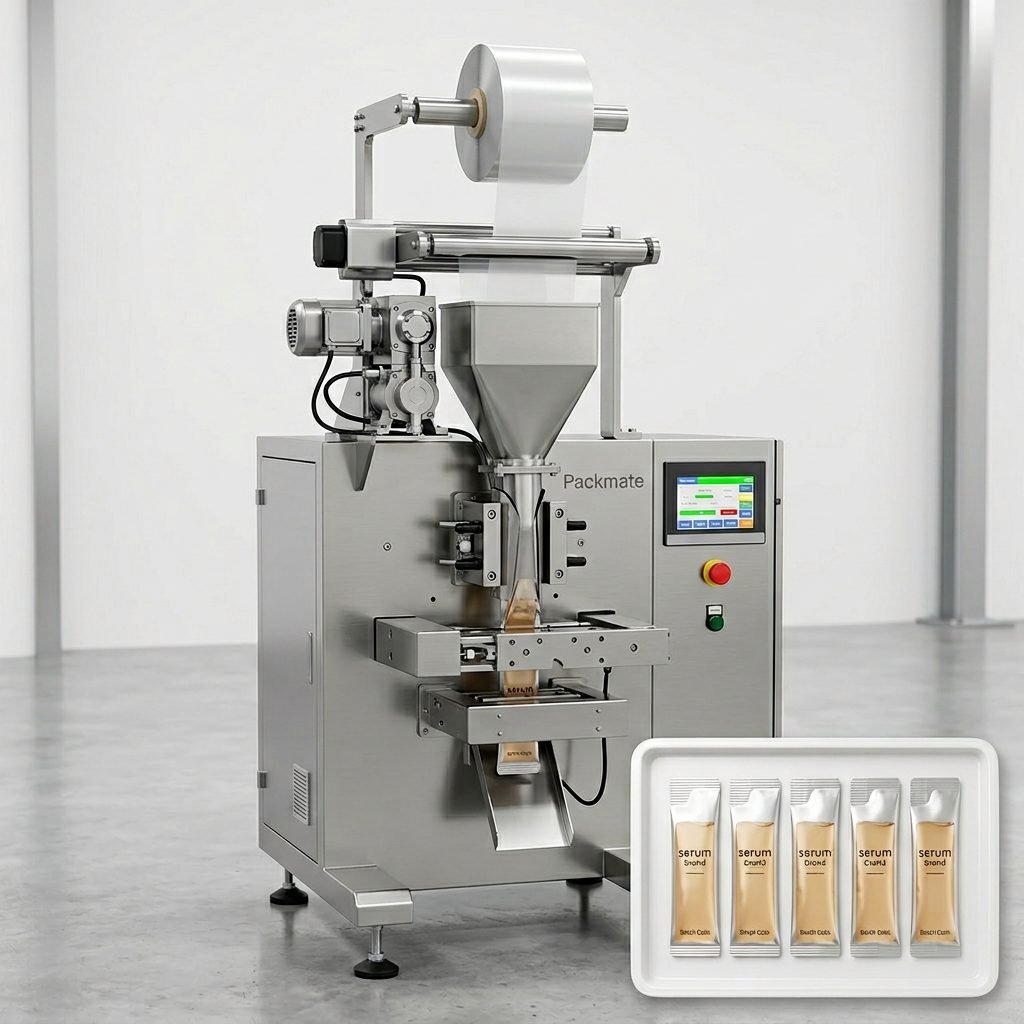
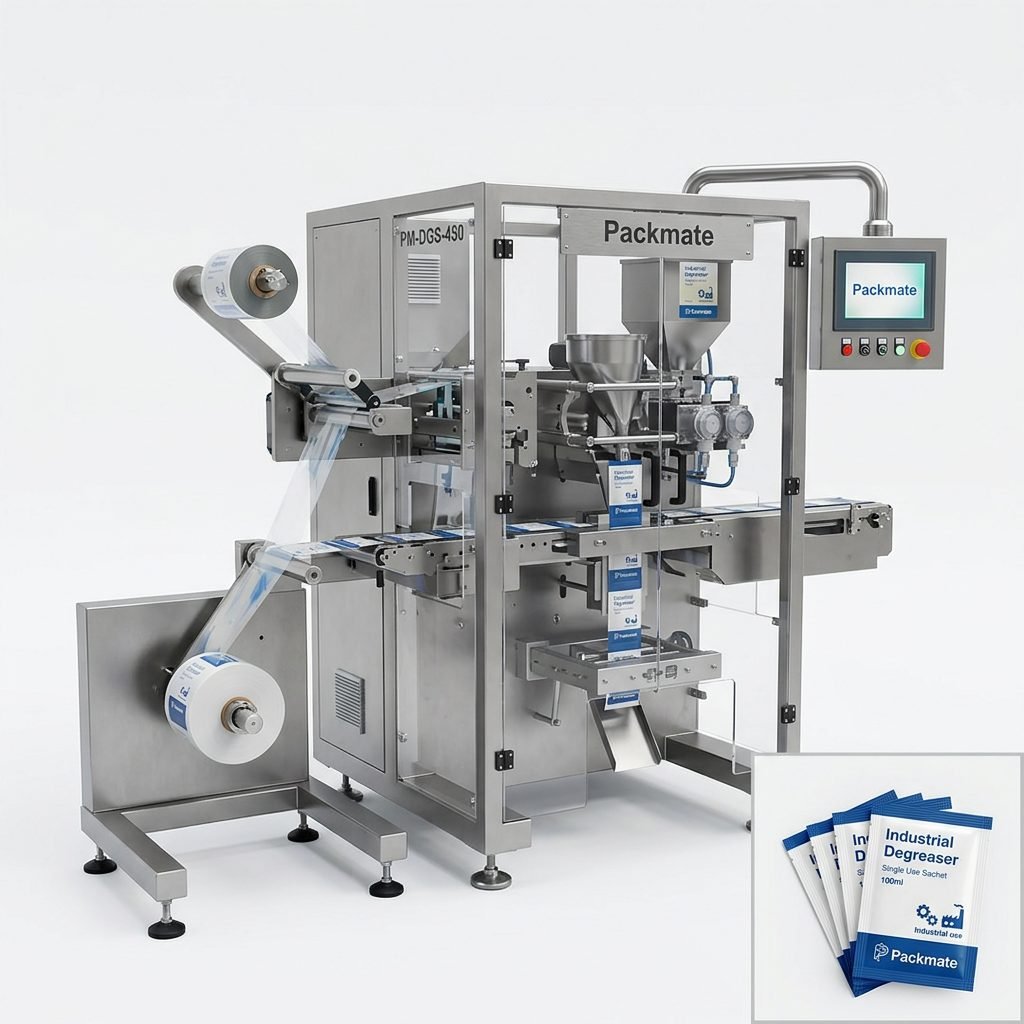
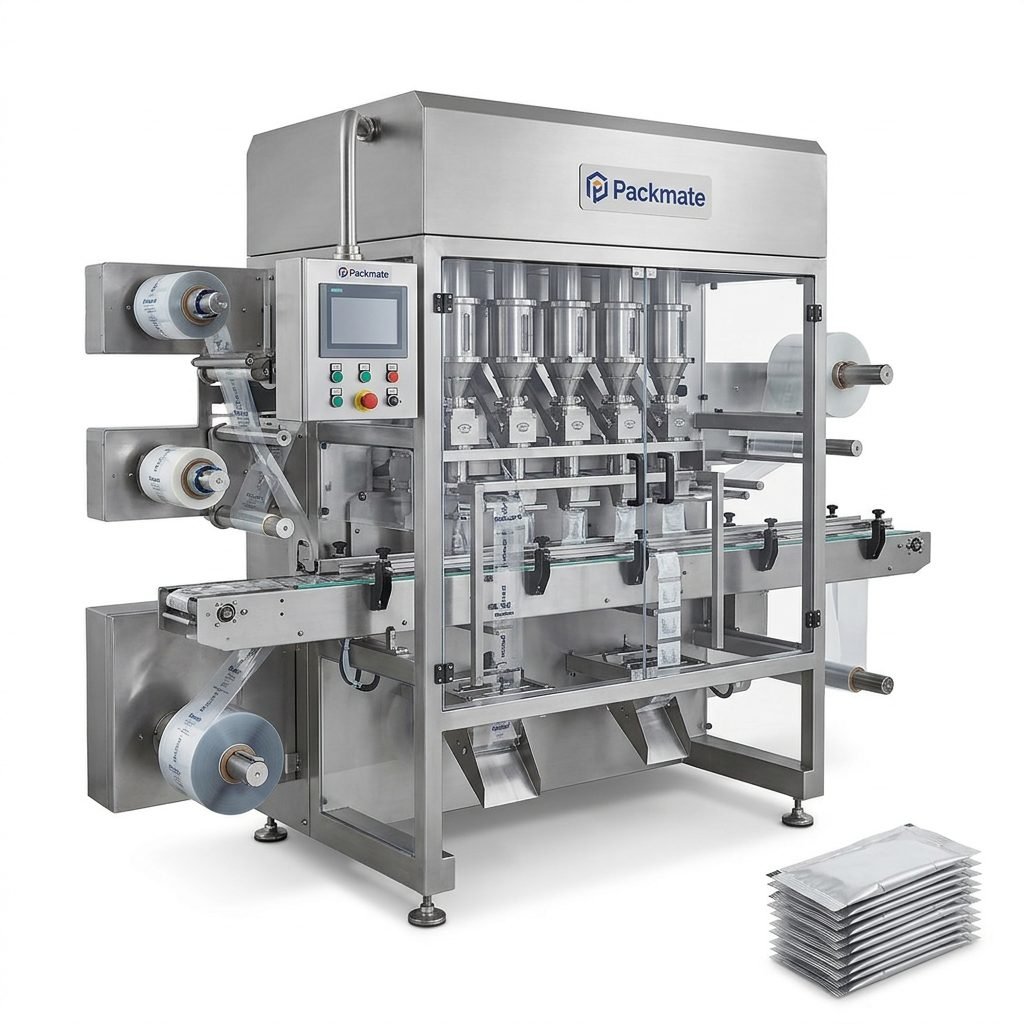
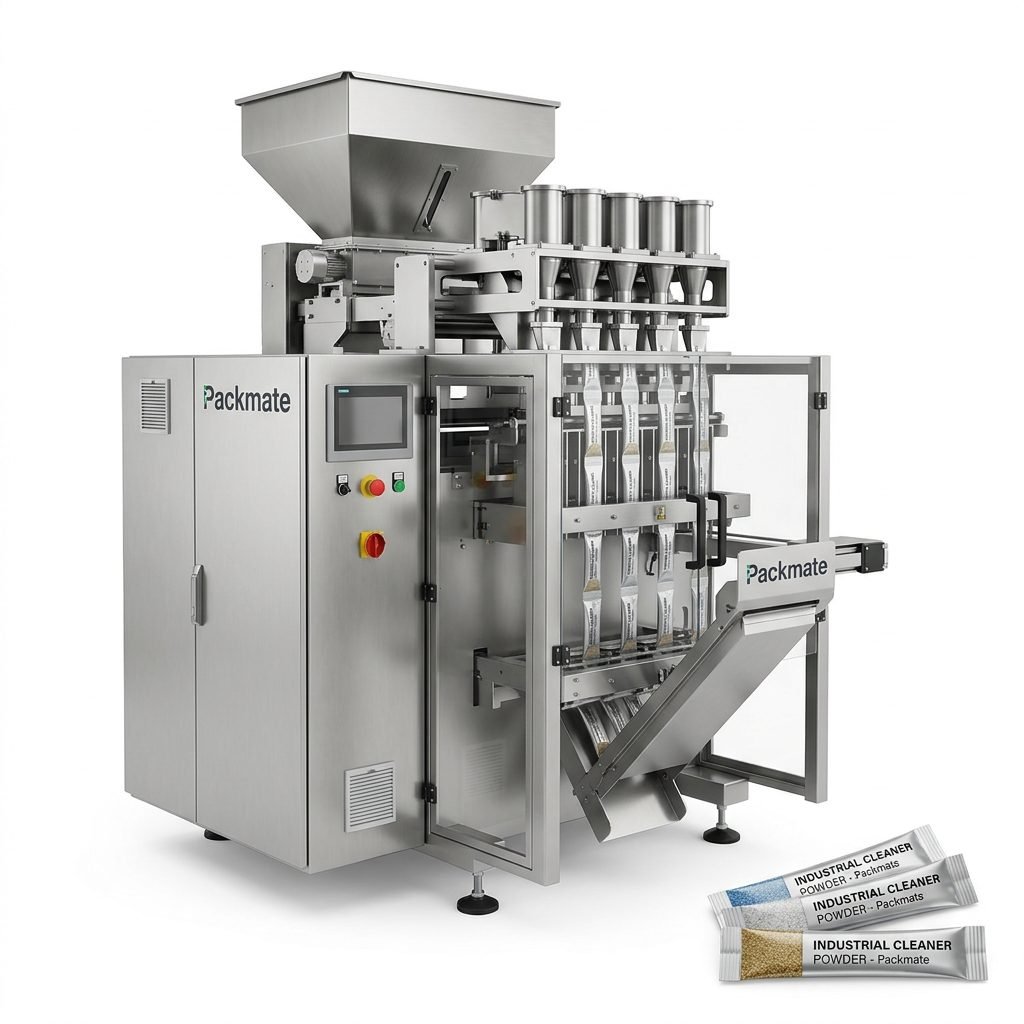
The heart of the line. This includes multi-lane stick pack machines for single-serve portions and sachet machines for powders or liquids. The film is formed, filled, and hermetically sealed in one continuous, sterile operation.
3. Secondary & Tertiary Packaging
After primary packaging, products are automatically collated, cartoned, and case-packed. This stage includes labeling with batch codes, expiry dates, and tracking information as required by global regulations.
💡 Innovation Spotlight: Smart Integration
Modern lines are equipped with Industrial IoT (IIoT) sensors and PLC controls. This allows for real-time monitoring of OEE (Overall Equipment Effectiveness), predictive maintenance alerts, and seamless data logging for complete production traceability—a must for FDA and EU GMP audits.
Benefits Beyond Labor Savings
While reducing labor costs is a significant advantage, the ROI of an automated packing line extends much further:
✔ Enhanced Product Quality: Consistent sealing, accurate filling, and gentle handling preserve product characteristics and extend shelf life.
✔ Unmatched Scalability & Flexibility: Lines can be designed for quick changeovers, allowing manufacturers to run multiple product types (e.g., different supplement powders or snack granules) with minimal downtime. Explore potential packaging solutions for your specific needs.
✔ Sustainability Gains: Precise dosing reduces product giveaway, and optimized film usage minimizes packaging material waste.
✔ Supply Chain Resilience: Reliable, high-speed automation ensures on-time order fulfillment, strengthening your market reputation.
Choosing the Right Partner for Your Turnkey Project
Implementing a complete line is a major investment. Success hinges on partnering with a provider with deep domain expertise. A partner like Packmate Packaging Line brings over 30 years of focused experience in these industries. Their approach involves:
1. Comprehensive Needs Analysis: Understanding your specific product, output goals, and facility constraints.
2. Customized Line Design: Selecting and engineering the right combination of machines from over 50 models, whether for delicate probiotic sachets or bulk food-grade granules.
3. Project Management & Integration: Overseeing installation, commissioning, and synchronization of all line components.
4. Training & Ongoing Support: Ensuring your team can operate and maintain the system efficiently, with reliable service support.
Viewing real-world applications can be invaluable. Reviewing case studies from similar companies provides concrete evidence of a system’s capabilities and the vendor’s execution prowess.
Conclusion: The Strategic Path Forward
For food, pharmaceutical, and health product manufacturers, investing in an automated, turnkey packaging system is a strategic decision that secures quality, ensures compliance, and drives long-term profitability. It transforms packaging from a cost center into a competitive advantage. By automating this critical link in the supply chain, businesses can achieve the operational excellence required to thrive in demanding global markets.
Frequently Asked Questions (FAQs)
1. What is the typical lead time for a complete turnkey packaging line?
Lead time varies based on line complexity and customization. A standard system may take 3-6 months from order to delivery, while highly customized solutions can take longer. A detailed project timeline is provided during the planning phase.
2. How do automated lines handle different packaging formats (e.g., switching from stick packs to sachets)?
Modern lines are designed for flexibility. Quick-change toolkits and programmable recipes allow for format changeovers, often in under 30 minutes. This minimizes downtime and is ideal for manufacturers with diverse product portfolios.
3. Can the system integrate with our existing ERP or MES software?
Yes, most advanced packaging lines come with standard communication protocols (OPC UA, Modbus TCP) that allow for seamless integration with factory-level ERP or MES systems for real-time production data exchange and traceability.
4. What kind of after-sales service and support can we expect?
Reputable suppliers offer comprehensive support including remote diagnostics, on-call technical assistance, readily available spare parts, and periodic maintenance services. Ensure your provider has a clear service agreement. For more details, visit our FAQs page.
5. Are these systems suitable for cleanroom or hygienic zone environments?
Absolutely. Machines can be constructed with stainless steel (SS304 or SS316), feature smooth surfaces with minimal crevices, and incorporate CIP (Clean-in-Place) or SIP (Sterilize-in-Place) capabilities to meet the stringent hygiene standards of pharmaceutical and certain food applications.