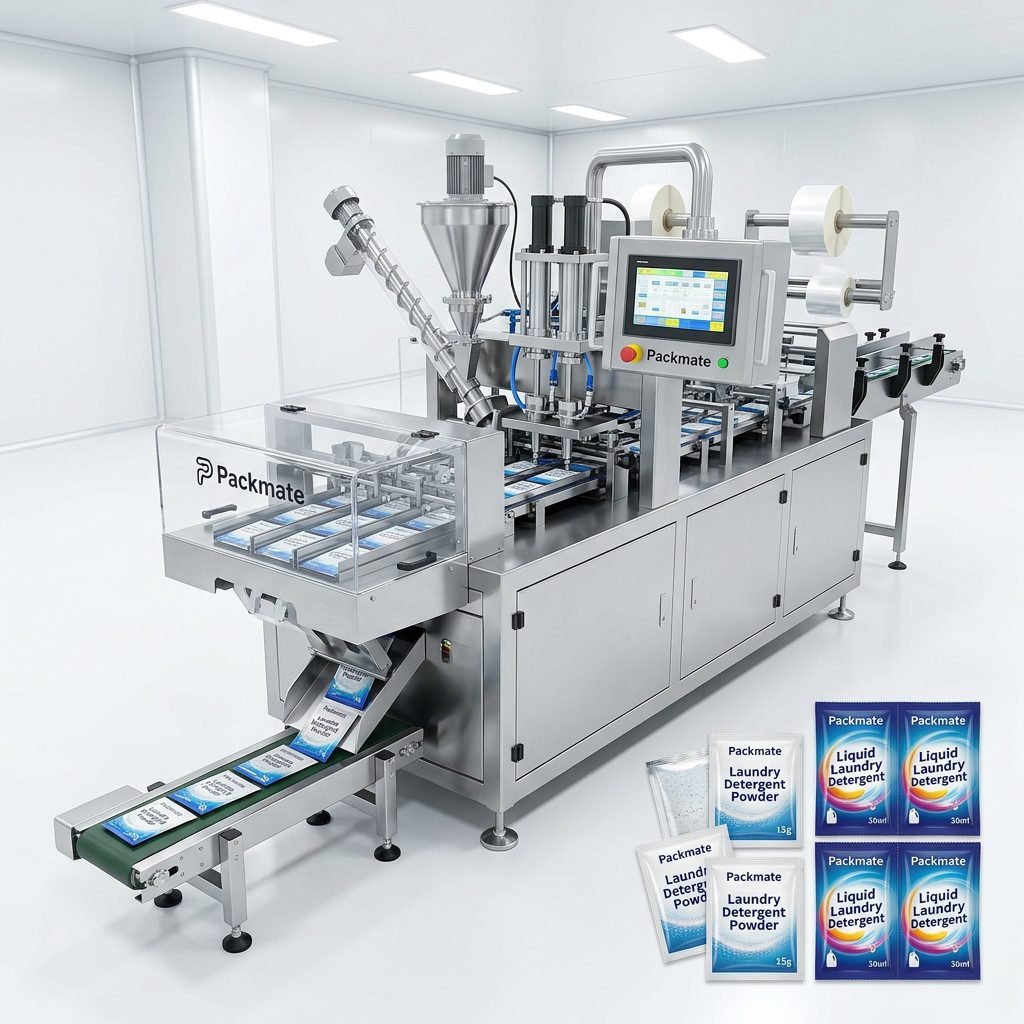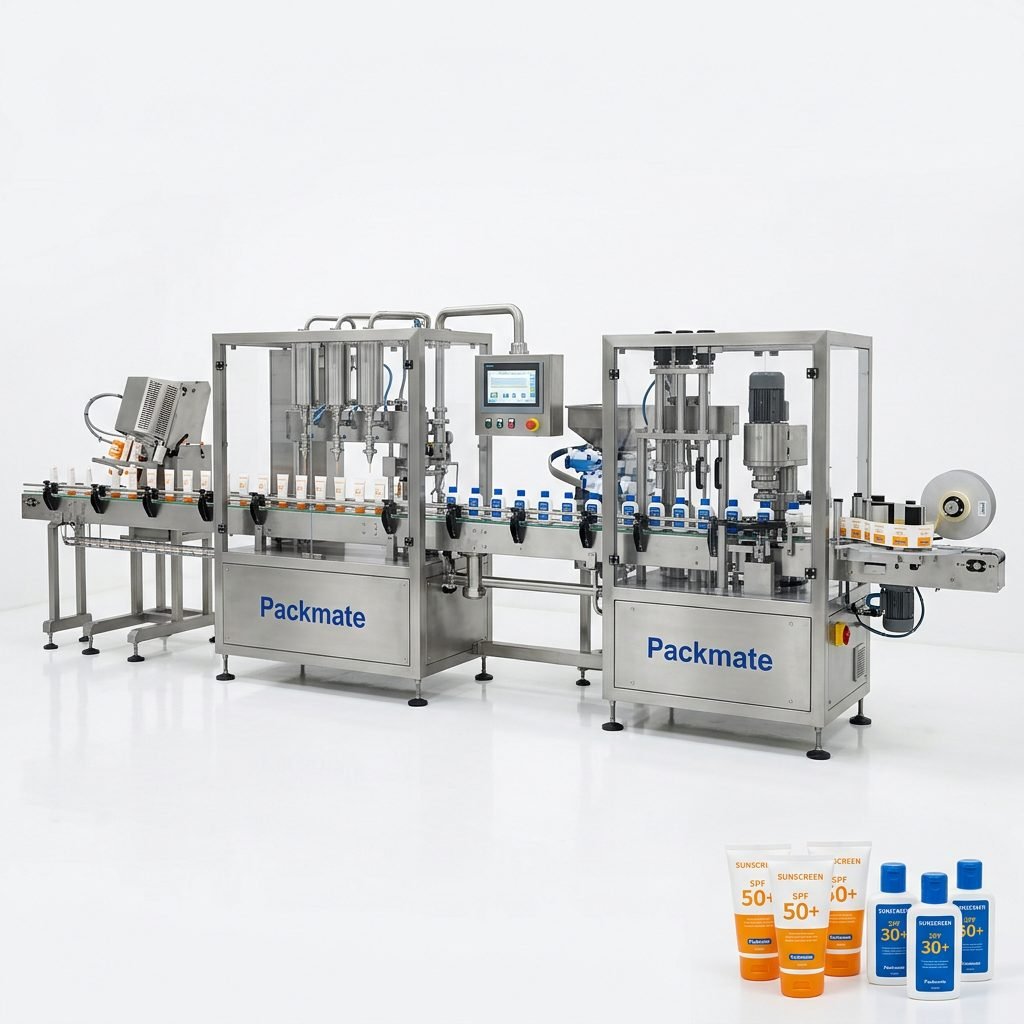
In the fast-paced world of industrial food production, efficiency, hygiene, and reliability are non-negotiable. For manufacturers of sliced bread, bagels, hot dog buns, and similar products, the packaging process is a critical final step that directly impacts shelf life, brand presentation, and operational cost. A specialized Industrial Bread Dual Splice Packaging Line represents a pinnacle of automation, designed to handle two continuous webs of packaging film simultaneously. This technology, coupled with comprehensive turnkey automatic packing solutions, transforms a complex logistical challenge into a seamless, high-output operation.
The Core Challenge in Industrial Bakery Packaging
Industrial bakeries operate on a massive scale, producing thousands of units per hour. Manually packaging these products is impractical, slow, and introduces contamination risks. The primary challenges include:
- Maintaining Product Freshness: Bread products are highly susceptible to staling and mold. Packaging must create a secure, often gas-flushed, seal immediately after cooling.
- High-Speed Throughput: Packaging lines must keep pace with high-volume ovens and production belts without creating bottlenecks.
- Film Changeover Downtime: Stopping the entire line to reload a new roll of packaging film is a significant source of lost productivity and revenue.
- Consistent Seal Integrity: Every package must have a perfect seal to prevent leaks, contamination, and product waste.
This is where the dual splice technology becomes a game-changer, directly addressing the critical issue of downtime.
What is a Dual Splice Packaging System?
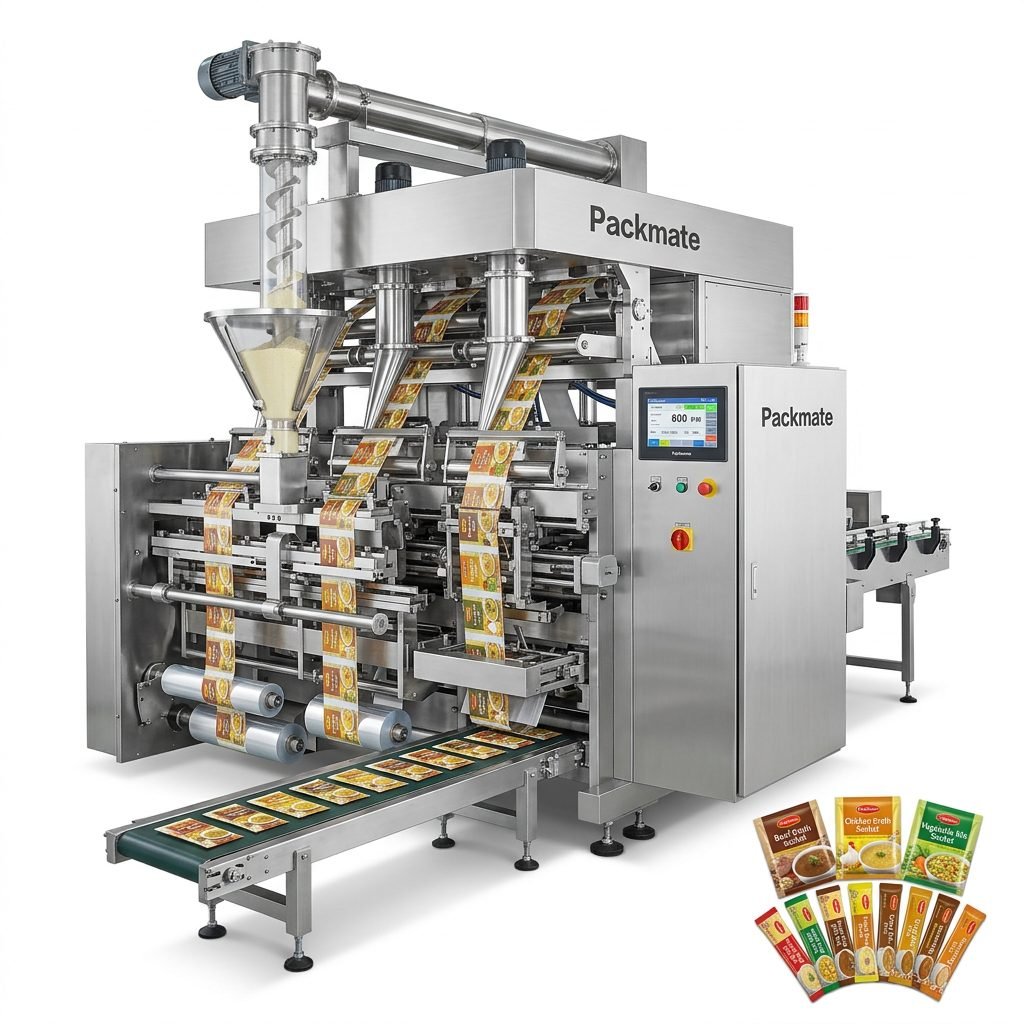
A dual splice system is an intelligent film feeding mechanism integrated into a form-fill-seal (FFS) packaging machine. It utilizes two independent film unwind stations. While one roll is actively feeding the packaging process, the second roll stands ready. As the primary roll nears its end, the system automatically:
- Activates the Splicer: A precision mechanism aligns the new film web with the expiring one.
- Performs the Splice: Using a hot-knife, adhesive, or ultrasonic welding, it joins the new film to the old without stopping.
- Transfers Control: The new roll seamlessly becomes the primary film source, and the empty core is ejected. The operator can then reload the second station at their convenience, without rushing.
This process ensures continuous, non-stop operation, maximizing line efficiency and Overall Equipment Effectiveness (OEE).
Components of a Complete Turnkey Bread Packaging Line
An industrial bread packaging line is more than just a single machine. It is a synchronized symphony of specialized equipment. A true turnkey solution from a manufacturer like Packmate encompasses every stage:
1. Product Handling & Infeed System
Gentle yet precise handling is crucial to avoid damaging soft bread products. Systems include vibratory conveyors, bucket elevators, or gentle belt systems that orient and singulate the products for consistent feeding into the packaging machine.
2. The Dual Splice Form-Fill-Seal (FFS) Machine
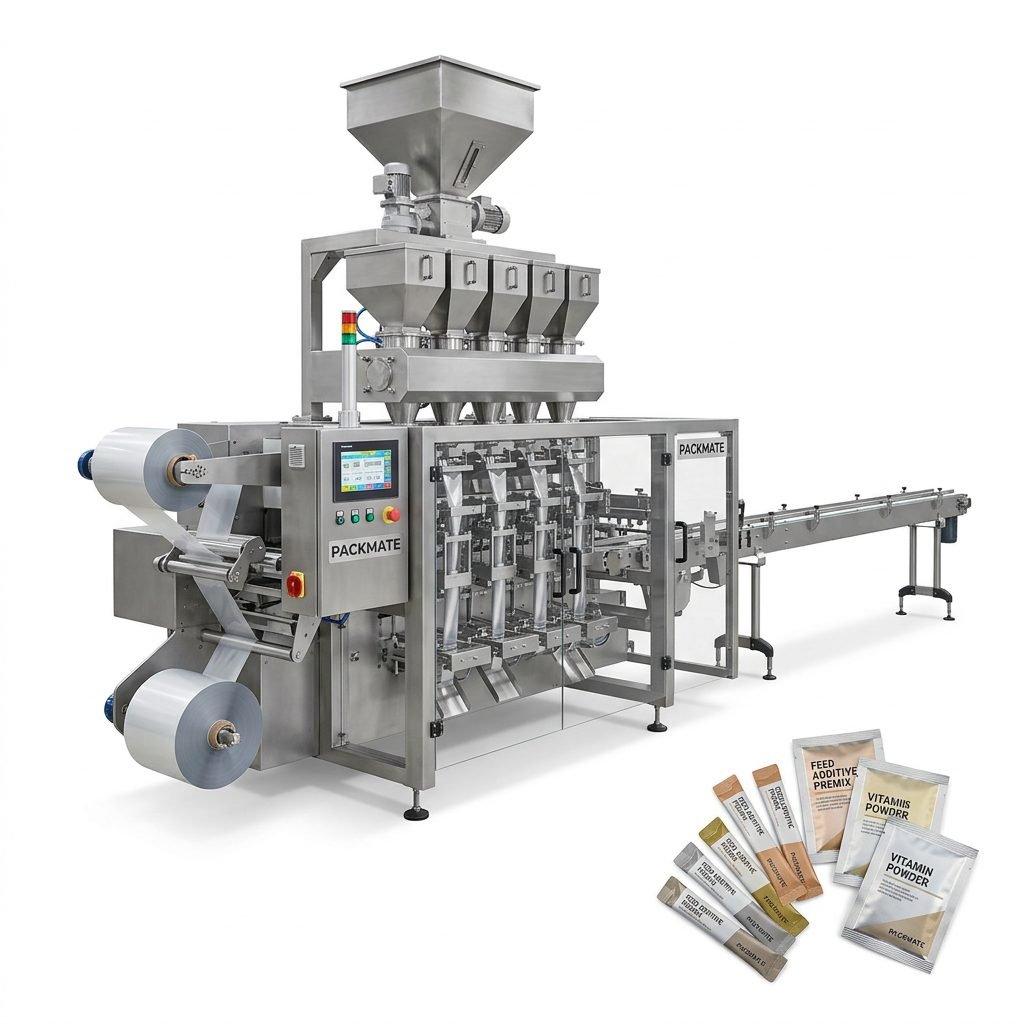
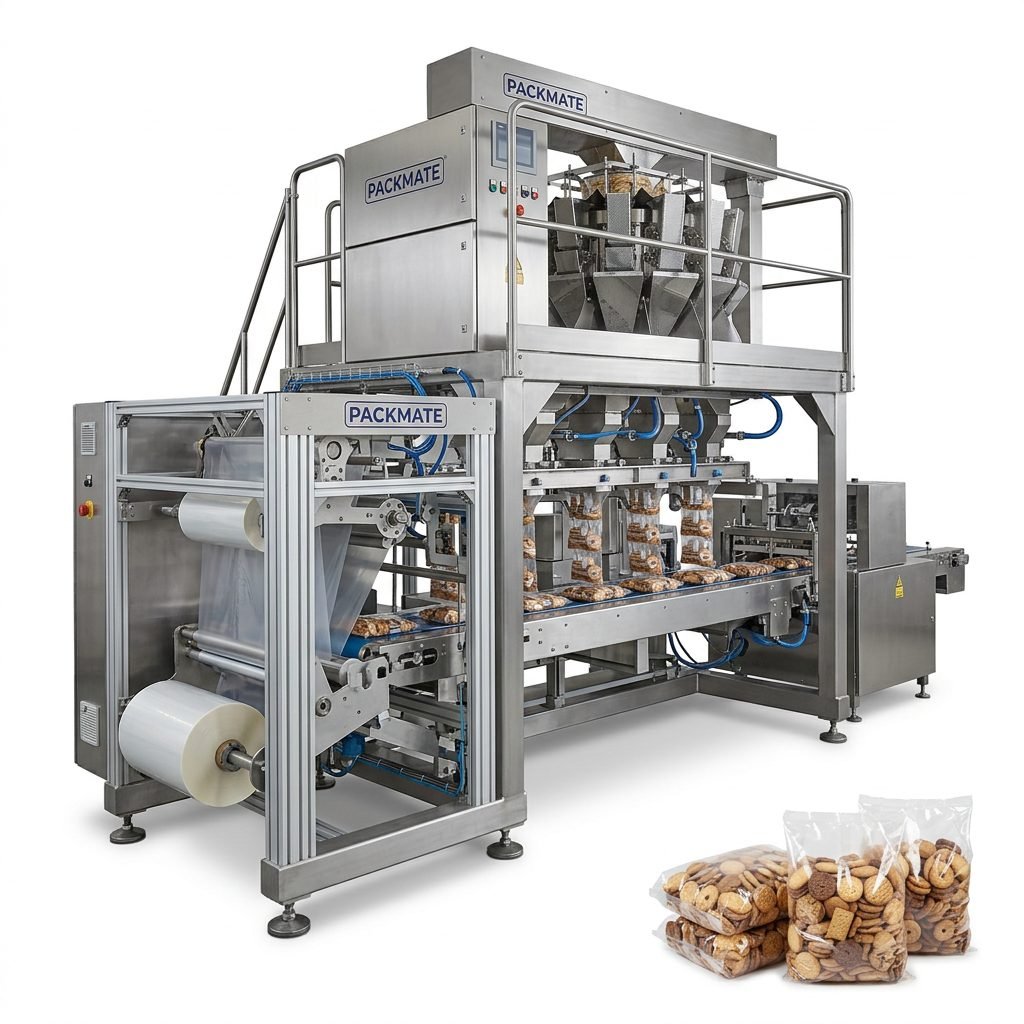
The heart of the line. This machine forms the packaging film from the dual unwind stations into a tube, inserts the bread products, and creates the longitudinal and end seals. Modern machines feature servo-driven technology for precise control, quick changeover capabilities for different bag sizes, and integrated checkweighers or metal detectors.
3. Gas Flushing System (Optional but Crucial)
To extend shelf life dramatically, an integrated gas flush system replaces the air inside the package with a modified atmosphere (typically a mix of nitrogen and carbon dioxide). This inhibits mold growth and oxidative staling, keeping bread fresher for longer.
4. Secondary Packaging & Case Erection
After primary packaging, individual bags are often collated into groups, boxed, and sealed automatically. Robotic case packers or automatic cartoners place the bags into pre-formed cases, which are then sealed and labeled, ready for palletizing.
Key Benefits of Partnering with a Specialist Manufacturer
Choosing a manufacturer like Packmate (GuangDong) Co., Ltd. for your turnkey solution offers distinct advantages beyond simply purchasing machinery.
✅ Maximized Uptime & Productivity
The dual splice system is the most direct contributor. By eliminating film-change stops, production runs can continue for days. This leads to a higher return on investment and the ability to meet tight delivery schedules consistently.
✅ Reduced Operational Costs
Higher efficiency means lower cost per unit. Automated lines also reduce labor dependency and minimize human error and product giveaway through precise filling and sealing.
✅ Enhanced Product Quality & Safety
Automated, enclosed systems minimize human contact, improving hygiene. Consistent, robust seals protect product integrity. Integrated quality checks (like checkweighers) ensure every package meets specification.
✅ Scalability & Future-Proofing
A professional manufacturer designs with flexibility in mind. Lines can be modular, allowing for future upgrades in speed, the addition of new functions (like printing), or adaptation to new product shapes. Reviewing their project case studies can provide insight into this flexibility.
The Packmate Advantage: Engineering Turnkey Success
With over 30 years of experience and a 20,000㎡ modern facility, Packmate embodies the expertise required for complex turnkey projects. Their approach goes beyond hardware:
- Comprehensive Analysis: Engineers work with clients to understand specific product characteristics, desired output, and factory layout.
- Integrated Design: Every component, from infeed to case packer, is selected and engineered to work in perfect harmony, avoiding the pitfalls of piecing together disparate machines.
- Project Management: They oversee installation, commissioning, and rigorous testing at their facility (FAT – Factory Acceptance Test) and on-site (SAT – Site Acceptance Test).
- Training & Support: Comprehensive training for operators and maintenance technicians is provided, backed by a global service and support network to ensure long-term reliability.
Conclusion
Investing in an Industrial Bread Dual Splice Packaging Line as part of a turnkey automatic solution is a strategic decision for any large-scale bakery. It is an investment in unparalleled efficiency, consistent quality, and robust food safety. By eliminating the major bottleneck of film changeovers and integrating every step into a cohesive, automated system, manufacturers can achieve significant competitive advantages in cost control, production capacity, and market responsiveness. Partnering with an experienced, full-service manufacturer like Packmate ensures that this complex engineering challenge becomes a streamlined, profitable, and future-ready reality for your production floor.
Frequently Asked Questions (FAQs)
1. What is the main advantage of a dual splice system over a standard single-roll system?
The primary advantage is continuous operation. A dual splice system allows for automatic, non-stop splicing of a new film roll to an expiring one, eliminating the need to halt production for manual roll changes. This dramatically increases line uptime and overall productivity.
2. Can a turnkey packaging line handle different types of bread products?
Yes, a well-designed line from an experienced manufacturer is highly flexible. Through adjustable forming tubes, changeable product buckets, and programmable servo drives, the same core line can often be configured to package various products like sandwich bread loaves, hot dog buns, bagels, or English muffins with relatively quick changeovers.
3. How does modified atmosphere packaging (MAP) extend the shelf life of bread?
MAP replaces the oxygen inside the package (which promotes mold growth and oxidation) with inert gases like nitrogen or carbon dioxide. This creates an unfavorable environment for spoilage microorganisms, potentially extending shelf life from a few days to several weeks without preservatives.
4. What kind of maintenance does an automated dual splice line require?
Regular preventive maintenance is key. This typically includes daily cleaning, lubrication of moving parts, inspection of sealing jaws and cutting blades, and calibration of sensors. A good manufacturer provides detailed maintenance schedules and training. The dual splice unit itself requires periodic inspection of splicing mechanisms and web guides.
5. What factors determine the cost and ROI of a turnkey bread packaging line?
Key factors include: required speed (bags per minute), level of automation (primary packaging only vs. full case packing), optional features (gas flushing, checkweighers), and film type. ROI is calculated based on labor savings, reduced film waste from efficient splicing, increased output, and lower product giveaway. Most operations see a full return on investment within 1-3 years.